Korea’s government has unveiled a 2027 budget of 820.9 trillion won, up 93 trillion won or 12.8 percent from this year, and the editorial says it deserves scrutiny. It argues the plan leans too heavily on an assumed semiconductor and AI boom, while the 162.3 trillion-won Future Response Fund needs tight oversight. The piece warns that spending growth, weak productivity gains and inflation risks could leave future taxpayers with more debt than growth.
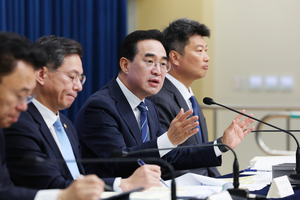
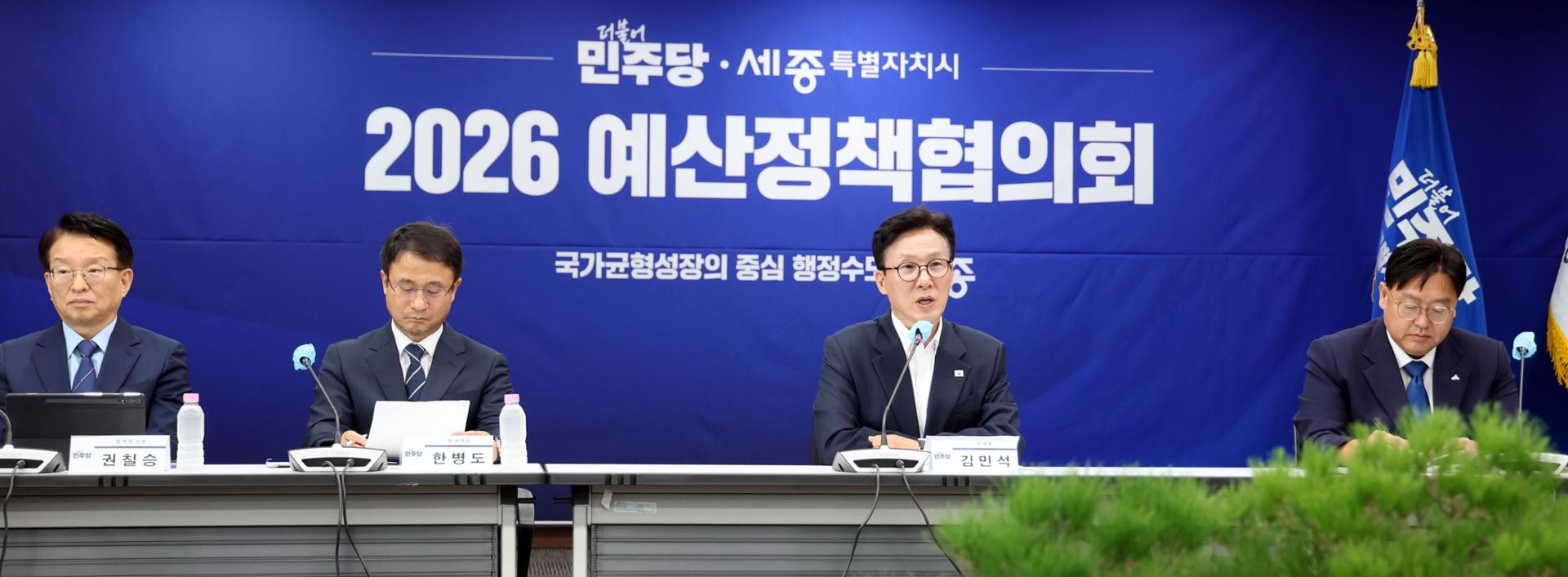
Kim Min-seok, chairman of the ruling Democratic Party of Korea, speaks at Sejong City Hall, Wednesday, one day after the government announced its budget proposal for next year, during a budget policy consultation. Yonhap
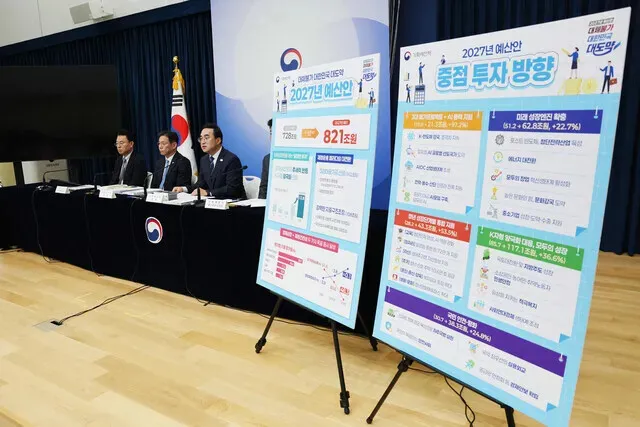
The government has unveiled a budget that deserves more scrutiny than applause. The proposed 2027 spending plan amounts to 820.9 trillion won ($562 billion) — 93 trillion won, or 12.8 percent, larger than this year’s budget. It is the biggest expansion on record.
The government calls it an investment in Korea’s future. The numbers suggest something less reassuring: a government spending spree financed on the assumption that today’s semiconductor boom will continue indefinitely.
President Lee Jae Myung has championed an expanded fiscal role, promising a “productive virtuous cycle” in which public spending raises potential growth, narrows inequality and prepares Korea for the future. At the heart of the plan is a new 162.3 trillion-won Future Response Fund, supposedly designed to channel resources into strategic industries and emerging technologies.