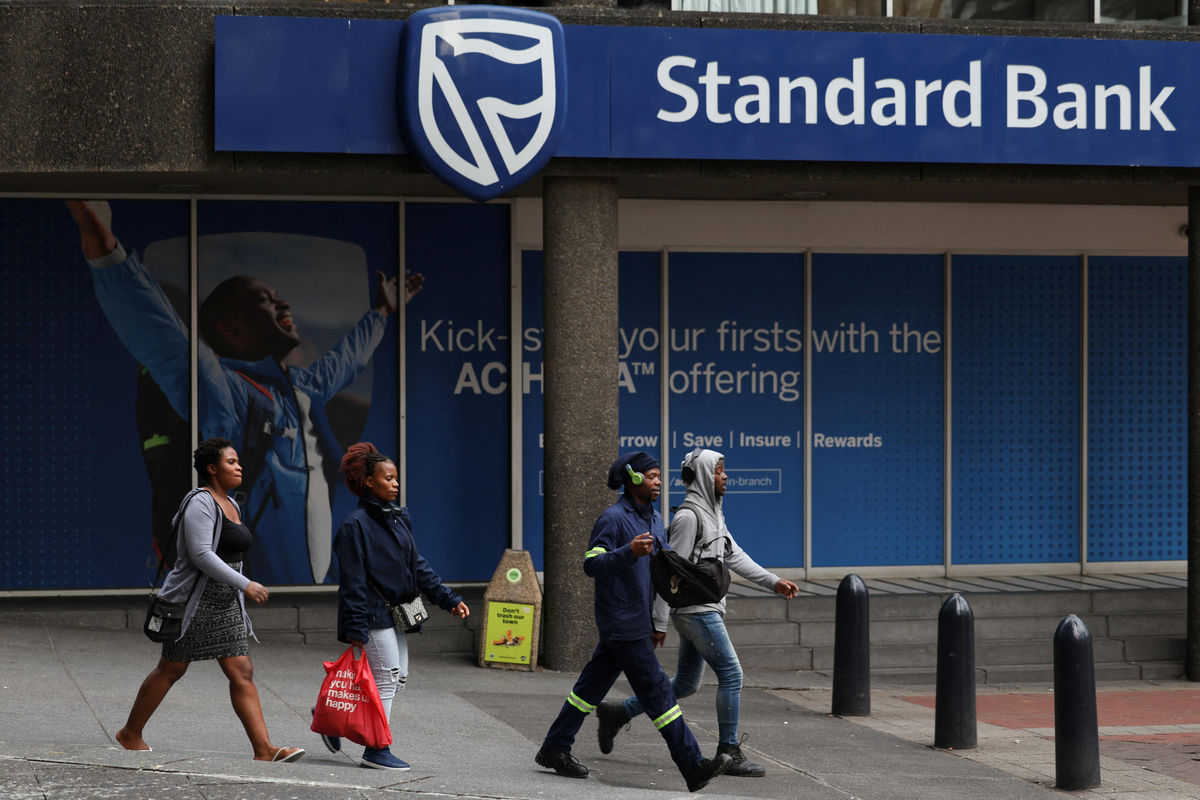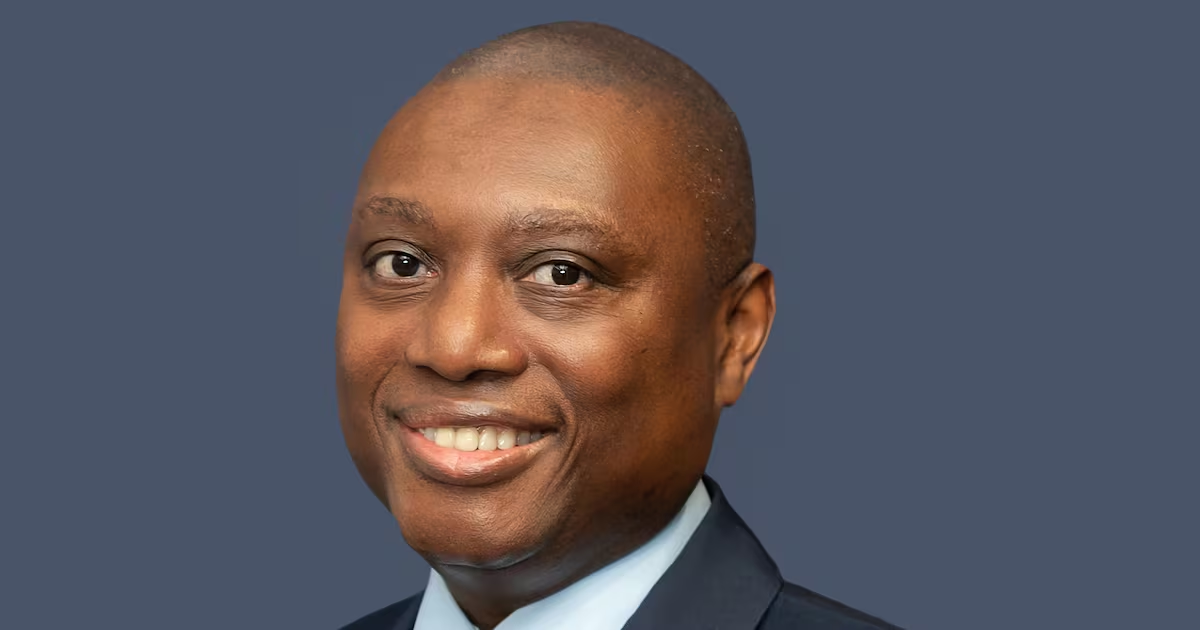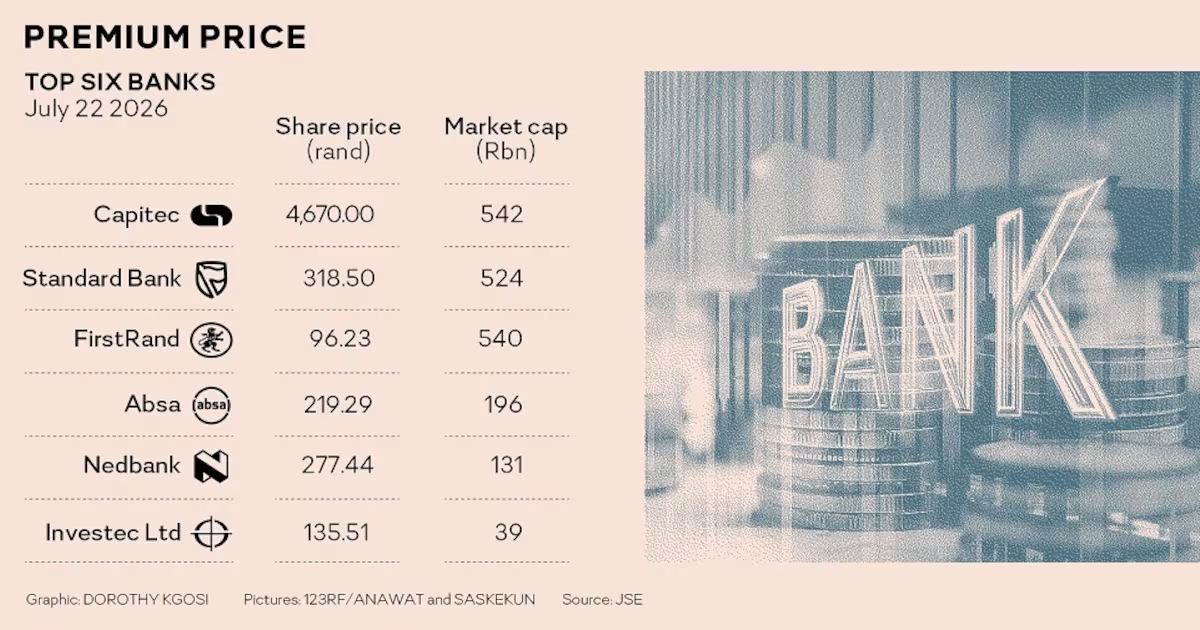
Three of South Africa’s largest banks — Standard Bank, Absa, and Nedbank — have recently reported their results, with their domestic operations showing strong performance despite a sluggish economic performance.For Standard Bank, its South African franchise delivered R13.4bn of the record interim profit of R26bn reported by the group, which has a presence in 20 countries outside South Africa.Group CEO Sim Tshabalala attributed the strong performance of the South African franchise to the improved economic outlook following several years of underperformance — explicitly crediting South Africa’s structural reform initiative, Operation Vulindlela, for driving tangible growth.The same theme ran through the interim results of Absa and Nedbank. For Nedbank’s Jason Quinn, South Africa’s improving economic outlook is supported by a more credible fiscal path, structural reforms and recent credit rating upgrades, with the country’s investment appeal “remaining intact despite global uncertainty”.The evidence is clear: the painful work done by the National Treasury to rein in spending and set forth a credible path to restoring fiscal health, alongside the results emanating from government and business partnerships on accelerating reforms, is bearing fruit.Nothing illustrates the effectiveness and importance of Operation Vulindlela better than the experience of banks, which are the heart and brain of the economy, channelling savings into productive investments, supplying vital credit and managing the daily payment networks that keep commerce moving.However, the progress made by Operation Vulindlela will amount to nought if unemployment remains high and South Africa’s industrial base is hollowed out.Private sector fixed investment remains subdued, constraining economic growth momentum. Another key concern is the persistent weakness in research and development (R&D) investment, which is critical for innovation, productivity growth and long-term competitiveness. Significant spending on R&D is not a nice-to-have; it is a critical enabler to enhance competitiveness, encourage innovation and support sustainable long-term growth given the rise in global protectionism, rapid technological advancement and the strategic need to expand high-value manufacturing exports.It is these two levers — ramping up fixed investment and renewed vigour in investing in R&D — that will ultimately put the economy on a higher growth trajectory.Operation Vulindlela has built the momentum; the next challenge is to consolidate its gains and accelerate the re-industrialisation of South Africa’s economy.For this to happen, we need a coherent and inspiring industrial policy that will attract the requisite fixed investment needed to get the economy on a higher growth trajectory. This is unfortunately missing in the revised industrial plan announced in June, which reads good on paper but lacks substance.The fact is that the continued weakness in fixed investment raises concerns that economic growth will remain driven primarily by consumption rather than by the expansion of productive capacity. This is illustrated by manufacturing registering a trade deficit of R310bn in the first months of the year.The sustained weakness in productive assets limits the economy’s ability to upgrade industrial capabilities, deepen domestic value chains and increase value addition.An economic review conducted by the Industrial Development Corporation (IDC) correctly warns that without “recovery in private-sector investment, particularly in machinery, equipment and industrial upgrading, South Africa risks further deindustrialisation, rising import dependence and slower productivity growth”. The lofty plans contained in phase three of the government and business partnership to accelerate inclusive growth and grow GDP by more than 3% by 2030 are commendable.But more emphasis should be placed on rebuilding South Africa’s industrial base at scale. Banks, like its many partners in the private sector, have a key role in improving fixed investment. This can and should be done, with both the private and public sectors throwing their enormous weight into the effort.Business Day
EDITORIAL | Banks love Operation Vulindlela, but where is fixed investment?
Despite improved outlook, private sector investment and R&D remain critical gaps
595 words~3 min read