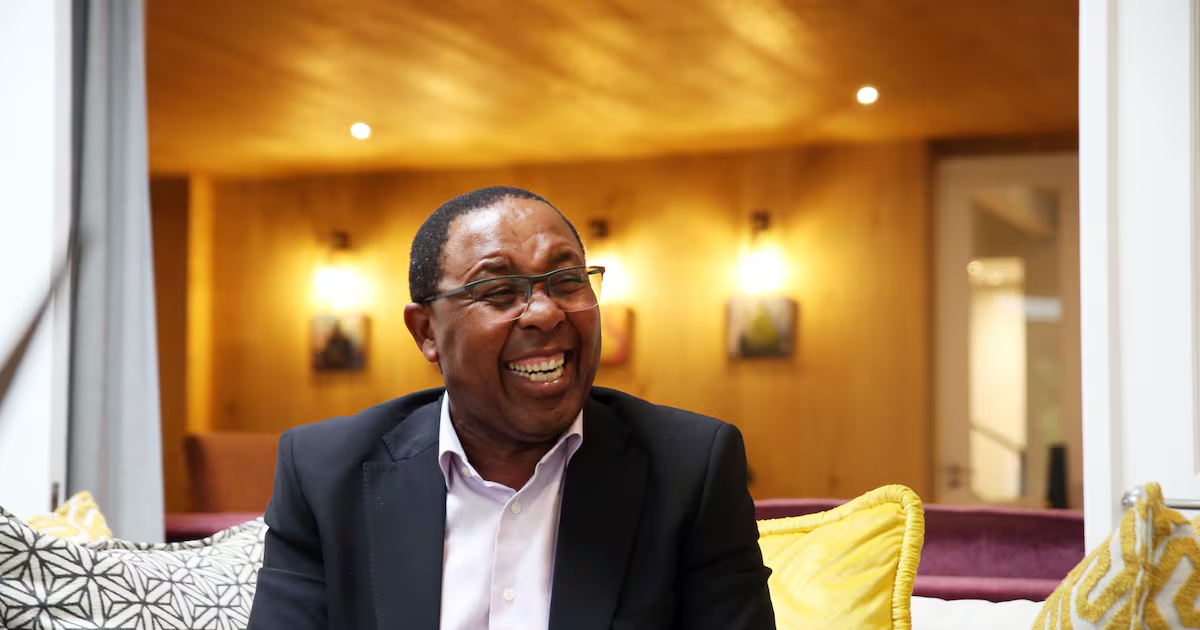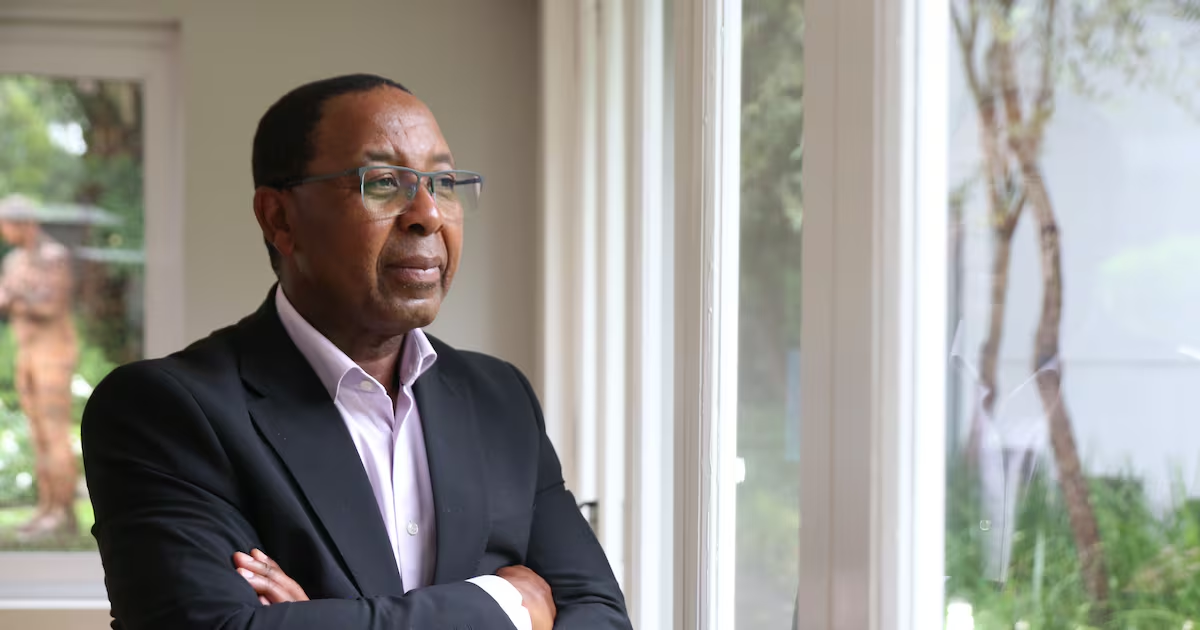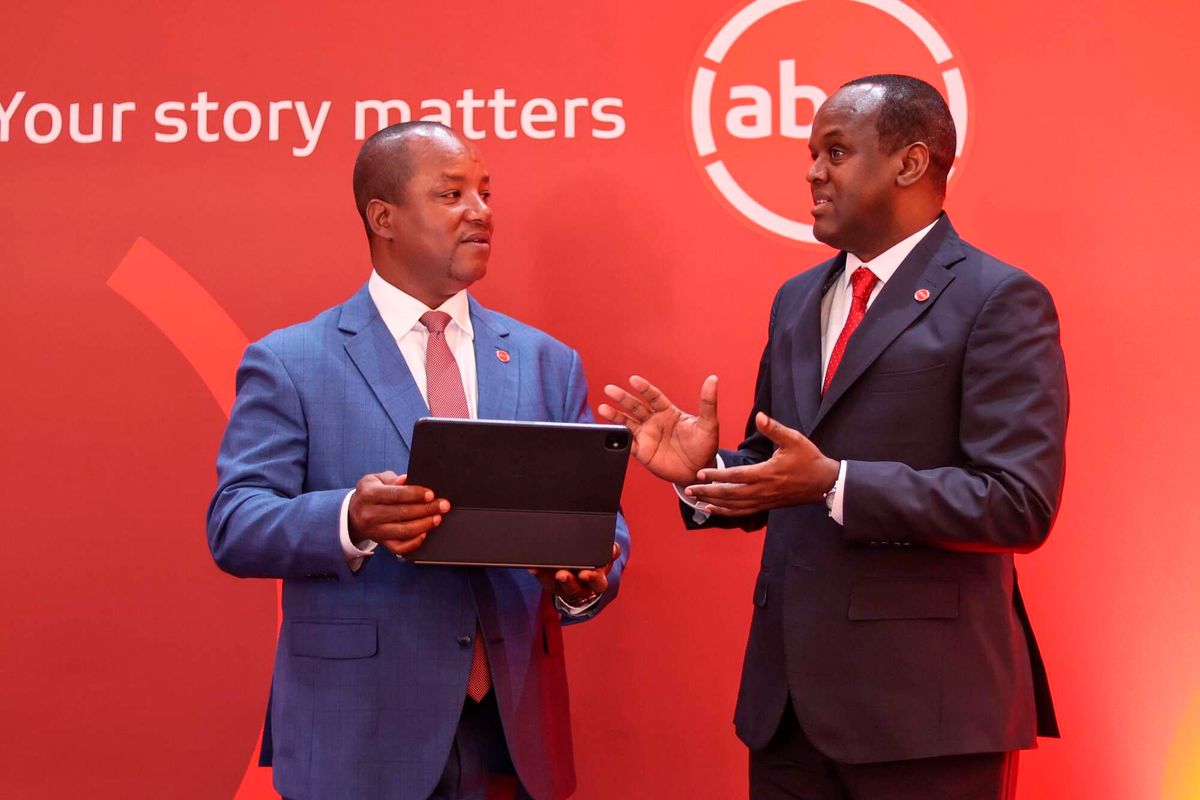
Absa has acknowledged leaving a lot of money on the table — allowing rivals, particularly Standard Bank, to have a dominant pan-African position, powered by its corporate and investment banking (CIB) juggernaut.The inspired hire of Kenny Fihla as Absa group CEO a year ago has certainly injected new energy into the once sleeping giant of South African banking.A careful inspection of Absa’s growth blueprint resembles that of the one hatched in the corridors of Standard Bank years ago — a plan that saw its CIB proposition amass R1.5-trillion in assets.To put this in context, Standard Bank’s CIB asset base is nearly equal to Nedbank’s group assets of R1.6-trillion. Fihla played a key role in Standard Bank’s CIB growth. During his tenure as the unit’s CEO, which stretched from 2017 to 2024, it doubled profit to R20.4bn, at a compound rate of 8.6%.In his role as Absa CEO, after his surprise exit from Standard Bank in 2025, Fihla has turned to his erstwhile CIB lieutenants to drive Absa’s growth.Chief among them is Zaid Moola, who left his role as head of Standard Bank’s global markets business — a key cog in the CIB business armour — to follow Fihla to Absa . Moola, who has assumed the role of CEO of Absa’s CIB business, opened up to Business Times on what informed his decision to cross the floor.“The move ... was driven by the opportunity to help shape and scale a distinctly Pan-African corporate and investment banking business at an important point in its growth journey. Absa has a strong continental footprint, deep client relationships, and a clear ambition to build a leading CIB business with sustainable scale and stronger returns,” Moola said.“What has stood out since joining CIB is the openness to transformation and the willingness to evolve the business around client needs. The culture is increasingly very client-centric. There is also a strong recognition internally that the next phase of growth requires greater agility, sharper sector expertise, and a more integrated approach across markets and products.Absa has a strong continental footprint, deep client relationships, and a clear ambition to build a leading CIB business with sustainable scale and stronger returns.— Zaid Moola“Like any transition, there are differences in operating models and ways of working, but those are outweighed by the opportunity to help build a modern Pan-African platform that combines African connectivity with global relevance. The focus now is firmly on execution, client outcomes, and disciplined growth.”Absa has identified a few regions on the continent where it plans to win big: East Africa, along with room for growth in Uganda, Tanzania, and Zambia.Moola’s appointment was followed by a flurry of top talent, mainly from Standard Bank, filling the ranks of Absa’s CIB unit.Musa Motloung was appointed as group strategic risk officer, also joining from Standard Bank, where he was chief risk officer in CIB. Avikaar Ramphal joined Absa as its head of strategic risk from Standard Bank, where he was portfolio head, strategy enablement, in CIB.Clive Potter, erstwhile head of client coverage in South Africa for Standard Bank CIB, joined Absa as the managing executive for client coverage in CIB. Absa also prised away the head of legal at Standard Bank CIB, Francisco Khoza, as its deputy general group counsel.The group has looked beyond Standard Bank for talent too, though. It hired Deutsche Bank’s South Africa head Saloshni Pillay to lead its investment bank and Rothschild and Co’s Giles Douglas as managing executive of its investment bank. Erstwhile Land Bank CEO Themba Rikhotso joined the CIB business to head transactional banking. In December, Fihla outlined the group’s growth blueprint, predicated on four pillars: customer-led growth, building a diversified pan-African business, driving excellence and pursuing new growth opportunities.At the heart of the strategy rejig is the lender’s need to wean itself off dependence on South Africa, Kenya, and Ghana for earnings.Moola outlined the business’s bold growth target: “Our primary ambition is to double CIB revenues and secure a top-two share of wallet across Pan-African sectors. Our primary focus will be on high-growth sectors and a client-centric approach to drive the increase in the scale of our business.“Our strategy is to lead more deliberately with advisory capabilities to deepen relationships and position CIB earlier in the client decision-making cycle. We are also strengthening collaboration between coverage, investment banking, and markets teams across regions to deliver more integrated cross-border solutions.”Absa’s CIB revenue for the 2025 financial year came in at R37bn, implying a growth target of R74bn. The unit reported profit of R13bn — still miles from the R25bn earnings reported by Standard Bank in the same period. Standard Bank is not about to hand its leadership position on a silver platter to its rivals. The lender’s CIB business, led by Luvuyo Masinda in March, outlined plans to grow its revenue to R100bn by 2028 — R25.6bn more than the R74.4bn it reported in 2025.Other players, Rand Merchant Bank, Investec, and Nedbank are all upping their CIB game to capture the massive opportunity the continent presents.Nedbank’s CIB franchise, led by Anél Bosman, recently showed its hand, leading the $700m [R11.4bn] debt financing deal for Ivanhoe Mines’ Platreef Mine — the biggest South African mining investment in a decade.Investec is also pushing to expand its CIB market share across the rest of the continent, citing economic and population growth prospects after its biggest portfolio restructuring.The Anglo-South African lender has tasked Dhiren Mansingh to lead its CIB business as part of a major restructuring.
CIB power play: Absa aims high
Absa plans to dominate corporate and investment banking on the continent after poaching Standard Bank staff
910 words~4 min read