Story audio is generated using AI
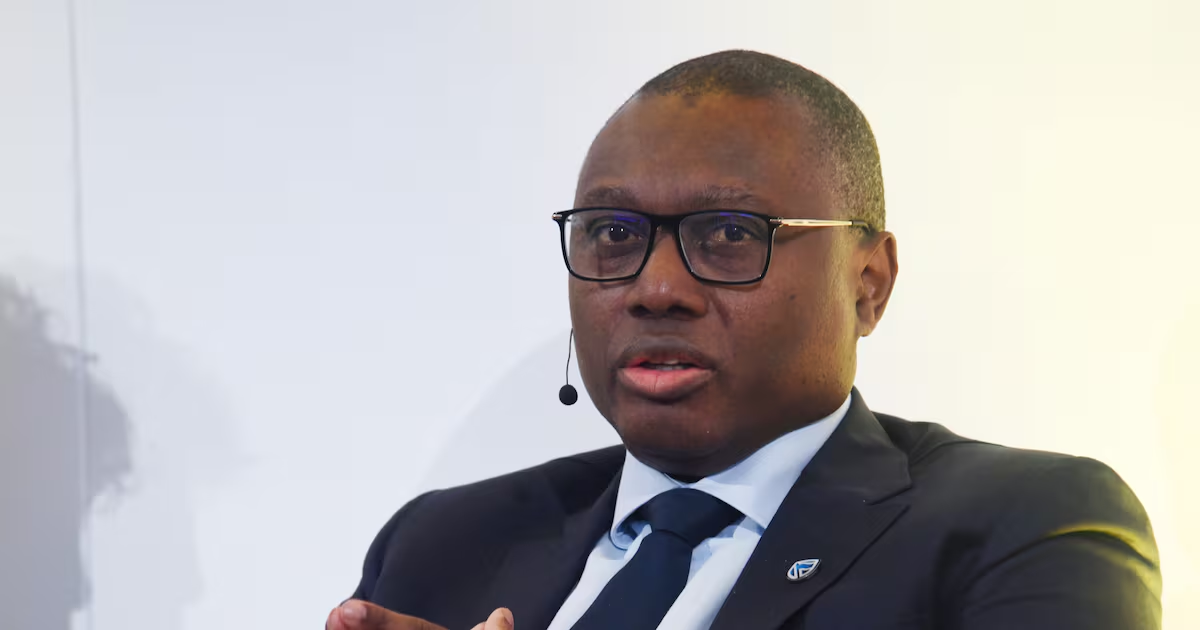
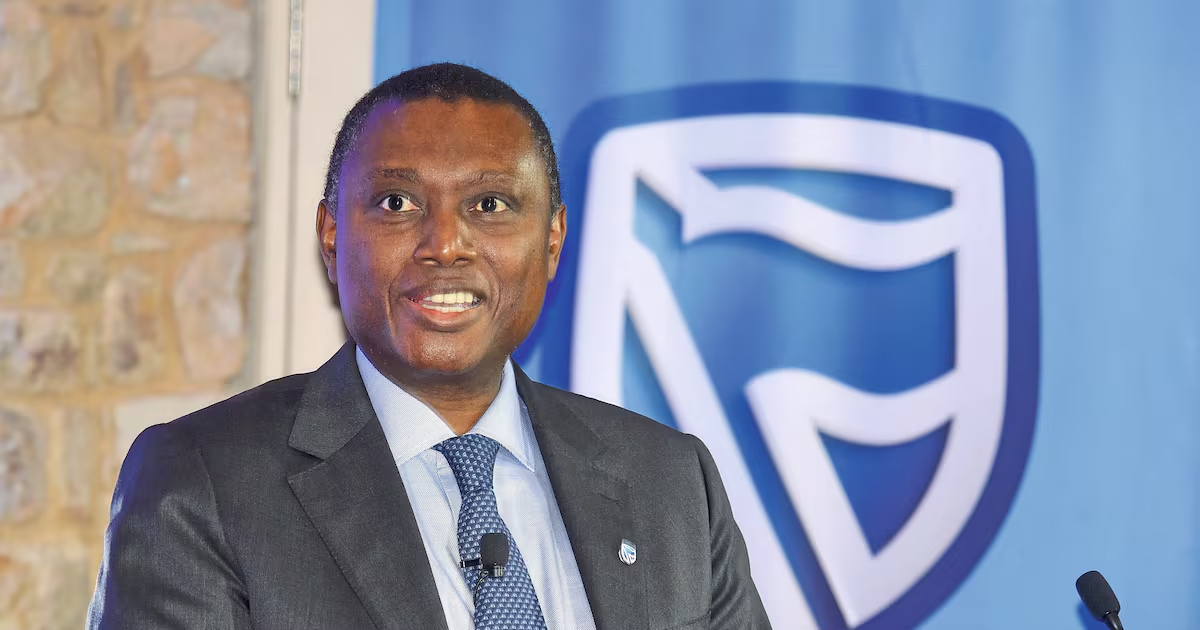
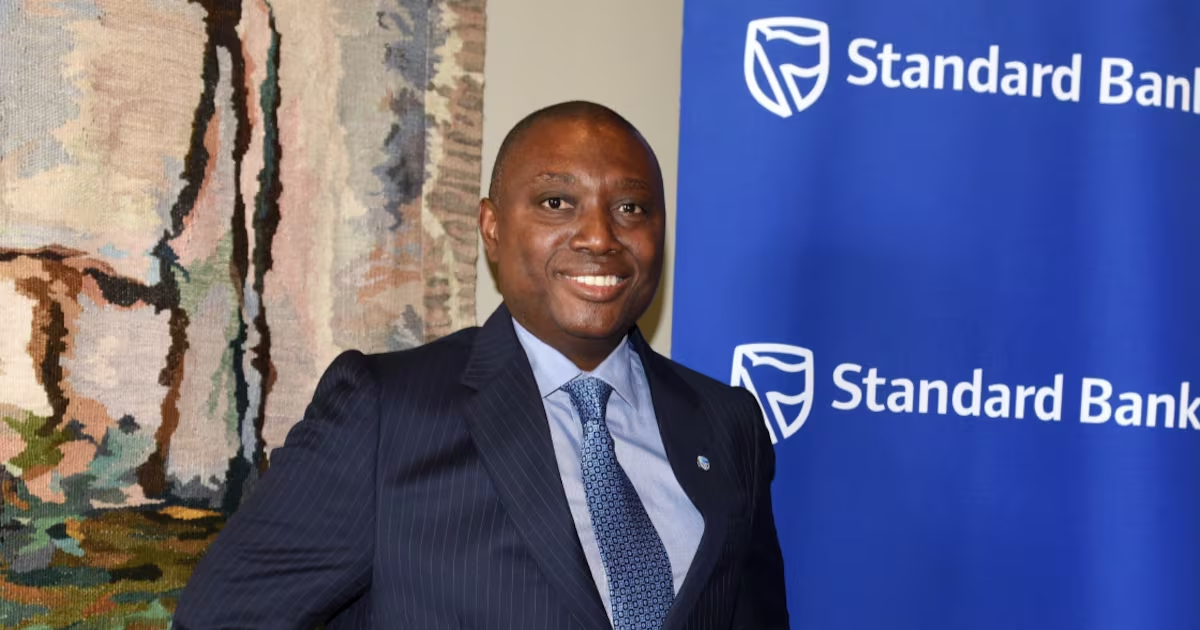
Reforms in rail, power and telecoms were a major tailwind for Standard Bank’s South African operations, which recorded higher profits during the six months ended June 2026.“South Africa was the hero in our results. The South African operations performed significantly to such an extent that they now make up 51% of our group,” Sim Tshabalala, Standard Bank CEO, told Business Times on Thursday.Standard Bank of South Africa contributed R11bn to the group’s headline earnings, up 14%, with a return on equity of 16.3%, with improvements in personal and private banking, business and commercial banking (BCB), insurance and asset management, and corporate and investment banking (CIB).The corporate and business sectors were the fastest-growing parts of the lending book, with clients borrowing to make investments.“It’s people raising money to buy trucks, pay for cement, build factories, retailing factories, for manufacturing purposes, and so forth. In terms of business activity, those are what the facts are.“Now, that does not seem to me that people are not investing. It looks to me like they are. Those people are mining houses, manufacturers, people building infrastructure, and so forth,” Tshabalala said. He said private-sector credit extension had grown fastest in the corporate sector in recent months, while the fastest-growing parts of the bank’s balance sheet had been CIB and BCB. “That has been driven in large measure by many of the structural reforms off the back of operations, including electricity, the ports, logistics, telecoms. Remember there was the spectrum auction, then people needed to pay for their licences, they needed to pay for fibre and so forth. That activity has given rise to much of that growth.” WATCH | Sim Tshabalala on Standard Bank’s record interim earnings:Standard Bank economists expect South Africa’s economic growth to be roughly 2.8% by 2028 and, depending on the success of Operation Vulindlela, it could grow even faster, Tshabalala said.“So what you’ve got, as a result, is faster growth over a large base relative to other countries on the continent, and if that happens, South Africa is definitely a game changer.”While Standard Bank’s cash cow has been the CIB business, Tshabalala said the bank would continue to grow organically by allocating capital to the fastest-growing parts of the business. Asked about plans to grow personal and private banking, he said the bank would continue to look for opportunities to buy and to partner.“Each of those opportunities must meet several criteria, as you would imagine. The cost has to be right because it’s not appropriate to overpay. The risk has to be appropriate. There has to be the right culture fit — then we will buy or partner,” he said.Tshabalala declined to comment on speculation about a possible partnership with retailer Pepkor to launch a retail bank.He said Standard Bank talks to a slew of potential partners — including retailers, telcos, fintechs and other banks — to look for opportunities to partner with them where they do something better than the bank.“We learn, we partner, we share resources, whether it be distribution capability or product manufacturing capability.” Standard Bank unveiled targets for 2026-2028, including revenue growth of 7% to 10% a year and ROE of between 18% and 22%.Tshabalala said the bank’s plans to 2028 do not assume acquisitions but are based on organic growth. Standard Bank’s personal and private banking division made R4.6bn during the period, down 1%, but its South African operations were up 12%.The personal and private banking division grappled with challenges in its African regions and offshore operations. Headline earnings fell by 31% as currency, particularly in East Africa, coupled with macroeconomic challenges in Botswana and Mozambique presented major headwinds. Headline earnings in offshore operations were down 23%.Currency challenges, particularly in East Africa, coupled with macroeconomic challenges in Botswana and Mozambique, contributed to challenges in personal and private banking.Standard Bank became Africa’s first bank to transact in Chinese yuan for Chinese exporters sending goods to Africa, as the continent strengthens its trading corridors with the EU, the US and the Far East.“Our job as a bank is to facilitate the payment and the investment made by clients — whether they be importers or exporters — in a way that is cheap and has the least amount of friction,” Tshabalala said.“By having the privilege of being a renminbi clearer, it puts us in a position to be able to provide our clients with cheaper and more efficient methods of payment. It’s all about what is in the best interest of these clients.”Standard Bank, Africa’s biggest lender by assets, lost talent following poaching from Absa, but it had managed to meet its targets.The bank delivered ROE of 19.8%, in line with its 18%-22% target range. The group’s shareholder value added was the largest in the industry.The group maintained guidance to the market to continue with a dividend payout ratio at the top end of the 45%-60% range, with revenue growth in the mid to high single digits.Business Times