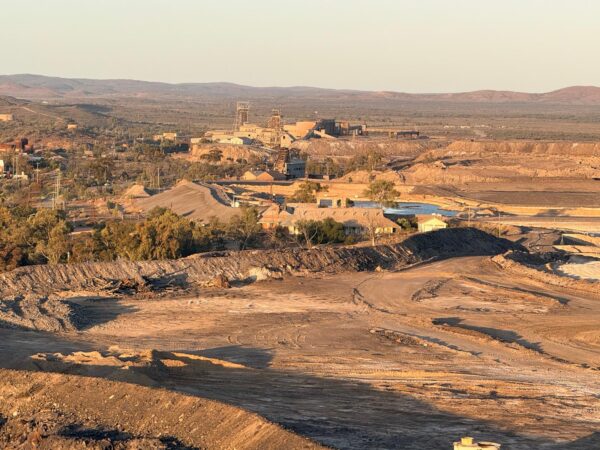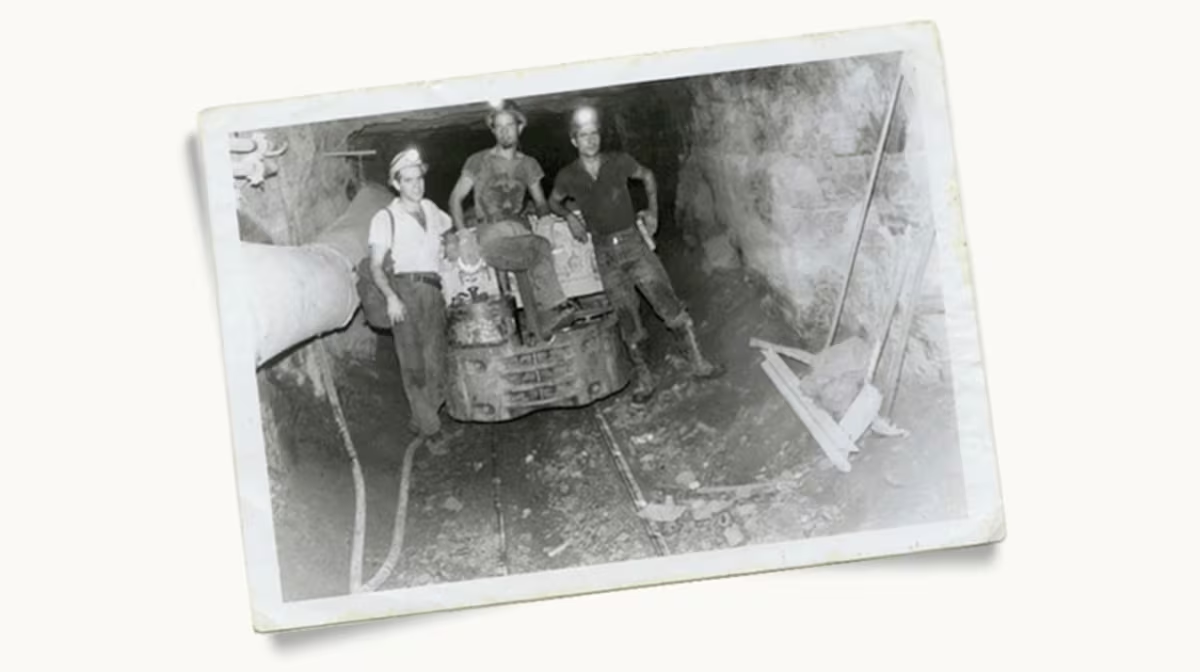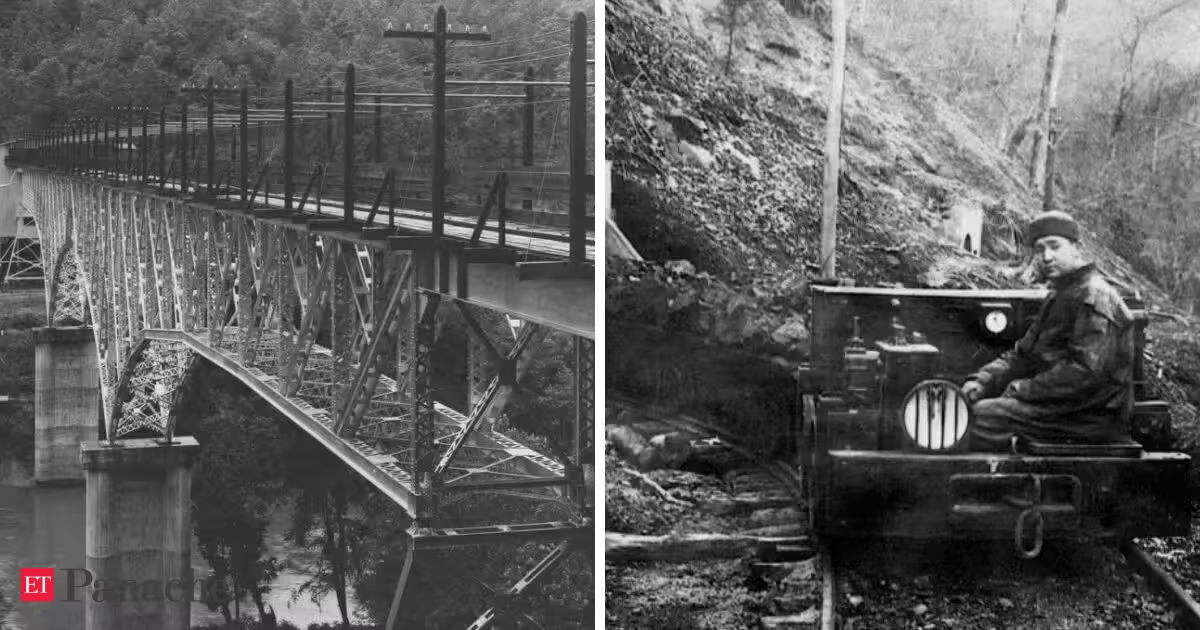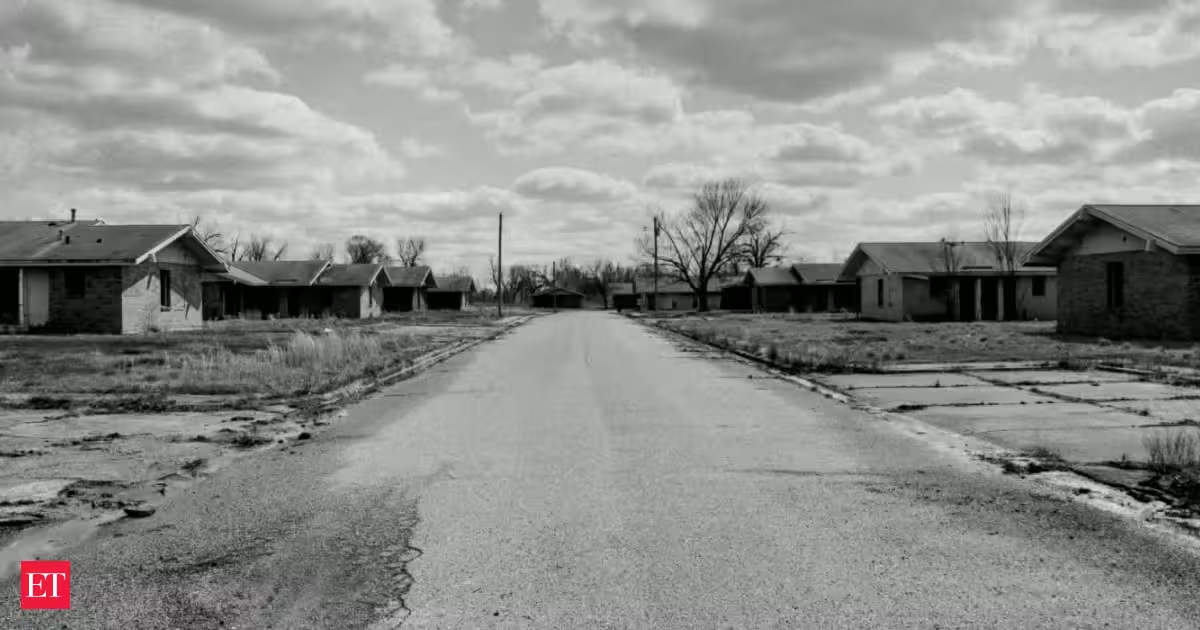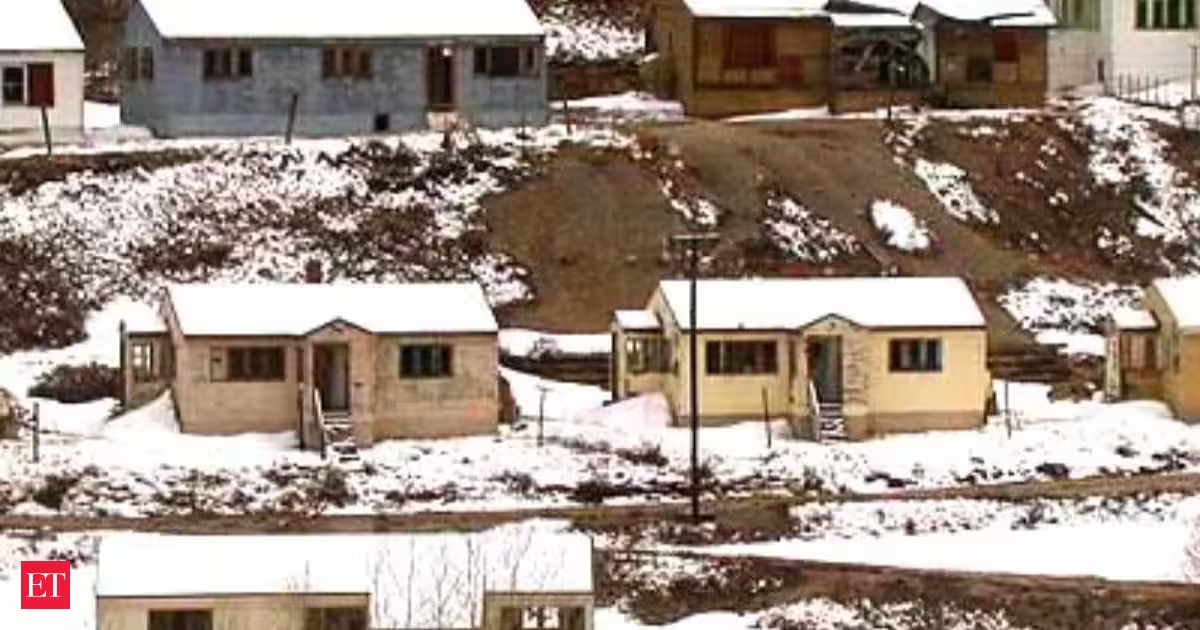
Sitting atop a cliff in the Colorado Rockies is a town that, viewed from a distance, appears inhabited. It has its houses standing. There hasn't been any demolition of the school building or the gas station. However, nobody has lived in Gilman, Colorado, since 1984, and it is not because of any of the ghost town stories that have been associated with the exhaustion of the mine or the evacuation of all of its inhabitants.In fact, Gilman had been evacuated because of the danger the place posed on its residents due to the federal decree. As reported by the Eagle Mine Superfund Site Profile by the U.S. Environmental Protection Agency, the mining process that had been going on there for decades had contaminated the area with toxic heavy metals, such as cadmium, arsenic, copper, lead, and zinc.A boomtown that outgrew its own logicThe history of Gilman begins in 1886 when John Clinton, a prospector and judge from nearby, established a mining camp on Battle Mountain. The camp took his name, Clinton, until 1886, when it received its first post office and was renamed Gilman, after Henry Gilman, the well-liked superintendent of the nearby Iron Mask Mine. The silver rush attracted people quickly: 1885 and 1886 were Gilman's boom years, when the camp's population may have swelled past 1,500, with a school, hospital, bowling alley and even a newspaper of its own, essentially when an entire city squeezed onto a mountainside sitting roughly 8,951 feet above sea level.Abandoned houses and the old mine in Gilman visible. Image credits: WikipediaFrom 1912 to 1915, the New Jersey Zinc Company (operated through its subsidiary Empire Zinc) acquired the surrounding claims and combined them into what would become Eagle Mine. It also purchased the town itself and operated Gilman as a company town, meaning that the company that owned your job also owned your house, your store, and increasingly, your future.The town nobody really got to vote onWhile there are many references to company towns that tend to paint them in an idealistic light within “good ol’ days” nostalgia stories, Gilman’s story provides a more complex account of that time. According to a 2025 feature about Gilman’s history in the Denver Gazette, which is based on the University of Colorado Denver thesis paper "The Model Company Town and the Orange Stain" by Gregory Brill, the seemingly idyllic company town reality had a very definite class system, with "uptown" and "lower level" districts divided by people’s jobs at the mine. Brill's research concluded that class division was "a real problem that lurked underneath the image" of an ideal company town, even though former residents themselves mostly recall the town fondly.When the pumps stopped, so did the townThe problems at the mine had become apparent by the late 1970s. Mining operations came to an end in December 1977, while in 1984, though limited silver production continued intermittently for a few more years. In 1983, the mine and townsite were sold to Battle Mountain Corporation. In 1984, with the mine's finances faltering, the dewatering pumps that kept the shafts dry were shut off, and the mine began to flood, triggering an EPA emergency response and, that October, a proposal to add the site to the Superfund program's National Priorities List.In the spring of 1985, Battle Mountain Corporation evicted the town's remaining residents, and the post office closed for good on April 22, 1986. Two years after the mine's closure, in 1986, the EPA formally added the 235-acre Eagle Mine site, which included an estimated 8 million tons of contaminated mining waste, to the National Priorities ListWhy should this matter As noted in a 2017 EPA news release about the water quality management plans at the Eagle Mine site, despite having a working water treatment plant and 20 years of remediation, the water in the Eagle River does not comply with the state standards for cadmium, copper, and zinc levels each year in March and April. The site is actually in a long-term “operation and maintenance” phase, and not a completed one.Gilman's cliff-top setting above the Eagle River. Image credits: Wikimedia CommonsGilman is one of more than a thousand Superfund sites the EPA currently lists nationwide, and none of the communities living near them had any input when the contamination occurred. The houses still stand behind the "no trespassing" signs, the river still isn't fully clean, and the company that built the town has long since moved on.
In 1886, Gilman grew from a mining camp into a Colorado mining town; after contamination concerns in 1984, remaining residents were removed in 1985
Discover the haunting history of Gilman, Colorado, a once-thriving mining town now abandoned due to toxic contamination. Explore its legacy as a Superfund site and the ongoing environmental challenges.
739 words~3 min read