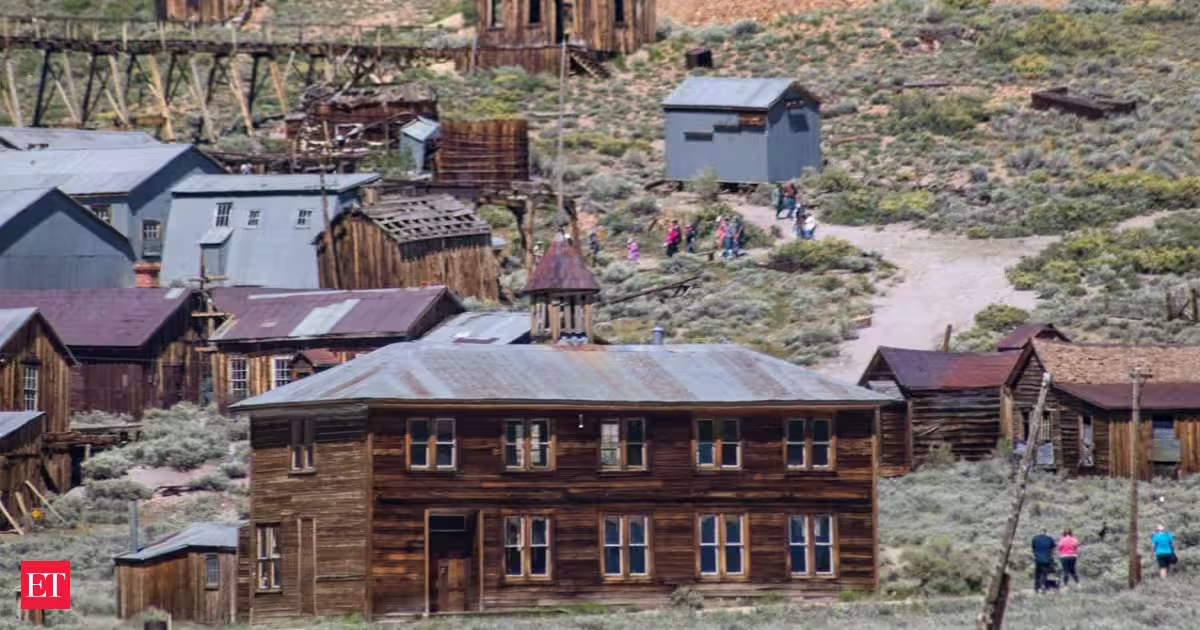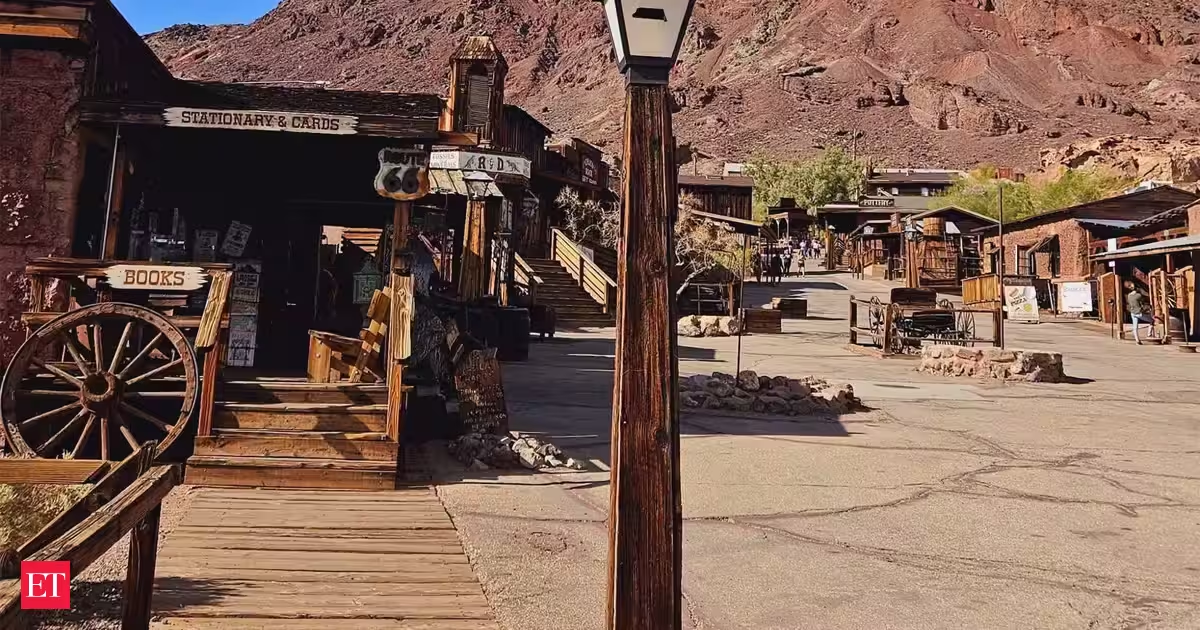
In the late 19th century, Calico was far from the quiet desert attraction it is today. The California town sprang to life after prospectors discovered silver in the surrounding mountains in 1881. Within a few years, miners, merchants and families had turned the remote settlement into a bustling Old West community. At its peak, Calico had nearly 3,500 residents, saloons, a schoolhouse, a post office, and a newspaper. But the boom depended heavily on silver, and when the metal lost value in the 1890s, Calico's fortunes changed dramatically.Calico's story began on April 6, 1881 in the Mojave Desert of Southern California, when prospectors discovered silver in the mountains and established the Silver King Mine. The discovery attracted miners and entrepreneurs to the area, quickly creating a settlement around the growing mining industry. The town expanded rapidly. Calico eventually had around 500 mines, according to San Bernardino County's Regional Parks Department. Over a 12-year period, those operations produced more than $20 million in silver ore.Despite its isolated desert location, Calico developed many of the features associated with a growing American town. Its growing importance was reflected in the establishment of its own sheriff and courthouse. Mining also generated wealth beyond silver. Over several decades, Calico's mines produced an estimated $86 million worth of silver and about $45 million worth of borax, according to San Bernardino County.Calico's greatest strength was also its weakness: the town's economy depended heavily on mining. When silver lost value in the mid-1890s, the economic foundation of the community began to collapse. Miners left in search of better opportunities, businesses lost customers and the population steadily declined. Calico became a thriving silver town from 1881 through the late 1890s, with its population falling as silver lost value. The change was striking. A community that had grown rapidly around the promise of silver could no longer support the same population once mining became less profitable. Although Calico eventually became a ghost town, its story did not end there.Walter Knott, the founder of Knott's Berry Farm, purchased the town in the 1950s and began restoring it based on photographs from the 1880s. He restored all but five of the original buildings. In 1966, Knott donated Calico to San Bernardino County. Today, Calico is part of the San Bernardino County Regional Parks system. Visitors can explore historic buildings, mining exhibits and other attractions while experiencing a recreation of the town's Old West appearance. In 2005, California designated Calico as the state's Silver Rush Ghost Town.Calico's history is a powerful reminder of how quickly a boomtown can rise - and how quickly it can fade. Silver transformed a remote stretch of the Mojave Desert into a bustling community filled with miners, families and businesses. For about a dozen years, the town's silver industry generated enormous activity and wealth. But when silver lost its value, the economic engine that supported Calico began to fail. People moved away, businesses disappeared and the once-busy settlement became a ghost town.Yet Calico ultimately found a second life. Knott's restoration preserved its Old West character, while San Bernardino County turned it into a historic attraction. Today, its weathered buildings offer visitors a glimpse into a remarkable chapter of California's mining past - and a lesson in how fortunes built on a single resource can change almost overnight.
Calico Ghost Town: How a thriving silver town in the Mojave Desert collapsed in just 12 years
Calico, a once-thriving town in California, saw its fortunes rise with a silver rush that began in 1881. Unfortunately, the gold rush faded by the 1890s as silver prices plummeted, causing miners and businesses to abandon the area. In the 1950s, Walter Knott took it upon himself to restore this ghost town. Today, Calico stands proud as a lively historic park, immortalizing its rich mining heritage.
549 words~2 min read