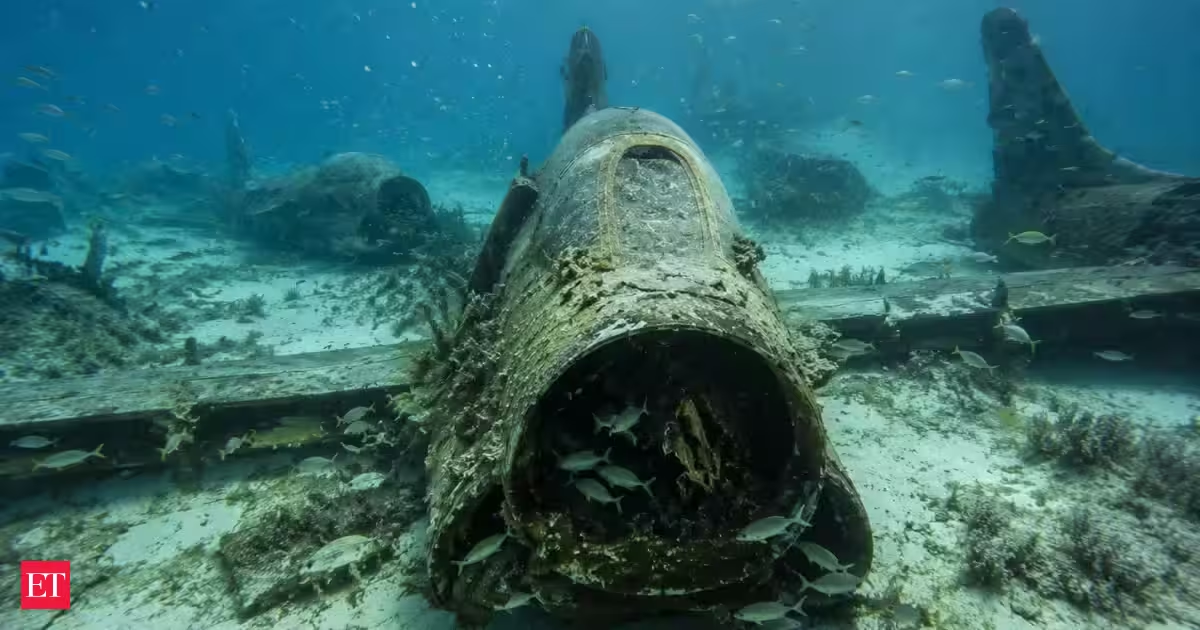
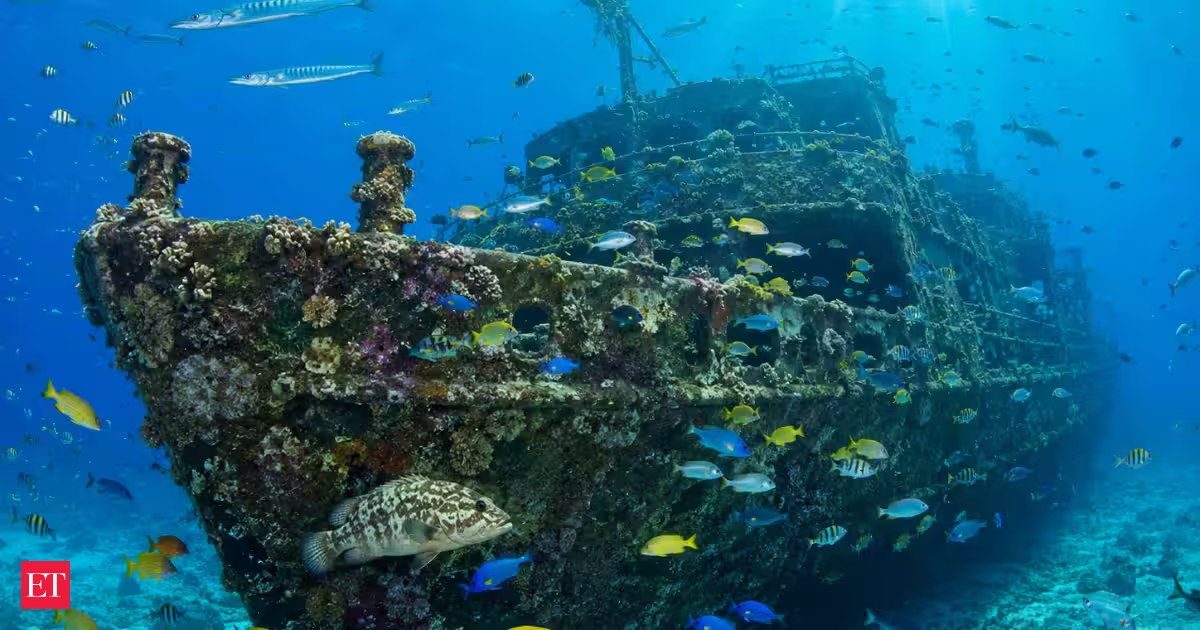
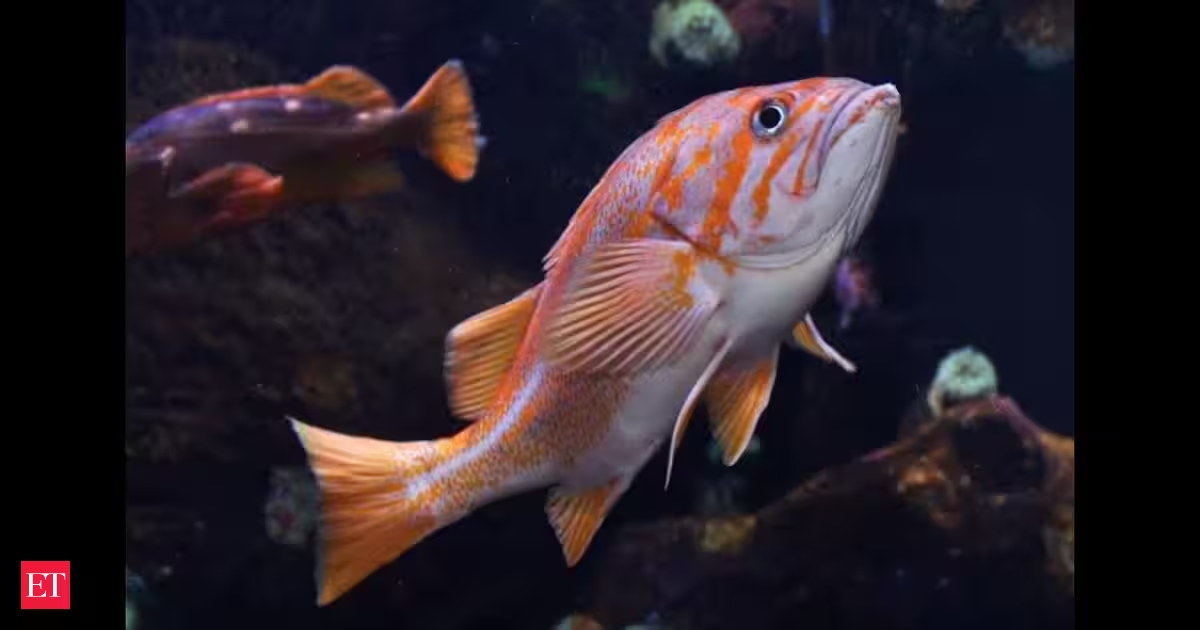
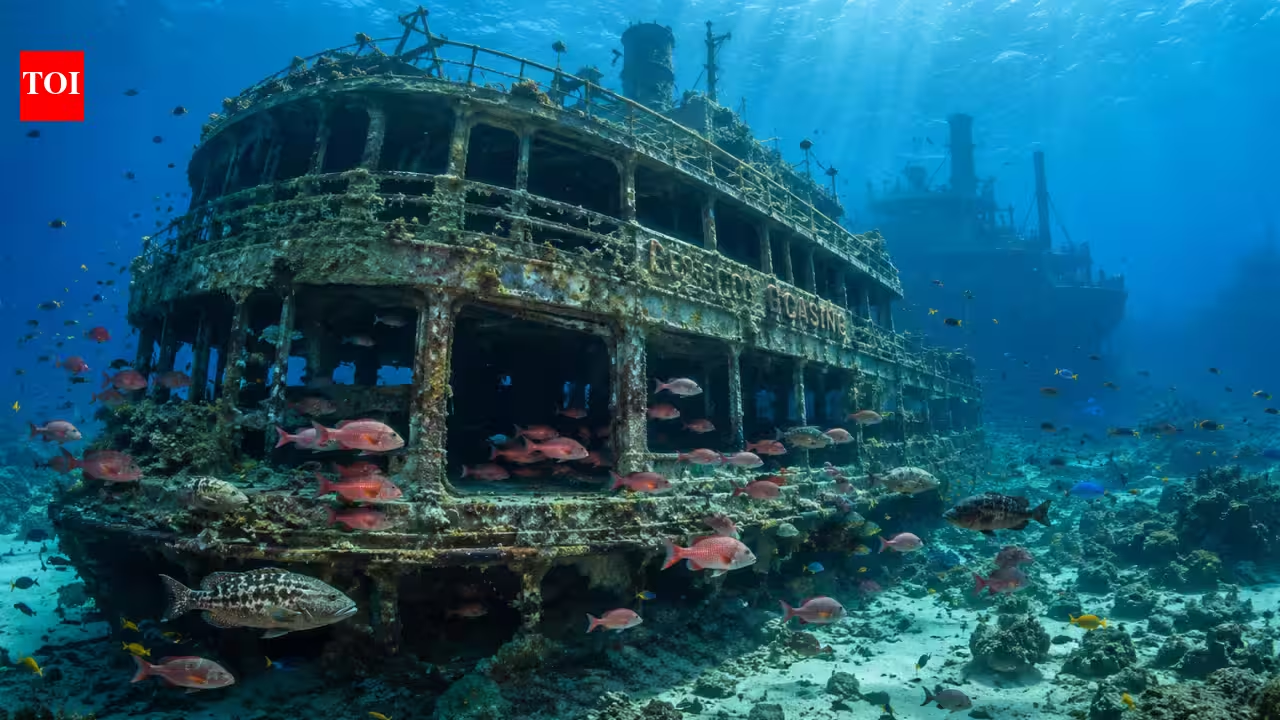
Some of the most compelling conservation stories begin far from the lab. They can come from a diver counting fish 100 feet below the surface with a slate and pencil. In a field report published by the Reef Environmental Education Foundation (REEF) in July 2010, a retired Coast Guard tender called the Spike was sunk off Jacksonville in 2009 to become an artificial reef, according to REEF Board of Trustee member Anna DeLoach. A year later, it was teeming with life.A ship with a second lifeThe Spike was never intended to be a reef. It was a Coast Guard tender that eventually got decommissioned and sunk some 30 miles offshore from Jacksonville at a depth of about 100 feet. Florida has one of the country’s largest and most active artificial reef programs, run by its Fish and Wildlife Conservation Commission, and sinking old vessels for reefs is a common practice there. Before a vessel like Spike goes down, crew typically remove fuel, oil, and other dangerous substances and cut open hatches and interior spaces so the structure is safe for divers to swim through and accessible for marine life to move in and out of. The aim is simple: to provide fish with a solid structure to live on in areas where the natural seabed is mostly flat and sandy, while creating a new site for recreational divers and anglers to explore.Ten days in, barely any lifeREEF divers first visited the Spike just ten days after the sinking, during a regular event known as the Great Annual Fish Count. The report notes the wreck was already home to a small, uneasy group of bottom feeders, including mainly Black Sea Bass and Vermilion Snappers. Six species were spotted. That was expected: a newly sunken ship is bare metal, with no algae, barnacles, or sponges yet growing on it, so larger fish had little reason to gather there.One year later, a very different sceneBy July 17, 2010, the first anniversary of the sinking, the site had changed dramatically. A curious barracuda led the first diver down, followed by hundreds of Atlantic spadefish who accompanied them throughout the dive. Silversides were everywhere around the wreck, fleeing in all directions once great amberjacks started hunting. The ship's superstructure was covered with barnacles, tunicates, sponges, and anemones, which sheltered thousands of small seaweed blennies. Tomtate grunts were found there at all life stages. Black sea bass, vermilion snappers, and red snappers were living under the bow while a polka-dot batfish was walking on the bottom of the sea. This time, the diver observed 16 different fish species, nearly three times the six recorded the year before.One year in, barracuda had claimed the Spike as their own. Image Credits: Wikimedia CommonsIn addition to the Spike reef, the diving team visited another reef constructed with the press box structure of the former Gator Bowl stadium. The report found the reef had nearly the same biomass as the Spike reef but supported even more fish species, including dwarf goatfish, longspine porgy, bank sea bass, and oyster toadfish.Why old steel turns into a buffetMarine biologists Higgins, Metaxas, and Scheibling, in a 2022 study titled ‘A systematic review of artificial reefs as platforms for coral reef research and conservation’ published in PLOS ONE, looked at over 130 studies of artificial reefs globally. They found that greater fish abundance was the most common outcome measured by researchers and reported in more than half of all conservation-focused studies. The logic is straightforward: hard surfaces in open water are colonized by algae and small invertebrates, which attract small fish and, in turn, larger predators. An empty steel hull can be incorporated into a food web in a matter of months.Bigger reefs, richer neighborhoodsSize and structure matter, too. In a 2020 study titled ‘Fish biodiversity patterns of a mesophotic-to-subphotic artificial reef complex and comparisons with natural substrates, ’ Jones, Asher, Boland, Kanenaka, and Weng surveyed a deep-water artificial reef complex off Hawaii with a submersible, recording 68 fish species, and reported that a greater diversity of fish was consistently found on larger and more complex features than on smaller features. A large sunken ship like the Spike provides far more hiding places than a heap of scrap metal, which may help explain why numerous species colonized it quickly.One year is just the opening chapterOne year is only an early snapshot of how a reef develops. The 2024 study, ‘A Decade of Monitoring Reveals a Dynamic Fish Assemblage on a Substantial Artificial Reef in the Texas Gulf of Mexico,’ in Fisheries Management and Ecology, followed fish in a large reefed vessel in the Texas Gulf of Mexico for a period of ten years. The study found that the fish community remained dynamic for several years and did not stabilize until about five years in, while species richness continued to rise over the decade as more reef fish, including hogfish and pufferfish, settled in. So, although the number of species at the Spike reef rose from six to 16 in a year, the community could have kept changing after that.What this means beyond one wreckFor those who scroll past ocean headlines with a shrug, this story is a reminder that recovery is possible, even from something as mundane as a decommissioned government ship. Artificial reefs are no replacement for natural coral reefs and cannot solve overfishing or warming oceans, but they can help marine life return in some areas. Some of the inspiring comeback stories in nature are happening quietly, a hundred feet below the surface.
In 2009, Jacksonville sank the former Coast Guard tender Spike in 100 feet of water; one year later, a REEF diver counted 16 fish species, up from just 6
Explore how the sinking of the Coast Guard tender Spike off Jacksonville created a vibrant artificial reef, boosting fish species from 6 to 16 in just one year and contributing to marine life recovery.
920 words~4 min read