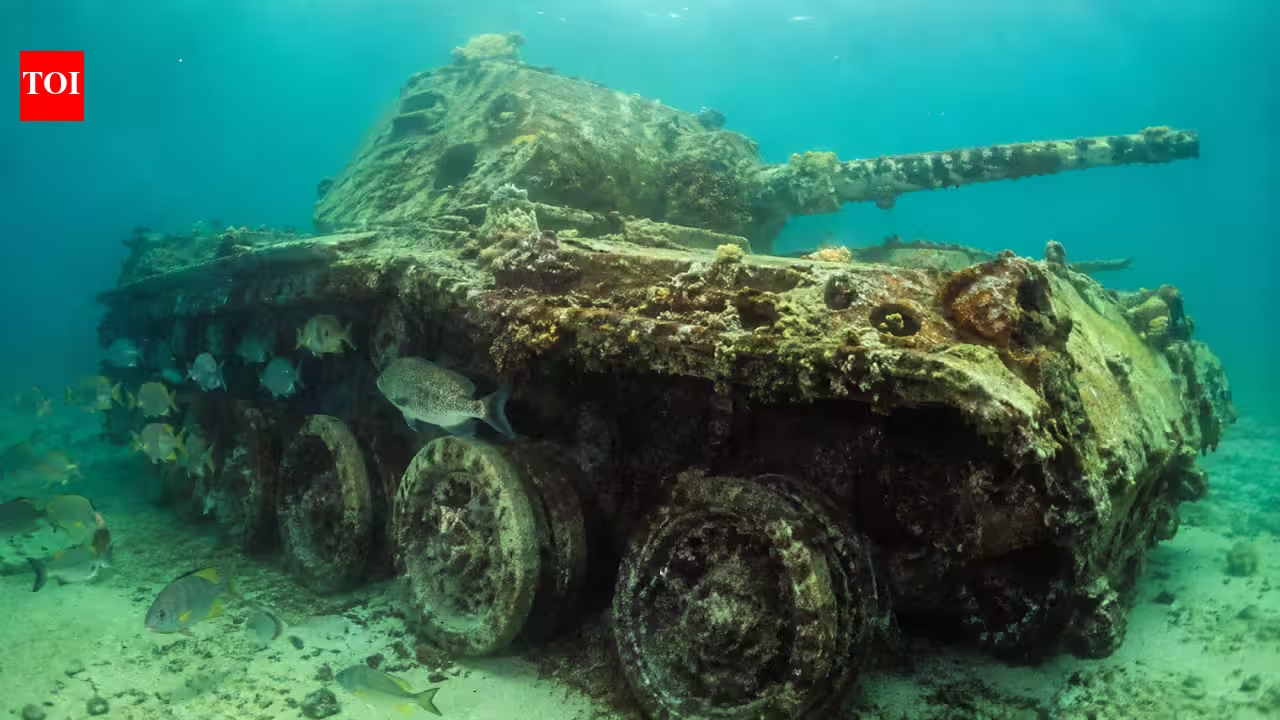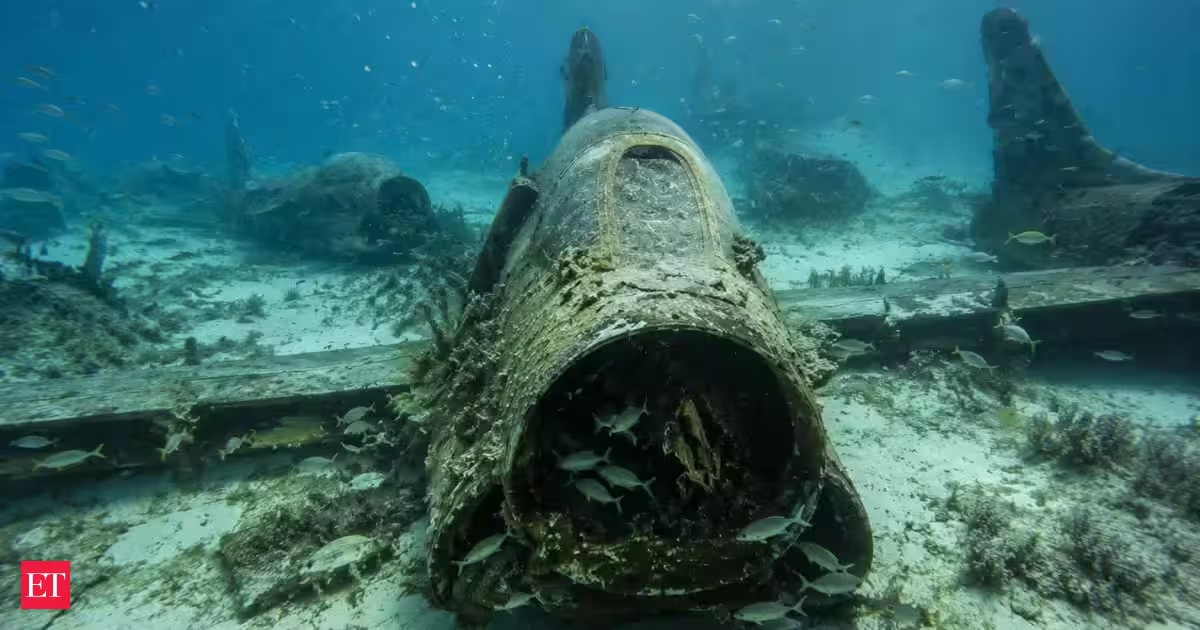
Eight retired A-7 Corsair attack planes and one T-2 trainer are at the bottom of the ocean off the coast of Jacksonville, Florida, where the state dropped them. Not crash sites. Not accidents. A sanctioned dumping operation in 1997 that transformed Cold War-era scrap metal into an artificial fish condo. According to the "Guidelines for Marine Artificial Reef Materials," a 2004 compilation document put together by the Gulf and Atlantic States Marine Fisheries Commissions, retired aircraft are one of the more lasting, if not entirely well-recognized, methods of artificial reef development in the United States.And old Navy planes that have been sunk off the coast of Florida are a textbook case of that strategy working nearly three decades later. After five years of being submerged in water, all those aircraft were still there, fulfilling the very purpose that they had been sunk for: providing barnacle habitat, housing groupers, and making the underwater activity for divers much more exciting than just a sandy floor beneath.Why the ocean floor needed a paint jobThe Florida continental shelf consists of very little but a flat, sandy nothing. There is no coral, no rock ledges, and no structure to hide in or feed around. It is well known to marine biologists that fish do not just magically appear in a water body only because water is present; they require relief, hiding places, and surface area to colonise. The whole idea behind artificial reefs is the towing of some kind of permanent structure, and life appears within hours.An A-7A Corsair from 1964. Image credits: Wikimedia CommonsA 2024 NOAA Office for Coastal Management report on artificial reefs generally, not a follow-up study of the Jacksonville site itself, states that artificial reefs can serve several purposes simultaneously: provide hard bottom in areas where it does not occur naturally; provide additional refuge for juvenile fish; provide a focus for adult fish spawning. The overwhelmingly dominant purpose behind most of the reefs built in the waters of the United States was to improve “recreational fishing.” America has sunk almost all the old ships, subway cars, rubble from bridges, and army tanks. However, the aircraft proved to be a great fit in the junkyard too, primarily because it was constructed of metal that was meant to withstand stress, whereas your average scrapyard sedan certainly wasn't.The part where nobody predicted the fish would show up this fastThe real fascination with the Jacksonville A-7s is not that they sank, as various sorts of things do. What is fascinating is that they stayed right where they were supposed to be. There are constant failures with reefing materials: barges move beyond approved locations, superstructures of ships are torn apart by hurricanes, and inferior metals turn into slag after only a decade. It was notable that eight fighter planes and one training plane had remained right where they had been deployed five years earlier and were actually being fished and dived while others would simply have rusted into oblivion without any fanfare at all.The uncomfortable footnoteHistorically, the disposal of military equipment in the ocean has been accompanied by "baggage," in the form of PCBs, lead paint, fuel residue, and many more pollutants, and for decades, regulators have been trying to reduce that amount of "baggage" that can end up in the ocean. Not to mention how much a 1997 jet would have needed to be cleaned before it was under all that inspection.A T-2 Training aircraft. Image credits: Wikimedia CommonsFish counts are indeed a measure of "success" for the reefs, but they do not establish that the whole process of achieving that was flawless. Yet in a nation with a rugged, under-structured coastline that has been resourceful in its employment of military throwbacks, eight sunken Corsairs performing duty for nearly 30 years are a sort of government recycling that's lived past its paperwork.
In 1997, Florida sank 8 A-7 Corsairs and a T-2 trainer off Jacksonville; 5 years later, all remained in place and were regularly used by divers and fishermen
Discover the fascinating story of how Florida transformed retired A-7 Corsairs and a T-2 trainer into thriving artificial reefs off Jacksonville, providing habitat for marine life and recreational opportunities for divers and fishermen.
637 words~3 min read