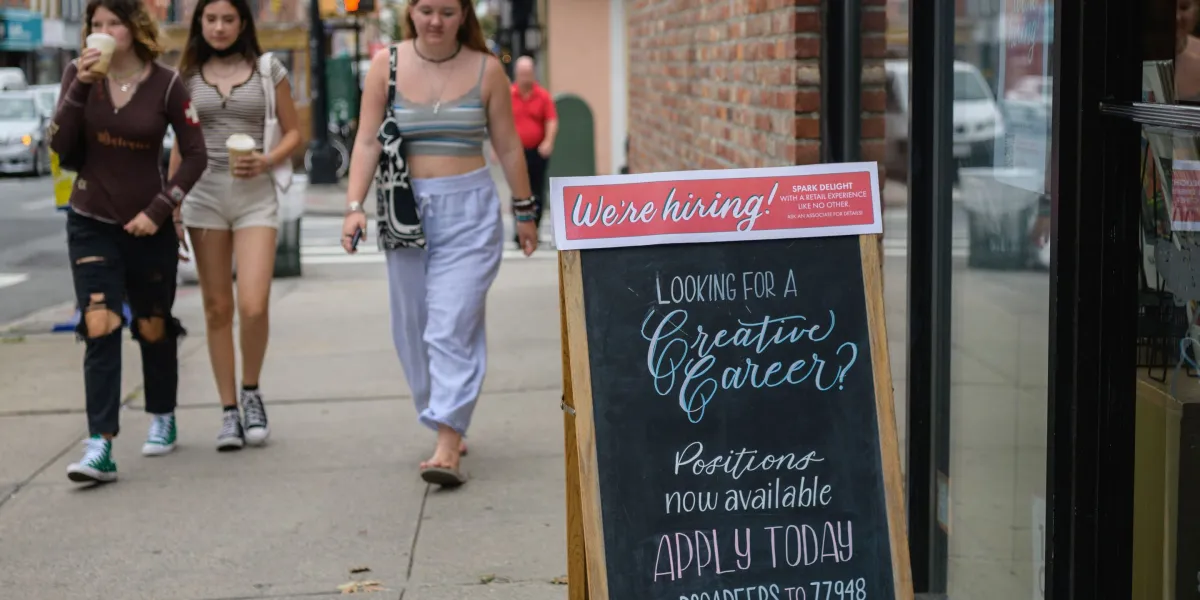
For years, the conventional wisdom about young workers has gone something like this: Gen Z doesn’t want a traditional career. They’d rather freelance, day-trade, chase side hustles, and treat a nine-to-five as something like a relic that their parents clung to. Some were even “financial nihilists” who gave up on an old-fashioned career.
Paul Osterman, professor emeritus at the MIT Sloan School of Management, has spent decades testing that kind of assumption against hard labor-market data, and in his new book, he says the evidence points in the opposite direction. “Is that rhetoric really reflected in the attitudes of younger people?” Osterman asked. “The evidence is that it’s absolutely not.”
The labor economist has built his career studying job quality, from long-term care workers to middle managers to what makes some employers create “good jobs” and others not. His book, Disposable Workers: The Transformation of Employment, is his latest attempt to quantify a shift he believes has been building since the postwar era: what employers are willing to offer.
The 35% number
Drawing on an original survey of more than 6,000 U.S. adults age 24 and up, plus nearly 100 interviews with workers, employers, and staffing agencies, Osterman calculates that 35% of the American workforce, more than 55 million people, now falls into what he categorizes as “disposable” work: freelancers, contractors, gig workers, and a group he named “marginal workers.”