Humans universally perceive and name colors as a mix of four pure hues (plus black and white). A new analysis ascribes this to the colors of the natural world and the brain’s propensity to simplify.
By Robert Sanders
August 31, 2026
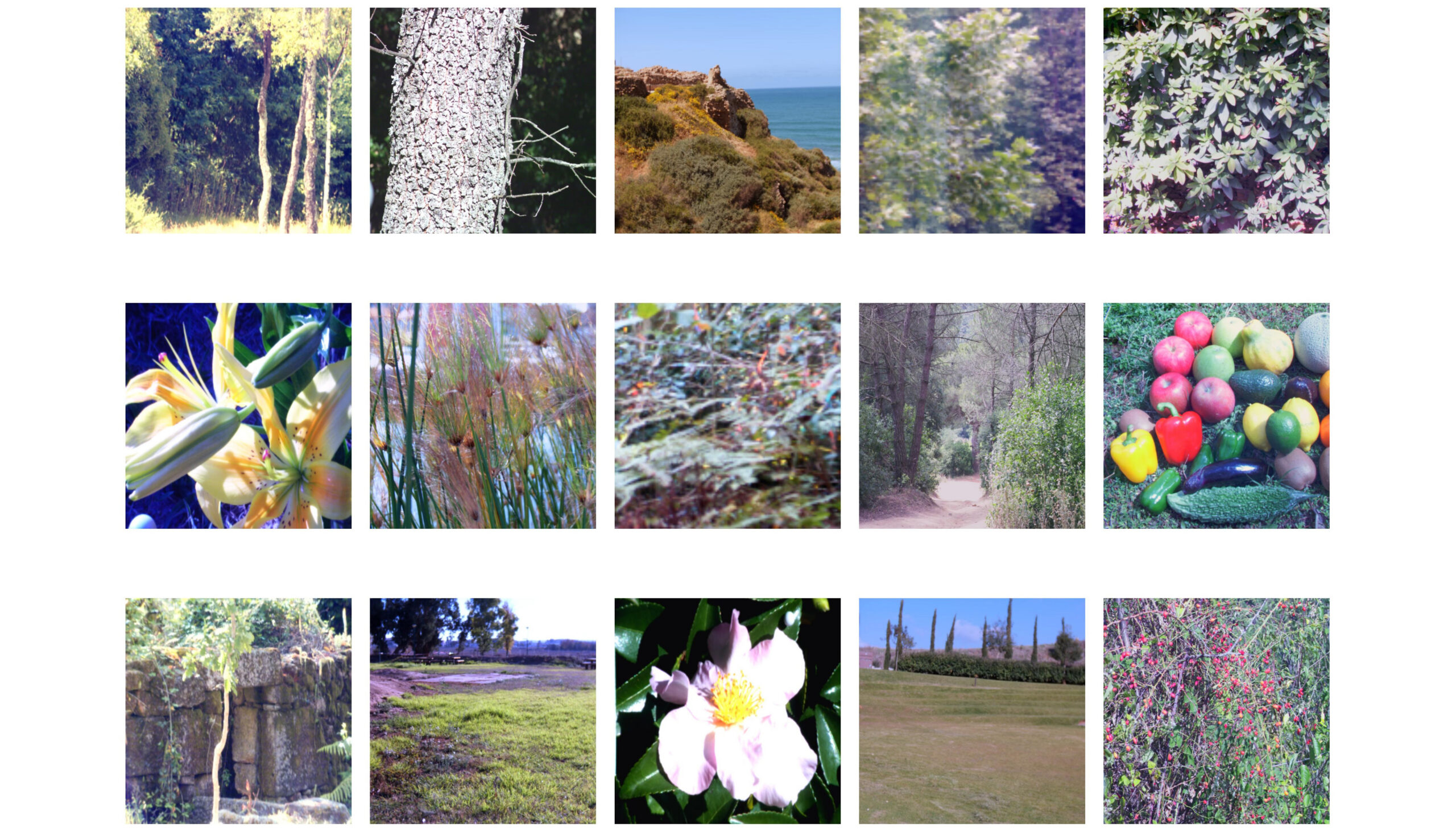
A sample of the photos used to assess the human eye’s response to natural scenes. The response of photoreceptors in the eye are helping researchers understand why our brain perceives color as a combination of red, yellow, green and blue and not other colors, like orange and purple. Most pixels in natural scenes are gray or unsaturated, with colors tending to cluster around red, yellow-green and blue-green.Alexander Belsten, Bruno Olshausen/UC Berkeley
Biologists and linguists alike have long puzzled over the universal human tendency to see and name colors as a combination of four “pure” hues — red, yellow, green and blue.