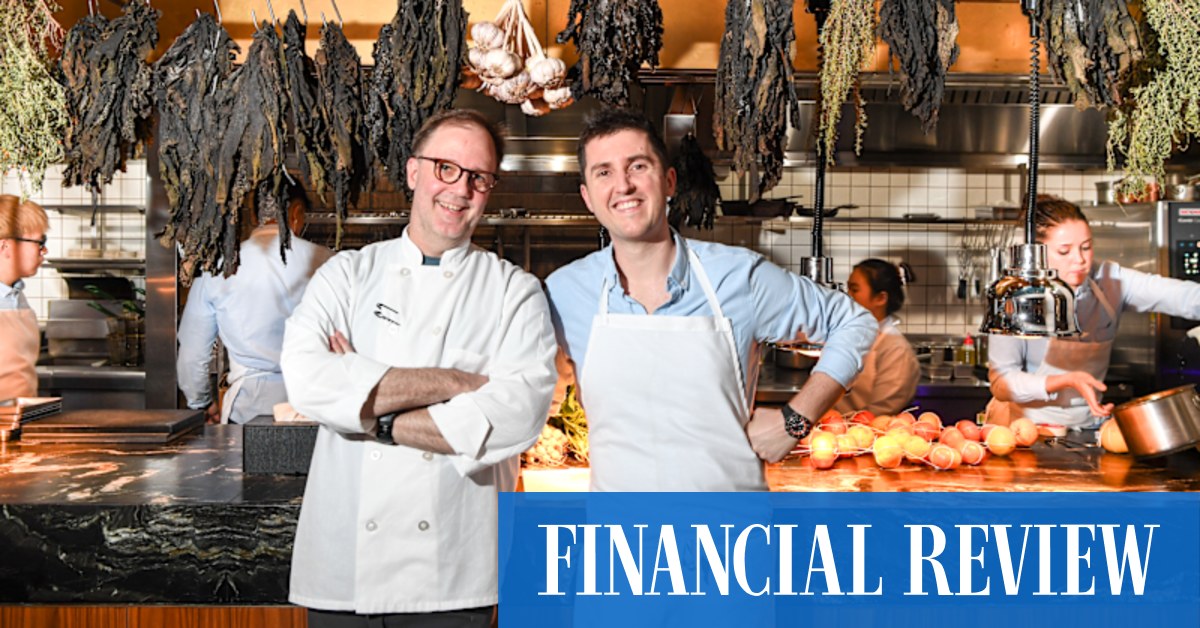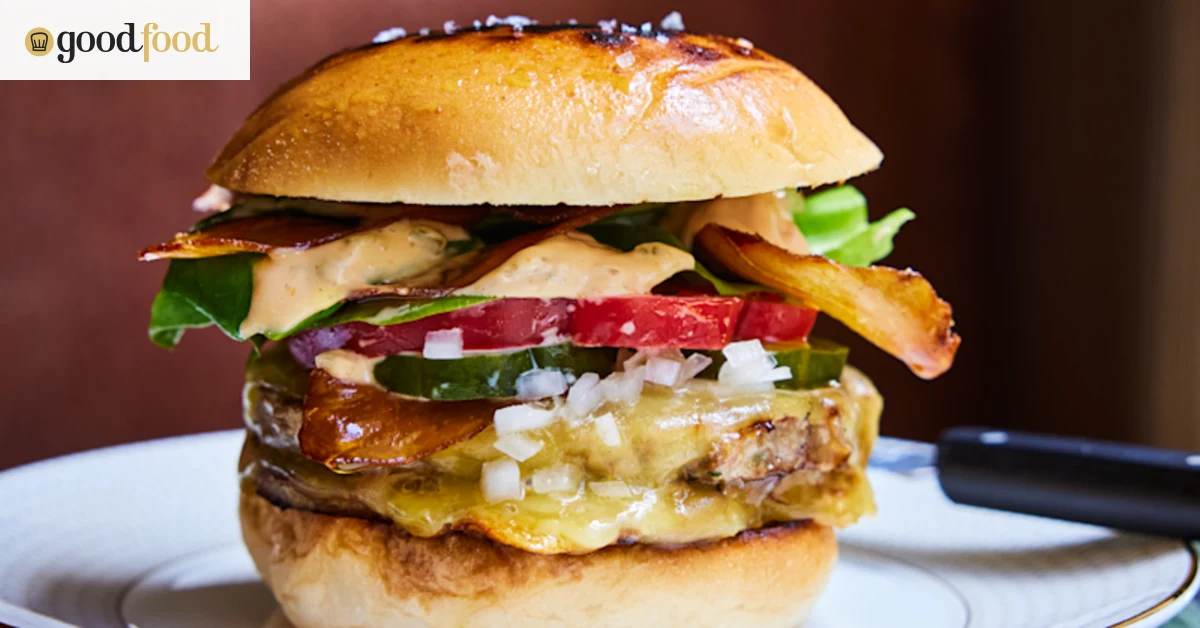
The pioneering Saint Peter chef, who redefined fish cooking globally, reckons the burger encapsulates his life’s work. It might – we just reckon it’s delicious.Josh NilandSeptember 1, 2026When asked what his signature dish is, Sydney chef Josh Niland says he’s always found it tricky to answer. “I usually shrug the question off and say it’s more of a signature method of whole-fish cookery as opposed to a single dish,” he writes in his latest cookbook, his fourth, Saint Peter: Chapter & Verse. “But the more I’ve thought about it over the years, the more I think this may just be it.”You might think that the defining dish of the world-renowned chef who pioneered the fin-to-tail cooking philosophy must be the sea urchin crumpet he invented for the original Saint Peter restaurant, which opened in 2016. Or maybe you believe it’s a dish that contains one of the more extreme ingredients such as fish eyes, scales and bones (his fish eye ice-cream is famous). Surely, it’s his beautiful charcuterie plate that’s been a decade in the making?No, it’s none of those. Saint Peter’s fish charcuterie plate, a decade in the making.David Loftus/Hardie Grant PublishingHis answer? The double yellowfin tuna cheeseburger. The best recipes from Australia's leading chefs straight to your inbox.Sign up“It summarises the work we have done across all our businesses, from interpreting fish as meat, whole-fish utilisation, dry-ageing and being bloody delicious,” the former Good Food Guide chef of the year writes.Niland says he and his team came up with the idea while experimenting with ground tuna at his shop the Fish Butchery in 2018. “The result was so mind-blowingly delicious that we put it on the menu the same day.” Josh and Julie Niland at The Grand National.Louise KennerleyGood Food is not the only fan of the burger. American actor Zac Efron and Phil Rosenthal of Netflix’s Somebody Feed Phil love it too. The recipe is one of the many in the 450-page Saint Peter: Chapter & Verse – a grand book that, as the name suggests, encapsulates Niland’s seafood ideology, and the innovative approach he and his team have to fish cooking. It’s been released on the 10th birthday of the three-hatted Saint Peter that he and wife Julie now run from Paddington’s Grand National, in Sydney’s inner east. “It’s a record of a decade of work – not just recipes, but a new way of thinking about fish, modern craftsmanship and leadership,” says Niland. “It captures the discipline, care and clarity behind the restaurant, and the belief that every part of the fish has value.” – Sarah NorrisJosh Niland’s double yellowfin tuna cheeseburgerDavid LoftusDouble yellowfin tuna cheeseburgerINGREDIENTS12 cheddar cheese slices24 slices bacon (Josh Niland uses swordfish belly bacon, see below)6 milk buns, halved18 dill pickle slices1 white salad onion, diced6 ox heart tomato slicesfreshly cracked black pepper6 butter lettuce leaves, trimmedYellowfin tuna patties 600g skinless and boneless yellowfin tuna trimmings3g table salt2g ground black pepper1g ground fennel3 tbsp finely chopped flat-leaf (Italian) parsley leaves100ml grapeseed oil, for fryingMayonnaise 20g egg yolks12g water4ml white-wine vinegar3ml lemon juice2g salt3g Dijon mustard135ml grapeseed oilBurger sauce 1 tbsp tomato sauce (ketchup)1 tsp Worcestershire sauce1 tsp dill pickle brine1 tsp brandy1 tbsp American mustard4 drops Tabasco1 tbsp white miso1 bunch of dill, finely cutpinch of cayenne pepperlemon juice to tasteMETHODTo make the patties, set up a meat grinder on a sanitised work surface. Place the tuna in the freezer and, once below 0C, mince through a 13mm plate. Combine the ground tuna with all of the remaining ingredients in a large mixing bowl. Form a small patty and fry it in oil in a hot frying pan to check the seasoning, adjusting if necessary. Layer four 60cm sheets of plastic wrap on a bench and place the mixture in a tight 50cm-long log along the bottom. Wrap tightly, maintaining an even and round thickness and diameter of 10cm. Freeze and turn every hour or so until it sets so the result is cylindrical, not flat on one side. Once frozen, use a sharp knife to slice the log into 12 1cm-thick slices weighing 70g each. The patties are best cooked from frozen to achieve maximum colour and moisture.For the mayonnaise, put everything except the oil in a Thermomix on speed 10 for 90 seconds, then turn down to speed 7. Slowly emulsify in the oil and adjust the seasoning to taste with further lemon juice and salt.To make the burger sauce, combine 150g of the mayonnaise with all the ingredients and season to taste.When ready to cook the patties, set a large, heavy-bottom cast-iron pan over a medium heat. Brush the frozen tuna patties with the oil instead of adding oil to the pan. Place half of the patties in the pan and cook for 90 seconds on the first side until well caramelised, then turn to the other side. With a minute remaining on the second side, place a cheese slice on top of each patty and allow to gently melt. Stack the patties together into doubles, remove from the pan and allow to rest. Repeat with remaining patties and cheese.In a deep fryer, fry the bacon until crisp and golden, about 30 seconds. Remove and drain on paper towel.Lightly toast the cut sides of the milk buns in a clean cast-iron pan and then the outside of the top bun. Add a tablespoon of burger sauce to the bottom half of each bun and place a stack of double patties on top. Add three slices of pickle and a tablespoon of diced onion to each. Season the tomato slices with sea salt flakes and cracked black pepper and position on top of the pickles and onions. Place a lettuce leaf then four slices of bacon on each burger. Add a spoonful of burger sauce to the lids and spread evenly, edge to edge. Top the burger with the lid and serve immediately.Makes 6 burgersSwordfish belly baconINGREDIENTSSwordfish belly, skin onDry bacon cure500g caster (superfine) sugar1kg table salt30g ground star anise150g ground cumin50g cure #1 (available from speciality shops)150g ground black pepper150g ground coriander150g ground fennelMETHOD Combine the cure ingredients in a bowl. Weigh the fish and use the ratio of 130g of dry bacon cure per 1kg of fish. Sprinkle the cure evenly over the belly and place on a stainless-steel tray. Refrigerate and allow the fish to cure for 7 days, turning each day, then rub off the excess cure.In a smoker set as per the directions, cold smoke the belly for 2 hours.Hang the smoked belly on a butcher’s hook in a fan-forced refrigerator for between 7 and 14 days, depending on its humidity. Once the fillet has reduced by 30 per cent of its original raw weight, the bacon can be sliced and used.Makes 1 bacon belly Photo: This is an edited extract from Saint Peter: Chapter & Verse by Josh Niland, published by Hardie Grant Books. Available in stores September 1. Photography by David Loftus.More:BurgersFor subscribersSeafoodCookbook extractsFish Butchery WaterlooSaint PeterTunaFrom our partners
Josh Niland says a double cheeseburger is his signature dish. This is how to make it
The pioneering Saint Peter chef, who redefined fish cooking globally, reckons the burger encapsulates his life’s work. It might – we just reckon it’s delicious.
1,166 words~5 min read