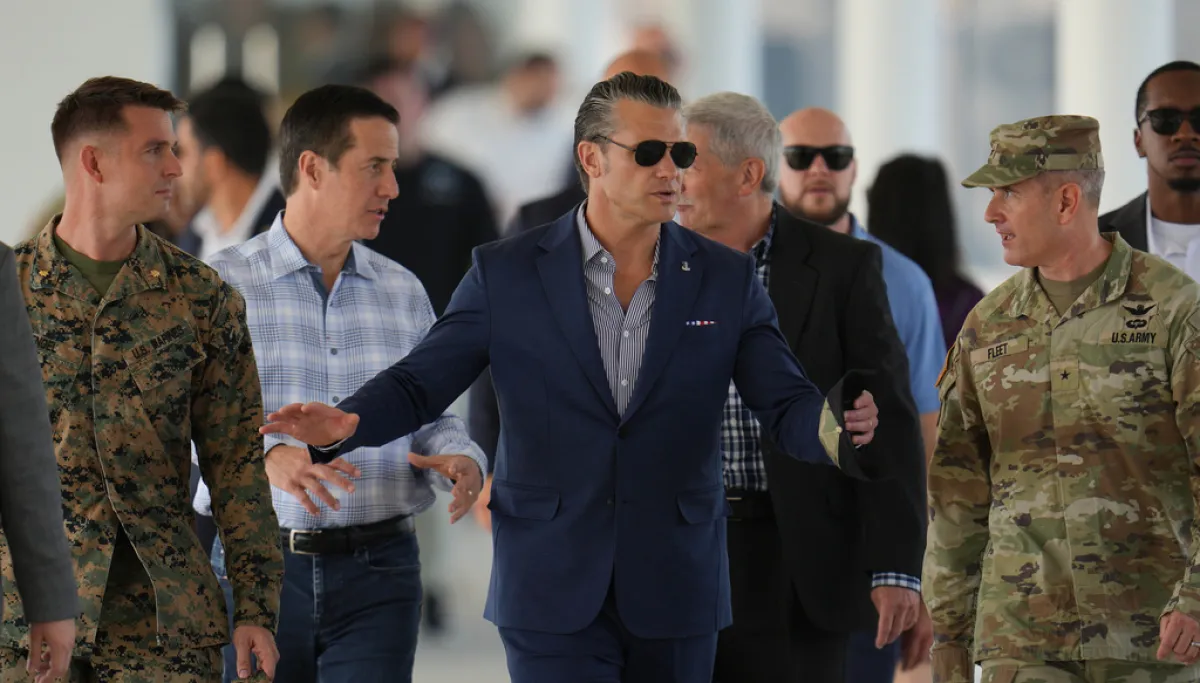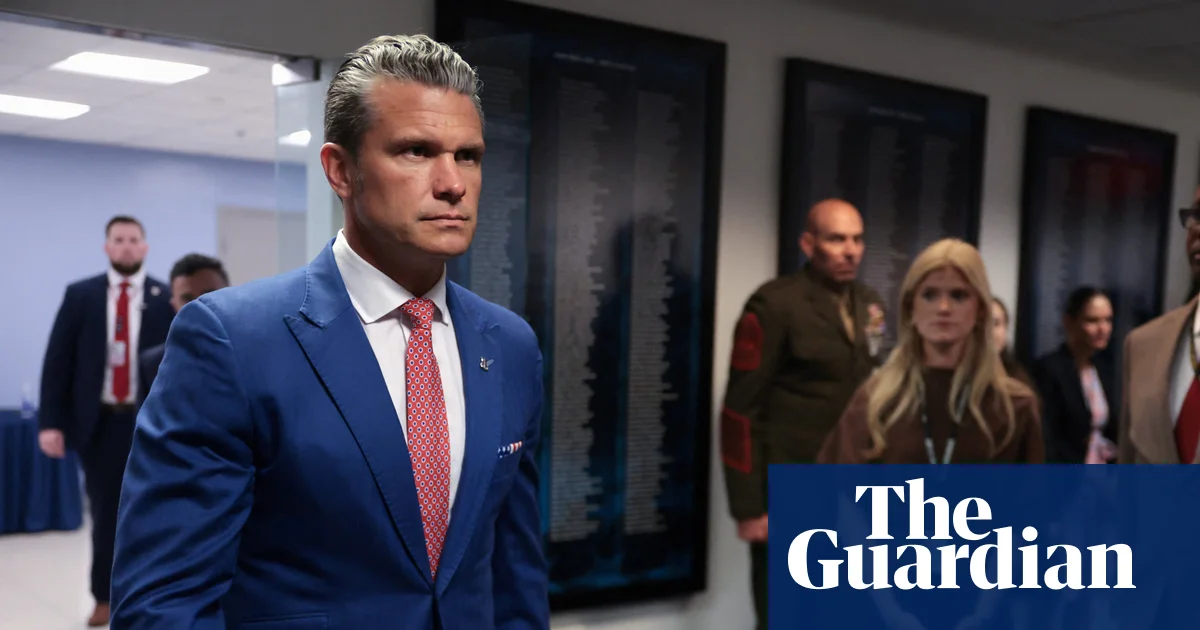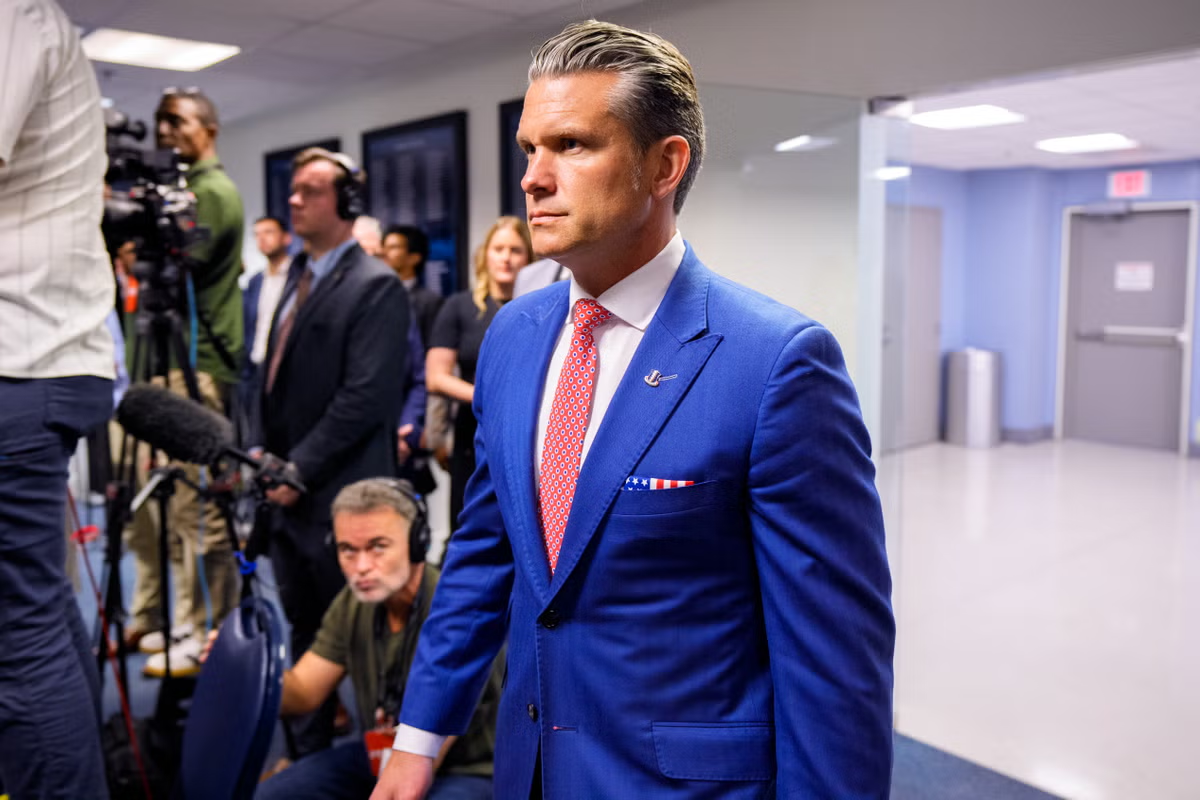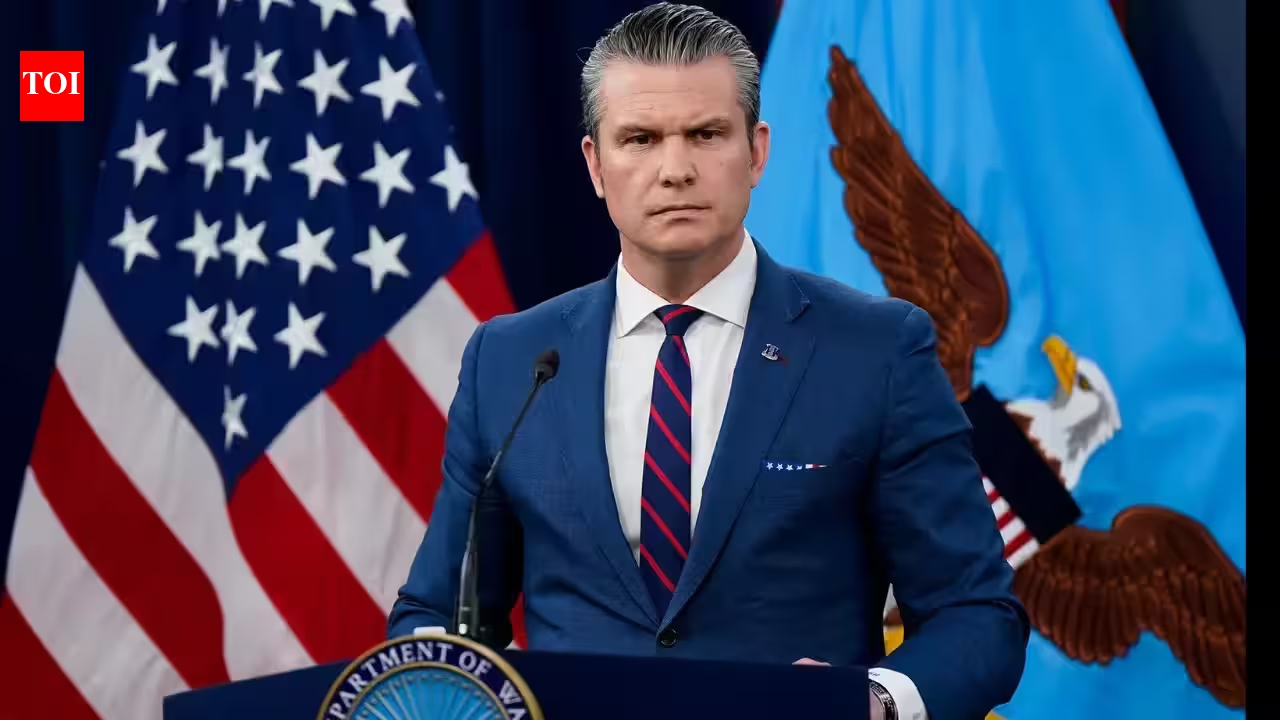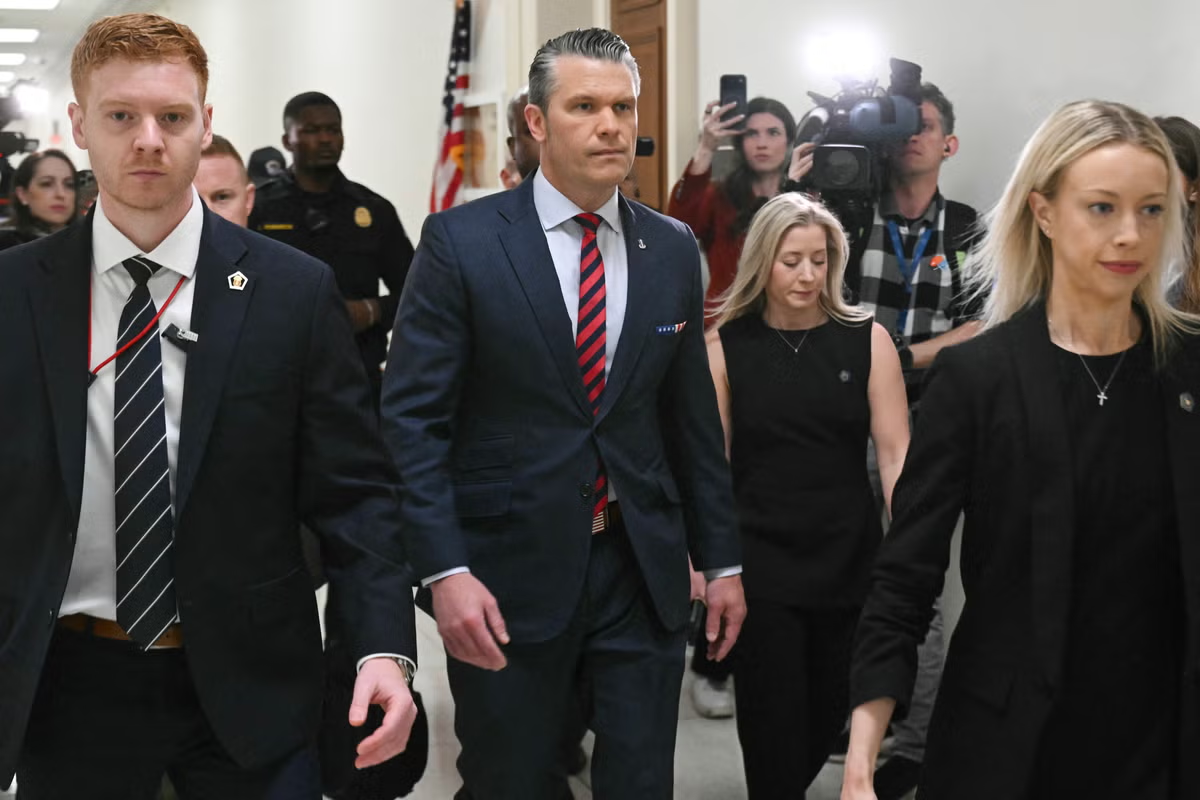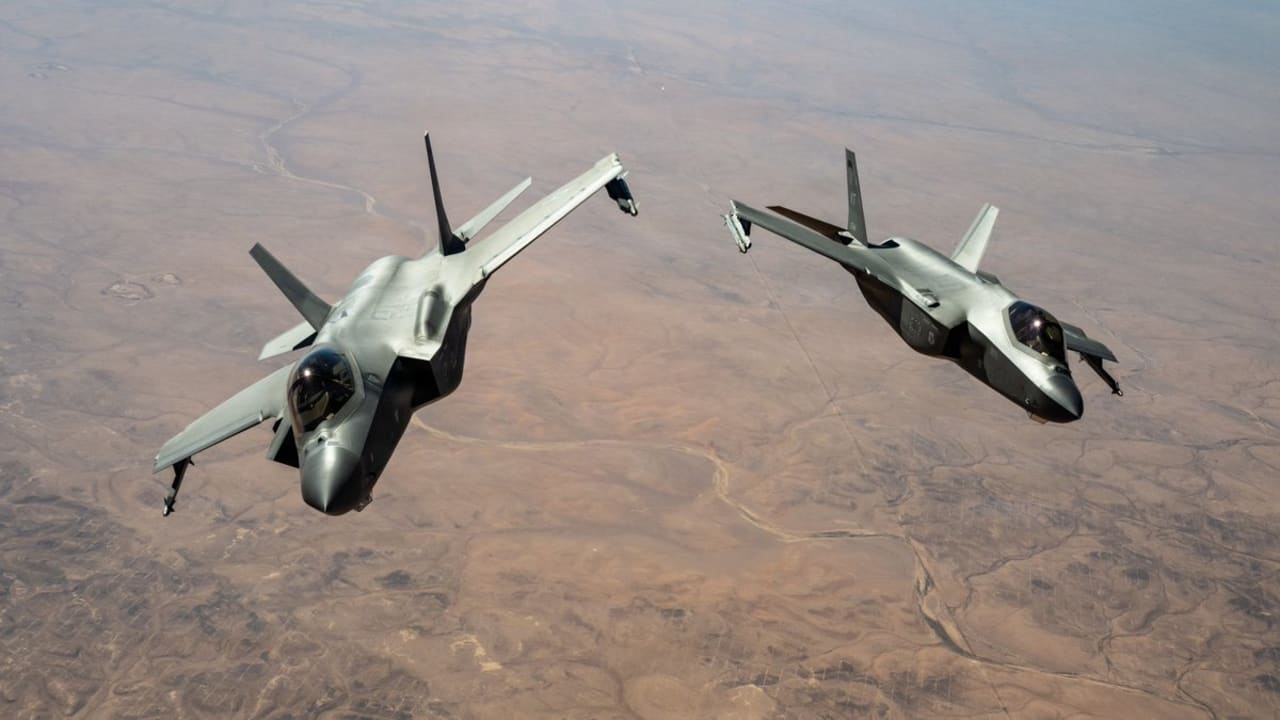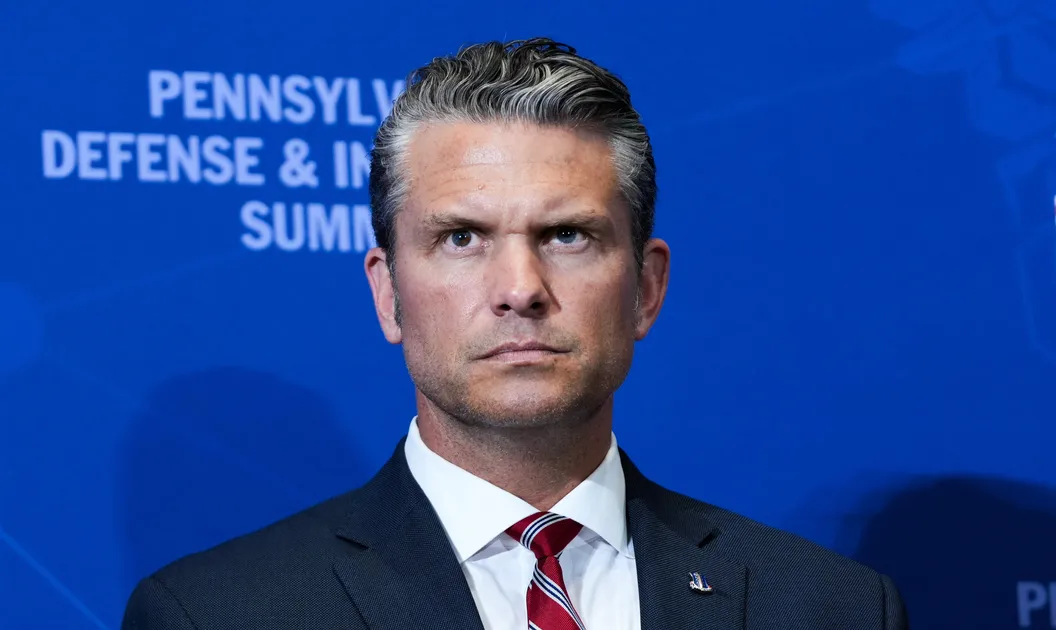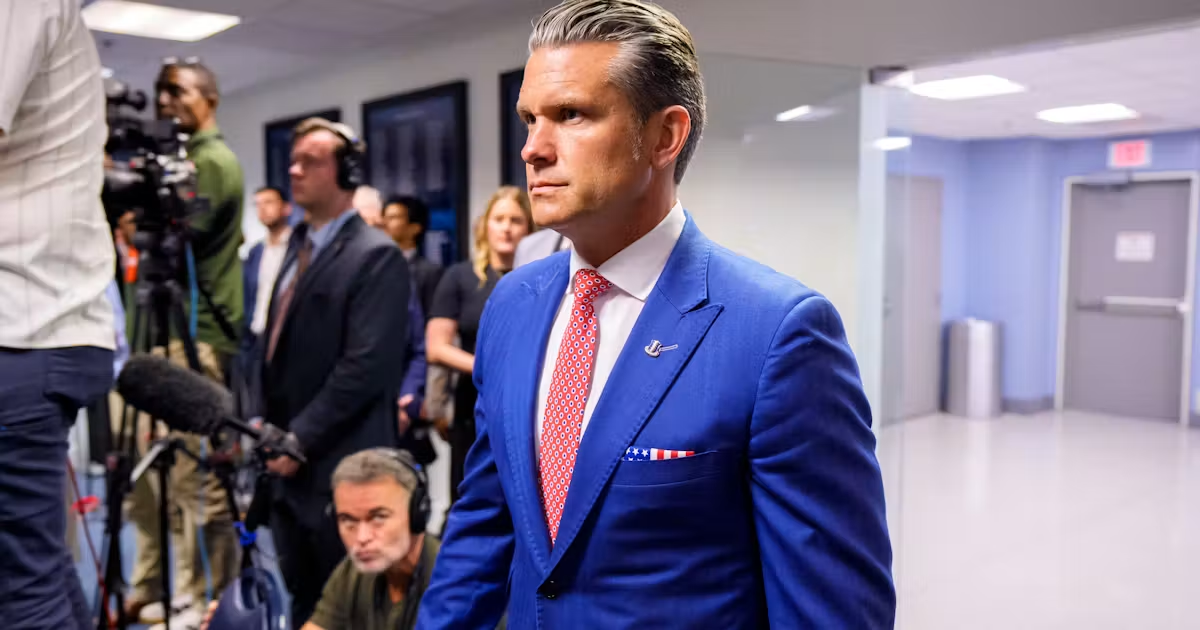
The Pentagon is scrambling to contain a leak from within the military’s top brass. Defense officials were left fuming after top military leaders spoke with The Washington Post Sunday, revealing they had advised Defense Secretary Pete Hegseth that a long-term engagement in Iran could have disastrous effects for American defense systems around the world—including at home.The warnings appeared in the August 14 edition of the Secretary of Defense Orders Book, a classified internal document outlining the availability and readiness of U.S. forces stationed around the world, as understood by the heads of the Army, Navy, and Air Force, as well as the four-star officers overseeing global operations.Shortly after the article’s publication, Defense Department spokesperson Sean Parnell falsely claimed on social media that the publication of the report was not only wrong but also illegal.“Publishing highly classified assessments from the Secretary’s orders book is a crime. It’s a betrayal of the force,” Parnell wrote. “And much of what they’re publishing is inaccurate.”Fact check: While it’s against the law for government employees to leak sensitive or classified government details, the Supreme Court ruled in 1971 that the press’s ability to publicize that information is protected under the First Amendment. That was the outcome of New York Times Co. v. United States, which pitted the daily newspaper against the Nixon administration after the Times published a top-secret history of the Vietnam War known as the Pentagon Papers.“The Secretary sees them constantly. That’s how you run a real military. We are in great shape around the world. This story isn’t about readiness. It’s TDS and PDS,” Parnell continued in his post, using acronyms as stand-ins for “Trump Derangement Syndrome” and “Pete Derangement Syndrome.”“They hate President Trump and Secretary Hegseth more than they love America,” he added.Adam D’Ortona, an active-duty Army lieutenant colonel who runs the account InfantryDort, similarly used his social media presence to attack the Post, claiming that it was “fact” that the staff of one of America’s largest newspapers is working for the “enemies of the United States.”“Worse, this isn’t gossip,” D’Ortona continued. “Revealing where senior commanders believe forces are stretched, where they perceive risk, and which commitments they consider unsustainable gives an adversary information it can immediately exploit.”D’Ortona works in Hegseth’s office, according to a USA Today report from 2025.The Iran war is entering its seventh month with no end in sight. For Americans, the conflict has killed at least 18 U.S. service members and taken an enormous toll on daily life across the country, inflaming the cost of practically everything as shipping companies contend with rising oil costs. Meanwhile, it has killed more than 3,500 people in Iran and injured tens of thousands more, according to data published by Al Jazeera.As the U.S. military campaign against Iran stretches into its seventh month, President Donald Trump has taken decisive action to keep posting stupid slop generated by artificial intelligence. Trump took to Truth Social Sunday night to post an AI-generated video of Kharg Island being “blown to smithereens” by a U.S. missile strike. Since the beginning of the war, the president has been musing about the possibility of taking over Kharg Island, a five-mile strip of land where Iran stores nearly all its oil prior to exporting it.Trump’s renewed threat comes as U.S. Central Command announced a series of strikes against a different island—Larak Island, where the U.S. says it hit two Iranian rocket launchers. Iran’s Revolutionary Guard announced that it had retaliated by targeting American forces in Jordan and the United Arab Emirates. By Monday morning, Trump was ready to declare victory over Iran—for the umpteenth time. “Iran is officially a Failed Nation. IT IS DEAD!” he wrote on Truth Social. The strikes follow the Trump administration’s vows to end the now more than six-month-long war using a series of toothless economic sanctions. This isn’t the first time that Trump has responded to a serious military escalation with self-aggrandizing AI slop. The president has made it clear that he’s much more interested in trolling than he is in actually leading the country. Editor’s Pick:A federal court has dealt a serious blow to prediction markets, ruling that Kalshi can’t block the state of Nevada from regulating its platform. The Ninth Circuit Court of Appeals in San Francisco ruled 3–0 against Kalshi Friday, saying that federal commodity training law doesn’t block Nevada from also regulating the platform when it comes to betting on sports events. All three judges were appointed to the federal bench by President Trump.Circuit Judge Ryan Nelson said Kalshi’s business clearly seems to be in sports betting, “a quintessential form of gambling” that would put it out of the purview of the federal Commodity Futures Trading Commission, or CFTC. He noted that Kalshi has run ads describing itself as “the first app for legal sports betting.” “It is difficult, then, to conclude that Congress intended to upend its decades of careful regulation of gambling based on broad definitions of the words used in a Wall Street Reform Bill,” Nelson wrote in his ruling. “The CFTC is not a national gambling regulator. No one suggested it was until over a decade after the law was passed.”The Trump administration has fought to keep states from regulating prediction markets, arguing that the CFTC is in charge. Donald Trump Jr., the president’s son, told Republican state attorneys general at a meeting earlier this year to back off any action against businesses like Kalshi and Polymarket. The lack of clarity over what laws govern prediction markets, which include betting on political and international events in addition to sports, has already proven to be a major problem. Nevada’s win on Friday is one of several legal actions launched by both Republican and Democratic state governments against prediction markets, with 20 states in litigation over whether prediction markets fall under sports gambling laws. In July, 44 states signed a letter calling prediction markets a “new form of casino” endangering young people. In March, Arizona became the first state to criminally charge Kalshi for allowing people to bet on elections and “operating an illegal gambling business.” In April, the Third Circuit Court of Appeals in Philadelphia ruled against New Jersey’s attempt to regulate prediction markets, setting up conflicting rulings and increasing the likelihood that the Supreme Court will address oversight of prediction markets in the near future.Editor’s Pick:President Donald Trump flew to Texas Friday to award the Artemis II team the Congressional Space Medal of Honor—but still managed to make the event all about himself. After making the team wait onstage for him for half an hour, the president began his meandering speech by recounting his experience watching the launch earlier this year during a “very important meeting with the biggest people in the country, maybe some of the biggest people in the world.”Trump briefly addressed the day’s honorees—Reid Wiseman, Victor Glover, Christina Koch, and Jeremy Hansen, who would soon receive the highest U.S. space award— before rambling about how he’d inherited his love of space “genetically” from his uncle.“He loved space, he used to tell me about space, space, all space,” Trump said. “He would throw in the word ‘nuclear’ every once in a while. He loved space. So I guess we have, genetically, we sort of, I believe in that stuff. I love it. I find it so interesting.”While musing that he “shouldn’t get political,” Trump shouted out several Republican politicians in attendance, including Senator Ted Cruz, Representative Brian Babin, Representative Jake Ellzey, and Texas Lieutenant Governor Dan Patrick, who was Trump’s state campaign chairman during the last three elections. As the president turned back to his prepared remarks the room remained awkwardly silent, not bothering to applaud. Trump is speaking to complete silence at the NASA center. Not a single person is applauding or reacting to anything he says during his brazenly partisan speech. pic.twitter.com/imGiKtzwt6— Aaron Rupar (@atrupar) August 28, 2026 complete silence at the NASA center as Trump brags about the stock market and touts fake foreign investment numbers. just a brutally awkward speech that is going over like farts in church pic.twitter.com/INpdhi6gv7— Aaron Rupar (@atrupar) August 28, 2026 But it didn’t exactly seem that Trump was winning over his audience as he claimed the country’s space program was merely “limping along” while he was out of office. “And now I’m back, and we’re doing more than limping, we don’t limp,” he said, to no response from the crowd. Desperate for any audience reaction, Trump veered into commenting on the astronauts’ appearances. “This is a good-looking group of people,” Trump said, as the audience again remained quiet. It’s not surprising that Trump’s remarks didn’t resonate with the scientists at NASA. His mission to reignite the country’s space program is motivated by vanity, nationalism, and his desire to “never be second,” rather than actual exploration. Plus, he proposed a whopping 23 percent cut to the agency’s 2027 budget.Remember this?President Donald Trump has a new idea that’s pretty much certain to make Americans sicker—and it’s all thanks to Glenn Beck.In a post on Truth Social Friday morning Trump called the Big Four meat-processing companies a “nasty Monopoly,” and said he would authorize legal documents to be drawn in order to grant farmers and ranchers the right to slaughter and process their own meat instead of using facilities inspected by the U.S. Department of Agriculture. “This should move quickly,” he added.It appears that Trump was inspired to act during an interview Wednesday on the Glenn Beck Program, when the host—and cattle rancher—raged against the “meat-processing cartel” and urged the president to “break the back of those processing plants.”“This is a very big thing you just told me, though, because you just gave me a very good idea,” Trump replied.But not everyone agrees with Trump’s “very good idea,” including the National Cattleman’s Beef Association, which released a statement Friday opposing the plan.“NCBA supports more competition, more opportunities for small & regional processors, and eliminating unnecessary regulations but weakening federal meat inspection & food safety standards isn’t the answer,” the statement said. “America’s cattle producers have earned consumer trust in U.S. beef over generations. That trust, and the gold standard food safety system behind it, shouldn’t be put at risk for a short-term political fix.”In the beef industry, just four processors control 85 percent of the market: Tyson Foods and Cargill Incorporated, which are U.S-owned, as well as JBS and National Beef, which are Brazilian-owned. In May, the Department of Justice launched an investigation into the big four meat-processing companies. In June, the Department of Agriculture directed $60 million to support small meat processors.Trump’s shortsighted announcement arrives as the president faces major backlash on a plan to begin importing tariff-free beef. The plan has been condemned by the American Farm Bureau, and to make matters weirder, the administration won’t reveal where the imported beef will come from.All of this comes as beef prices are steadily rising and as the shrinking American herd struggles to keep up with high demand. At the same time, farmers in the Midwest—who were once some of the president’s most steadfast supporters—are facing the toughest economic crisis in decades.Editor’s Pick:
Pentagon Erupts Over Report on Classified Warnings Against Iran War
Defense Secretary Pete Hegseth’s top advisers have warned against extending the Iran war.
1,846 words~8 min read