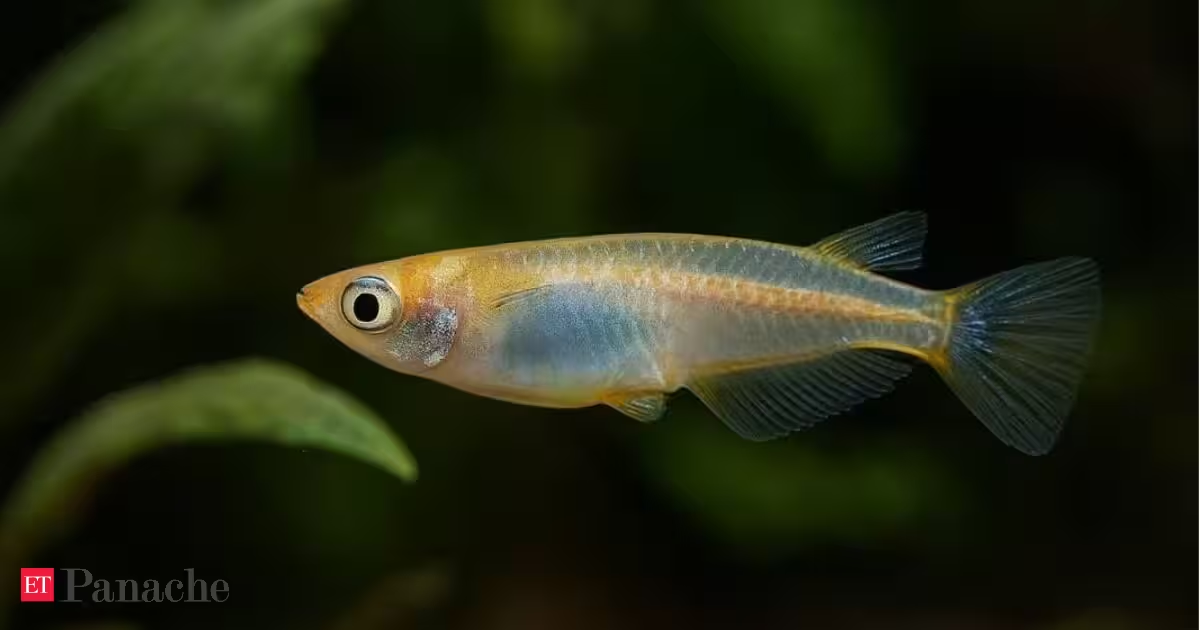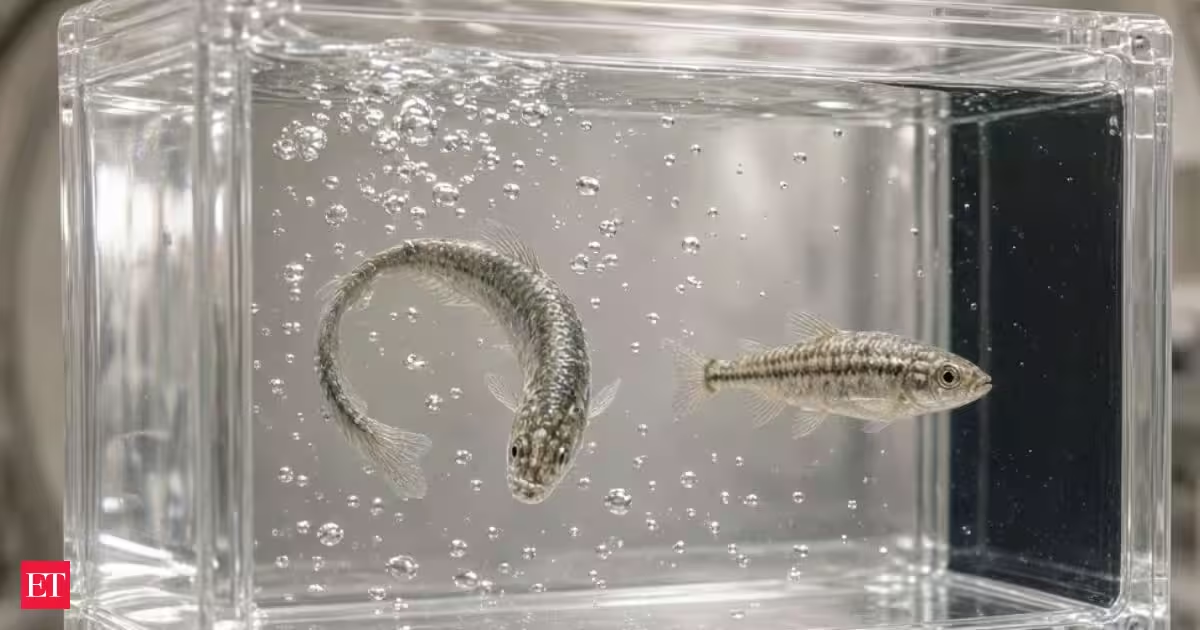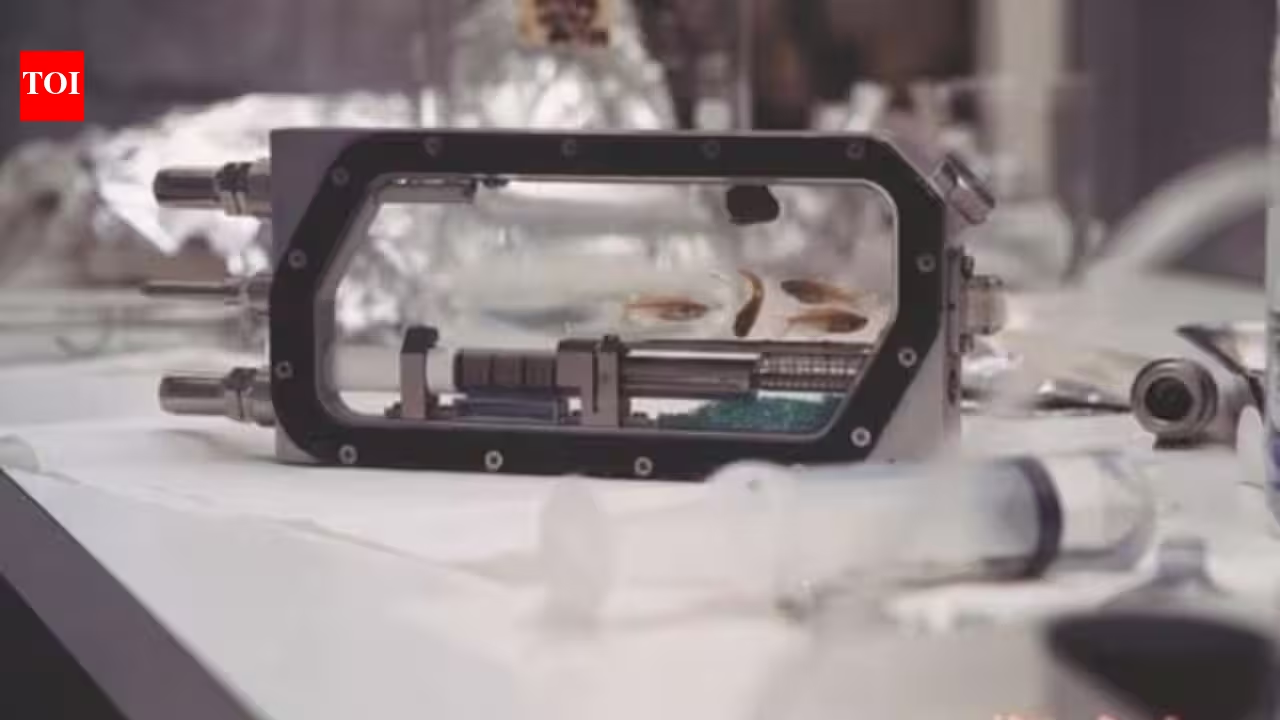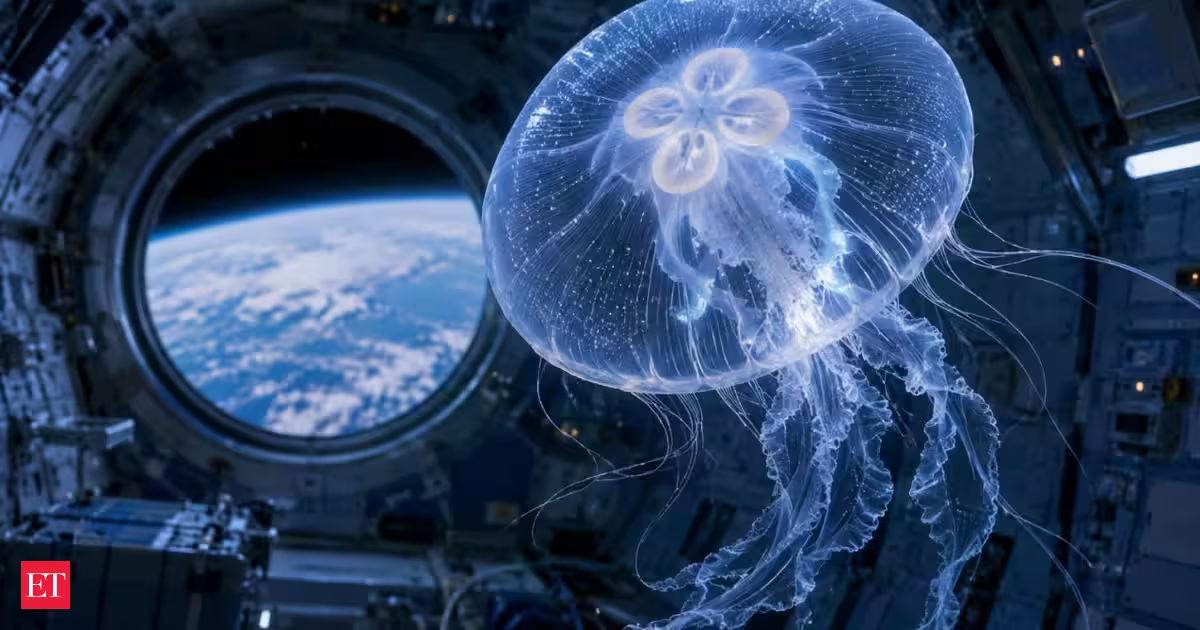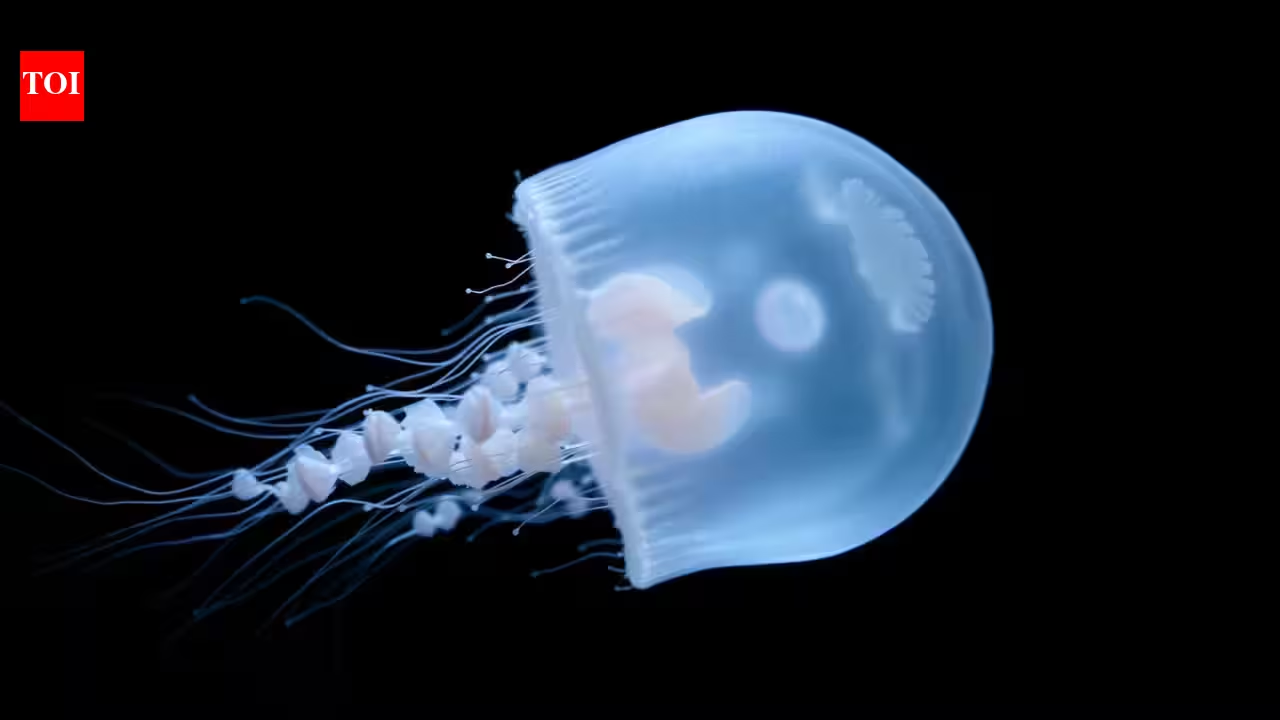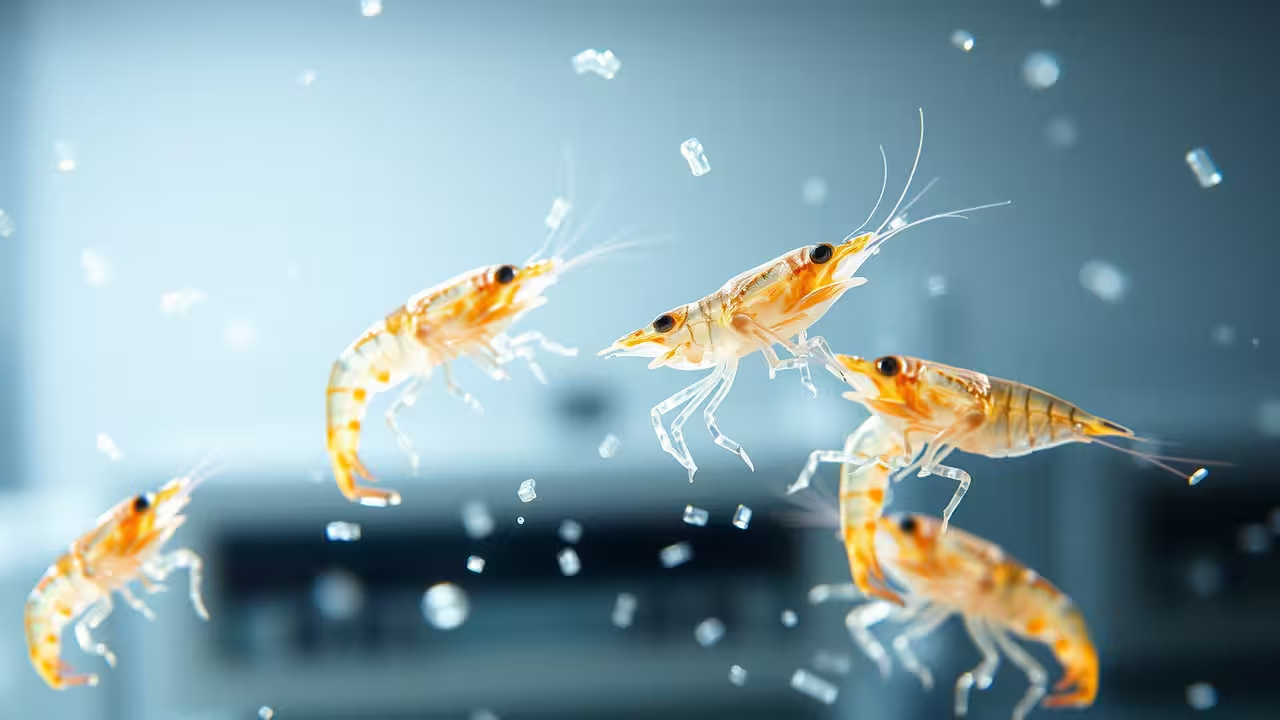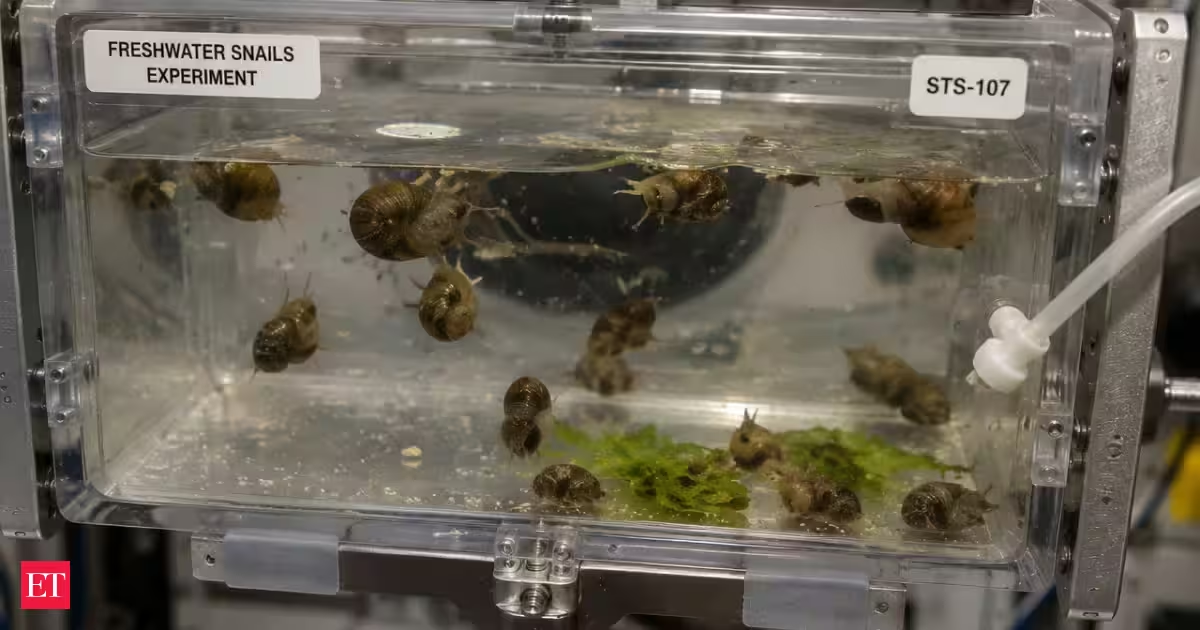
In 2003, researchers found freshwater snails had mated in space; their gravity-sensing statoconia were 50% larger by volume than matched ground controlsSynopsisExperiments conducted aboard the Space Shuttle demonstrated that pond snails bred in microgravity possessed larger gravity-sensing structures known as statoconia compared to their Earth-reared counterparts. Additionally, swordtail fish embryos showed an increase in otolith size during their development in orbit. Conversely, juvenile fish with pre-formed structures exhibited little change. This research underscores the essential influence of gravity on the development of balance structures in aquatic species.Experiments conducted aboard the Space Shuttle demonstrated that pond snails bred in microgravity possessed larger gravity-sensing structures known as statoconia compared to their Earth-reared counterparts. Representative Image | Image Credits: ChatGPTThere are times when space seems to conjure tales that sound too incredible to be true, yet are real enough. One of the most interesting studies was conducted by scientists at the University of Texas Health Science Center at San Antonio as part of NASA's Neurolab research and was titled Early Development of Gravity-Sensing Organs in Microgravity. They exposed pond snails to space aboard a Space Shuttle, where the snails mated and their young hatched in microgravity. That was the part that would most interest scientists afterward. Their gravity-sensing stones were roughly one and a half times larger than those of similarly sized snails bred on Earth. This might seem a rather trivial matter at first glance. It isn’t. It concerns a very important function of almost all living things with a sense of balance.To appreciate why this is important, it is useful to have some idea what these stones do. Almost all animals capable of feeling up and down have these stones in some form. In humans, they lie in the inner ear. In snails, they float in a small sac of liquid called a statocyst. The dense structures, called otoliths or statoconia, rest on minute hairs, and when gravity acts on them, they bend, thus sending a message to the brain about the direction of down. This is an efficient system about which most people think only when they get dizzy on a roller coaster or slip on ice.How lack of gravity affects body growthThe study, performed during two Space Shuttle missions, revolved around a simple, but clever idea. If these stones exist for the purpose of adding weight to a message, what would happen if there was no weight to add? Snails and swordtail fish were carried into orbit, and the snails played the major role in the experiment. They bred in space, meaning their offspring were developing their gravity-sensing apparatus in a microgravity environment.When the young snails were brought home and examined, the pattern held up, though not identically in every group tested. In the clearest comparison, flight-reared snails had about 50% more statoconia volume than ground-reared snails of the same shell size, a difference that was statistically significant. Across other comparisons in the project, the increase ranged from modest to much larger, and one group showed no measurable difference. Individual stones were not much bigger than usual. There were simply more of them, roughly a third to a half more per snail, as though the body were compensating for weightlessness. That detail changes how the finding should be read. It suggests these organs are not built to a fixed genetic size regardless of circumstance. The results suggest that early development involves feedback that targets a functional outcome rather than a fixed size.The fish responded differentlyThe swordtail fish, also part of the same project, produced a slightly different result. Juvenile fish that had already developed their gravity-sensing structures before launch showed almost no difference between the space-reared and ground-reared groups. Their systems were already established, and a short stay in orbit did little to change them. Younger embryos showed a different pattern. In the later stages of embryonic development, fish that grew in orbit had noticeably larger otoliths than Earth-based embryos of similar size, though the earliest embryos studied actually showed slightly smaller otoliths than their ground-reared counterparts, an unexpected result.On the whole, one can see how important a certain developmental period is when it comes to the environment’s ability to affect the formation of balance structures in living organisms. Missing this period leads to the retention of the current state by the organism. Such a coincidence between two such different animals as a mollusc and a fish indicates the presence of certain biological laws.Additionally, swordtail fish embryos showed an increase in otolith size during their development in orbit. Conversely, juvenile fish with pre-formed structures exhibited little change. Image Credits: Wikimedia CommonsA small snail, a much bigger questionOne could think that this information belongs only to the sphere of snail biology. However, if gravity influences the development of an organism's balance system, the finding raises broader questions about how such systems form in other animals. In humans, the inner ear contains the vestibular organs that help the brain sense motion and orientation, and changes in vestibular function during spaceflight are associated with motion sickness, spatial disorientation, and changes in postural control.What makes this experiment notable is how simple it was. There was no need for complicated equipment or dramatic footage of astronauts; the experiment involved only a few snails in an aquarium aboard the shuttle, where they mated and reproduced in microgravity. Their development gave scientists a glimpse into how living organisms form gravity-sensing systems when normal gravity is absent. The unassuming pond snail suggested that gravity can influence how balance systems develop, stone by microscopic stone.Read More News on(Catch all the US News, UK News, Canada News, International Breaking News Events, and Latest News Updates on The Economic Times.) Download The Economic Times News App to get Daily International News Updates....moreless
In 2003, researchers found freshwater snails had mated in space; their gravity-sensing statoconia were 50% larger by volume than matched ground controls
Experiments conducted aboard the Space Shuttle demonstrated that pond snails bred in microgravity possessed larger gravity-sensing structures known as statoconia compared to their Earth-reared counterparts. Additionally, swordtail fish embryos showed an increase in otolith size during their development in orbit. Conversely, juvenile fish with pre-formed structures exhibited little change. This research underscores the essential influence of gravity on the development of balance structures in aquatic species.
952 words~4 min read