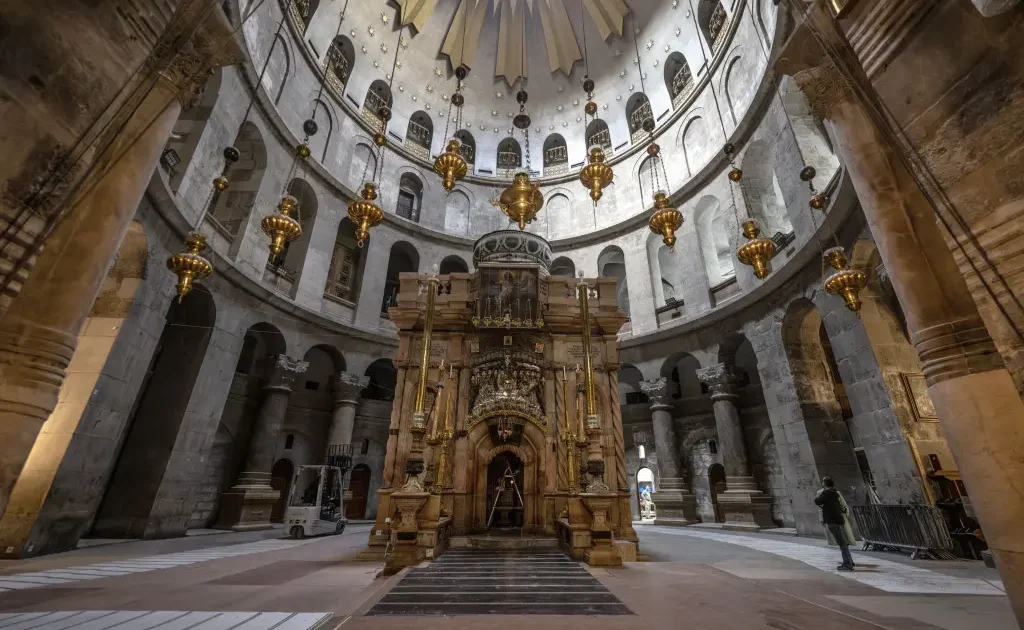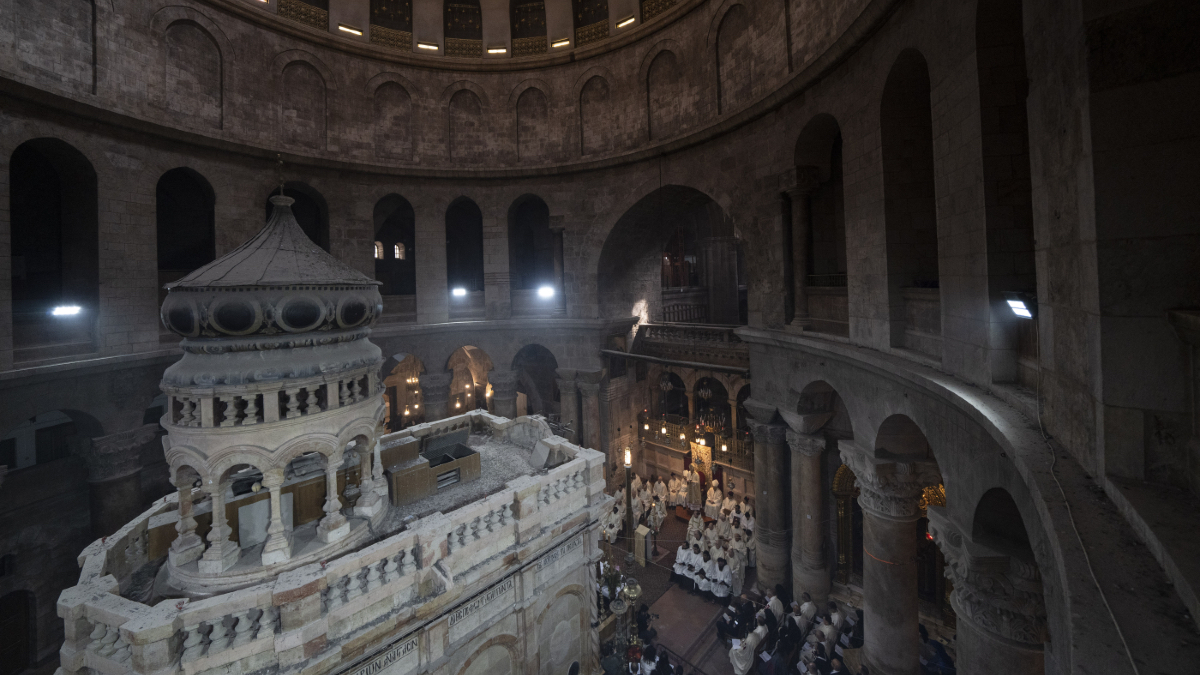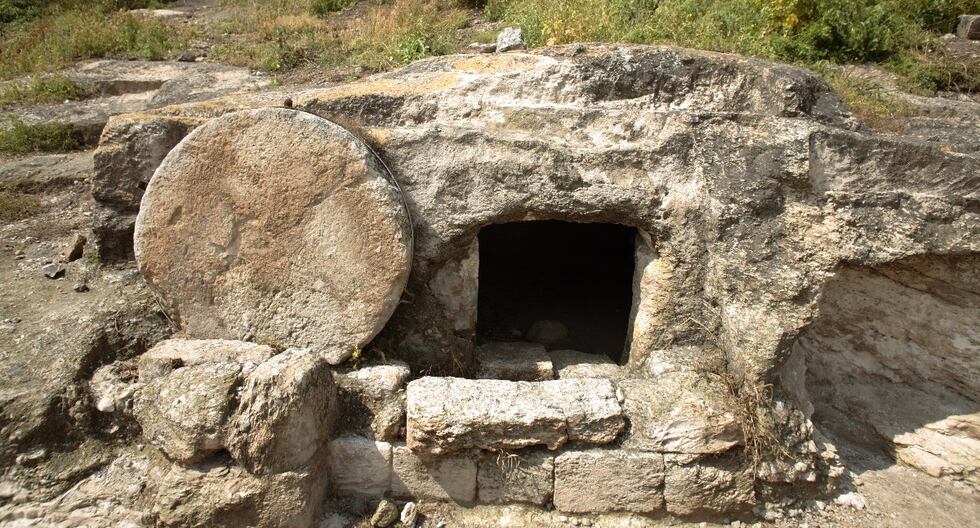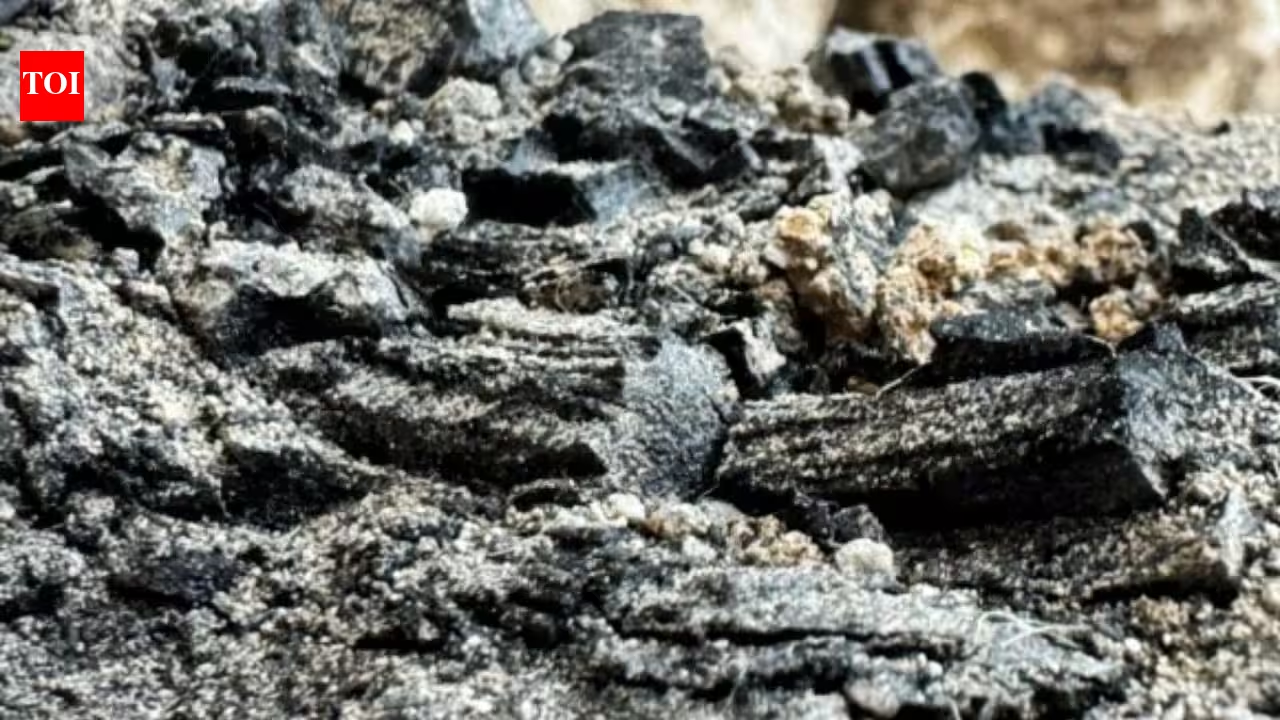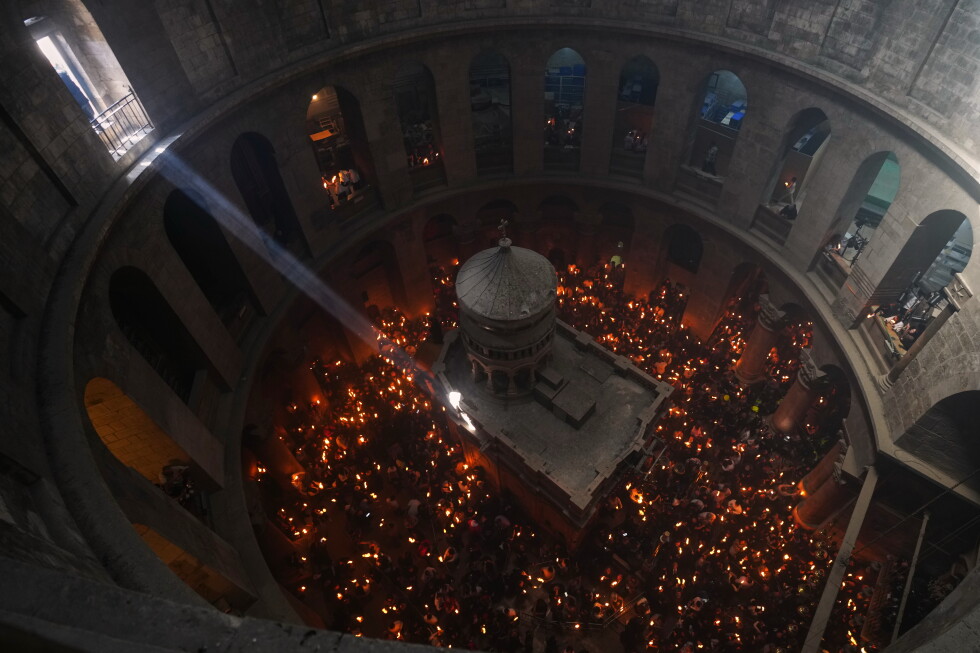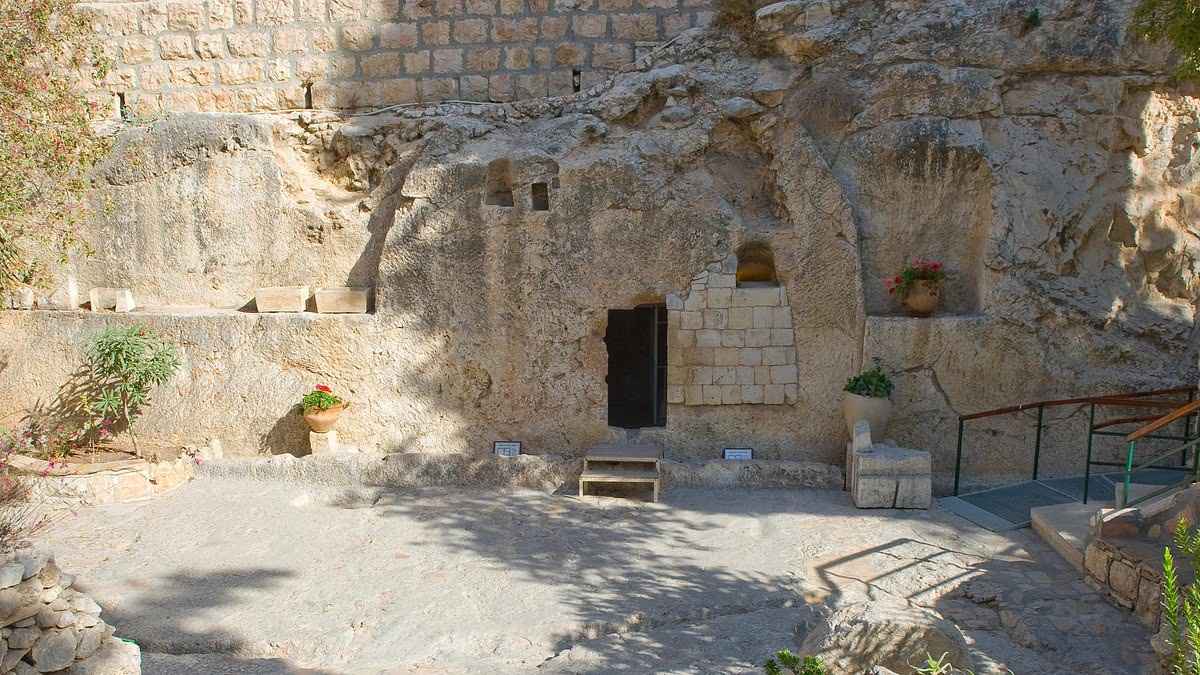
“True tomb of Jesus found after 2000 years!”This headline ripped through social media at the weekend.But extraordinary claims require extraordinary evidence.And that’s not what the archaeologists working under Christendom’s most revered place, the Holy Sepulchre in Jerusalem, claim to have found.“We have found evidence of a funerary landscape, alongside small areas planted with vines and olive trees,” explains Francesca Romana Stasolla of Sapienza University.But this is significant.It is confirmation of what Emperor Constantine thought in the 4th century.His mother, Helen, had toured the Holy Land between 326 and 328AD.The recent convert to Christianity returned to Rome with remarkable relics (including the True Cross). And news of the exact location of an empty tomb.They were epic finds.They were icons of the pivotal event behind her new religion: The death and resurrection of Jesus Christ. They came at a crucial time.Emperor Constantine had sent the newly decriminalised Jesus movement into disarray. He’d ordered his bishops to pick and choose among the many circulating traditions to create a unified Christian ‘canon’ to standardise what they believed.It was a tumultuous process.But his mother’s discoveries helped validate the emperor’s objectives.“The real treasure we are revealing is the history of the people who made this site what it is by expressing their faith here,” Professor Stasolla told the Times of Israel.“Whether someone believes or not in the historicity of the Holy Sepulchre, the fact that generations of people did is objective.”Second ComingHelen, later to be revered as a Saint, appears to have uncovered traditions among Jerusalem’s Christian residents that placed both Calvary Hill and the tomb beneath a Roman Temple to Fortuna (the goddess of luck and gambling).Emperor Hadrian had built this in what was, at the time, a suburb of “Aelia Capitolina”, Hadrian’s renamed capital of “Syria Palaestina”. His rule had sought to suppress the idea of Jerusalem and Judea after the failed Third Jewish Revolution of 132 to 136AD.Helen had it demolished.Her son, Emperor Constantine, then recycled the temple rubble into a basilica centred over one of the old tombs exposed in the bedrock beneath. This was completed in 335AD. It’s been known as the Church of the Holy Sepulchre (stone tomb) ever since.Now, archaeologists have identified additional original context.The La Sapienza University of Rome archaeologists have added to the pool of evidence showing that the Temple of Fortuna was built over a site that conforms to an amalgamation of New Testament accounts.The site was originally a rough-cut Iron Age quarry.“[This] does not surprise us because a vast part of the Old City of Jerusalem stands on a quarry,” Professor Stasolla told the Times of Israel.Once depleted, the quarry was divided into small irregular plots separated by stone retaining walls. These were filled with soil, which has been found to contain remnants of olive wood, grape vines, figs and cereals.These are yet to be carbon dated.Among the basilica’s foundations was found a cache of coins, ranging from the era of Emperor Constantius II (337-361AD) to Emperor Valens (374-378AD). The team also found what may be the remnants of Emperor Constantine’s original tomb marker: A circular marble slab. This is directly beneath the existing Aedicule (a shrine marking the tomb’s supposed location).“It is interesting because the most ancient depictions of the aedicule, which date back to the 5th and 6th centuries, describe it as circular,” the professor explains.The excavations, now in their final stages, are linked to a comprehensive restoration of the stone floors of the Church of the Holy Sepulchre. A preliminary results update from the team has been published by the archaeological journal Liber Annuus. Gospel truthVery little evidence exists of a historical Jesus. The Roman historian Josephus, the leader and sole survivor of the mass suicide of Jewish resistance fighters at the fortress of Masada in 73AD, makes a passing mention.The later Roman historian Tacitus, writing in his Annals (105AD), places the crucifixion at the heart of a new “pernicious superstition” taking place during Emperor Tiberius’ reign and identifies Procurator Pontius Pilate. Being buried was highly unusual for those sentenced to crucifixion.It was supposed to be the ultimate demeaning, humiliating and dehumanising punishment.Historians say victims were hung alongside busy roads as a public warning. They would generally eventually die of suffocation, and their bodies were left to rot.Once the remains collapsed to the ground, they’d be dumped in a common grave or nearby pit.None of the accounts in the New Testament give clear directions to Jesus’ tomb.The books of Mark, Matthew and John describe it as being cut from rock. Matthew and John suggest it was part of a garden. Matthew adds it was part of an established graveyard. John and Hebrews put it outside the city gates, near the crucifixion site. Scholars identify the Gospel of Mark as the oldest New Testament account of Jesus’ life. It was likely written between 65 and 75AD (Jesus is generally accepted as having been crucified around 33AD).Mark 15:42-47 describes how Joseph of Arimathæa approached Pilate for permission to bury the dead prophet. “And he bought fine linen, and took him down, and wrapped him in the linen, and laid him in a sepulchre which was hewn out of a rock, and rolled a stone unto the door of the sepulchre. And Mary Magdalene and Mary the mother of Joses beheld where he was laid.”The Gospel of Matthew is generally dated to about 50 years after the crucifixion (between 80-90AD).Matthew 27:52-53 suggests the tomb was part of an established graveyard: “And the graves were opened; and many bodies of the saints which slept arose, and came out of the graves after his resurrection, and went into the holy city, and appeared unto many”.The Gospel of John, believed to have been written between 90 and 100AD, is somewhat more specific.John 19:20 explains “the place where Jesus was crucified was nigh to the city”.John 19:41 adds: “Now in the place where he was crucified there was a garden; and in the garden a new sepulchre, wherein was never man yet laid”.The origins of the Book of Hebrews are less certain. Scholars date its composition to between 65 and 90AD.Hebrews 13:12 adds: “Wherefore Jesus also, that he might sanctify the people with his own blood, suffered without the gate”.The earliest surviving copies of these Gospels are fragments dated to the 2nd century. And scholars believe the Gospels were, in turn, extrapolations from earlier (now lost) lists of sayings attributed to Jesus circulating among the earliest believers.“The history of this place is the history of Jerusalem,” concludes Professor Stasolla, “and at least from a certain moment, it is the history of the worship of Jesus Christ.”Jamie Seidel is a freelance writer
Archaeologists’ huge Jesus tomb discovery
“True tomb of Jesus found after 2000 years!”
1,102 words~5 min read