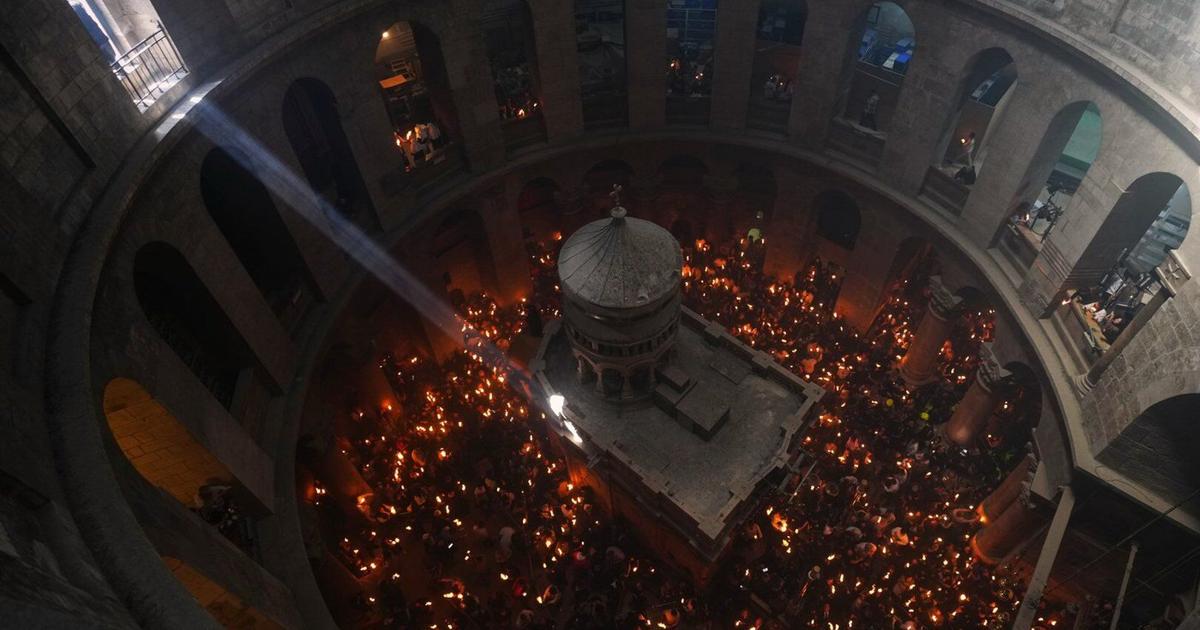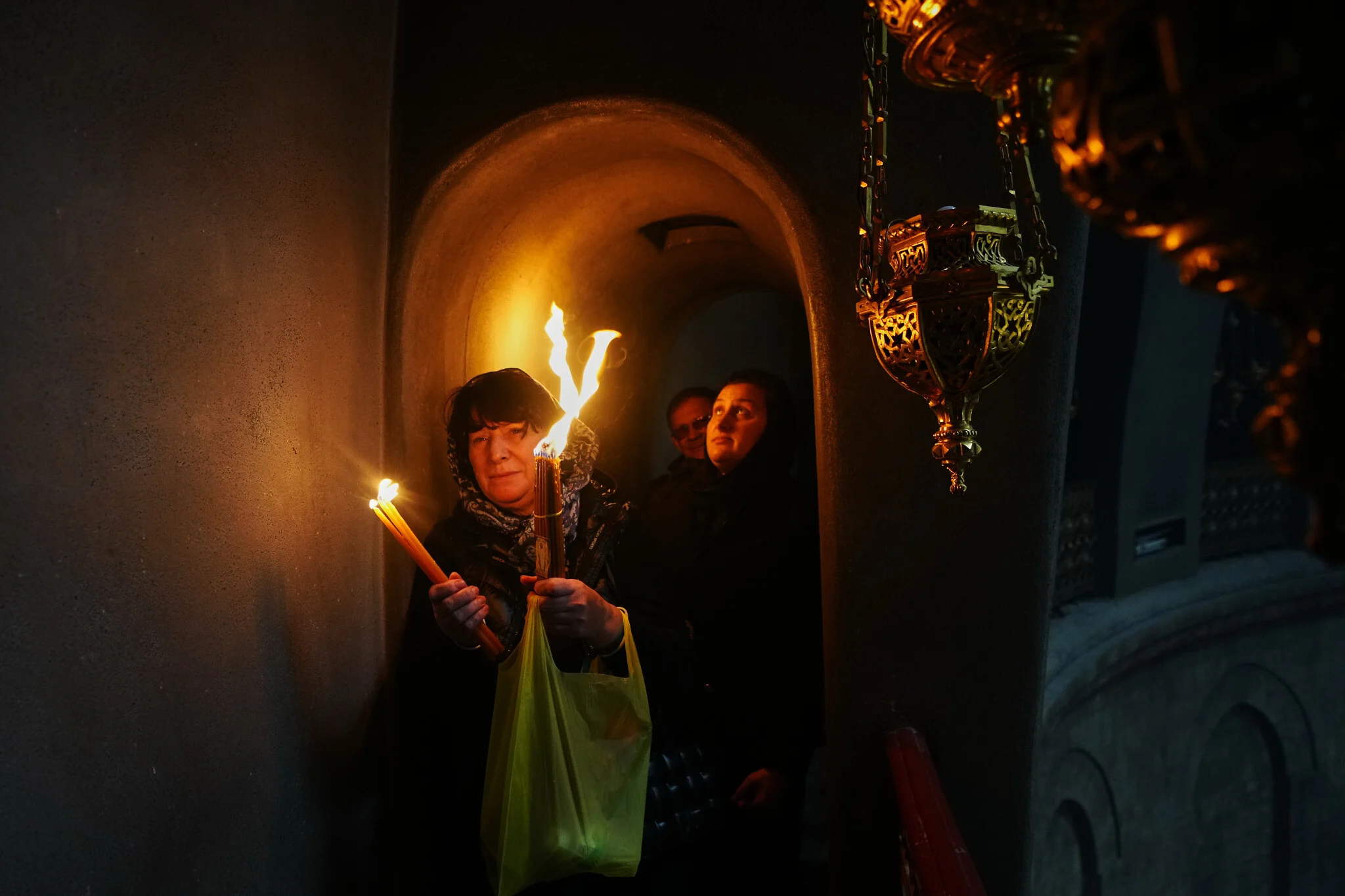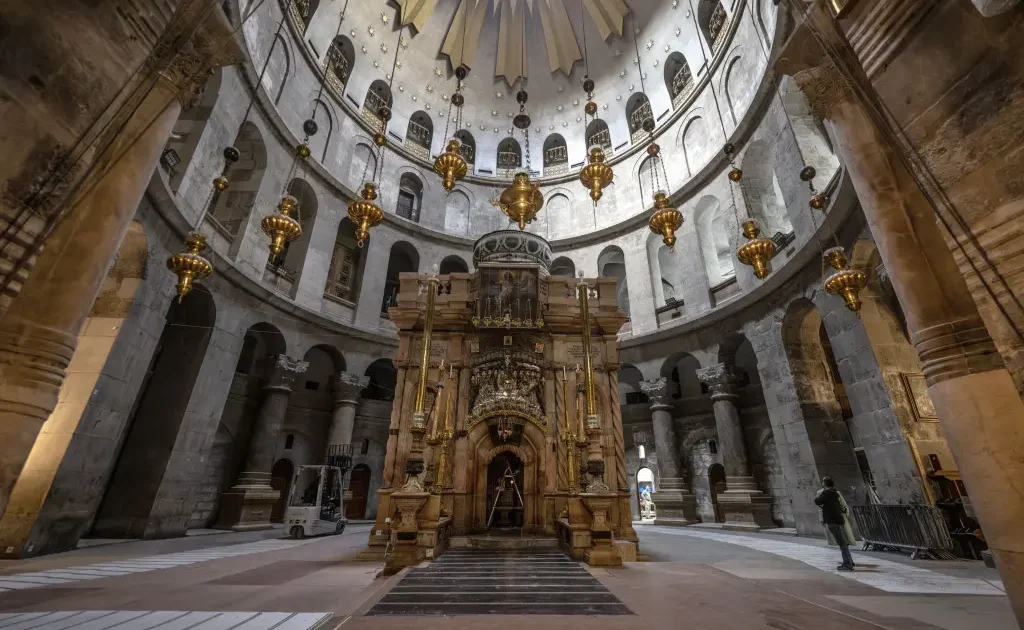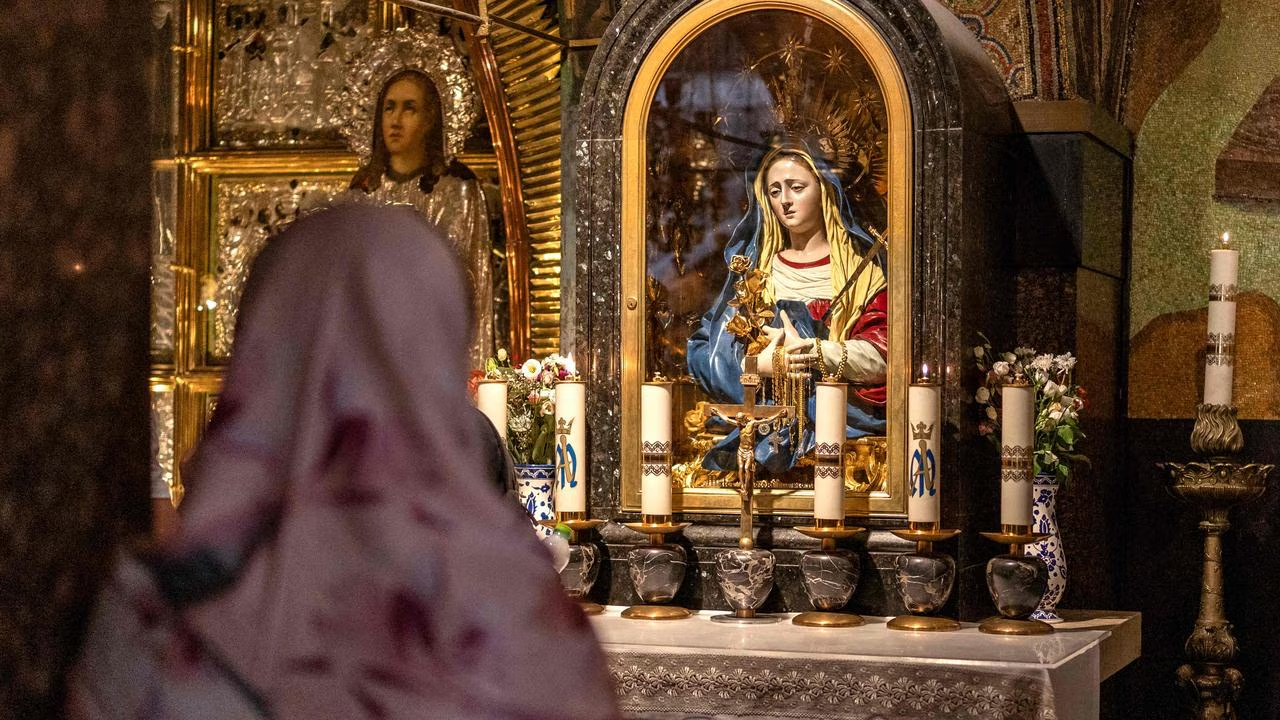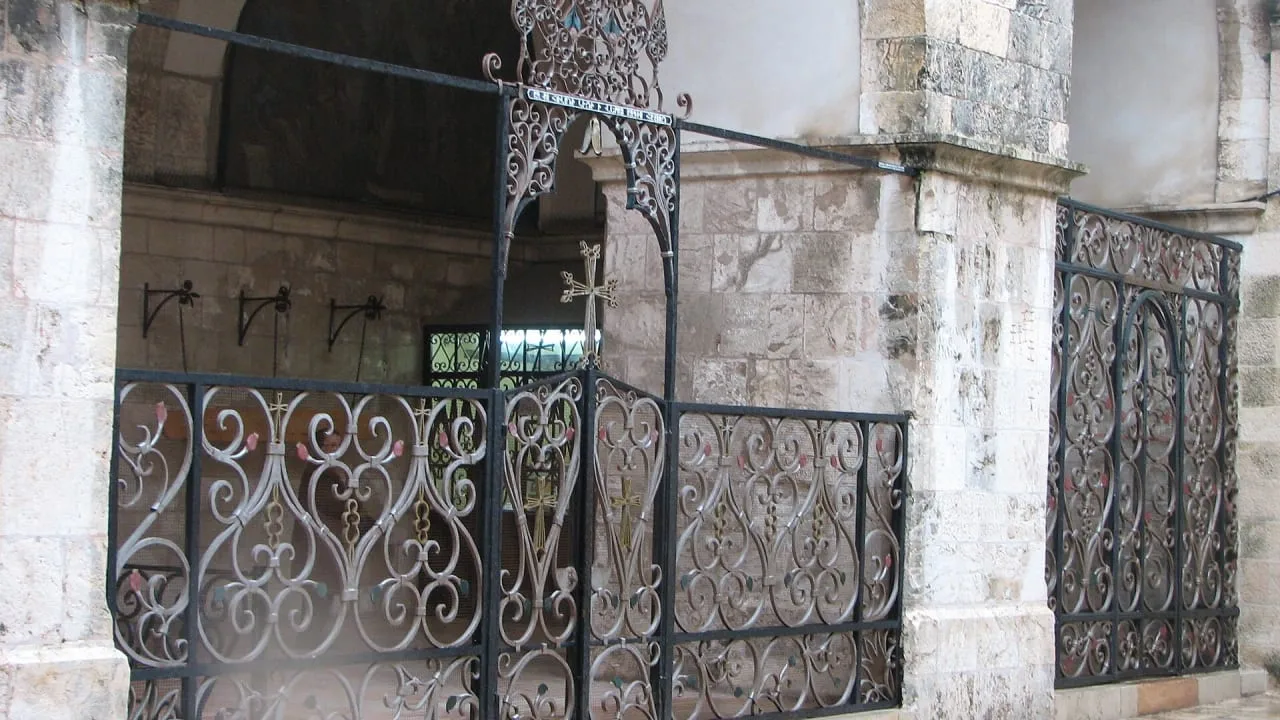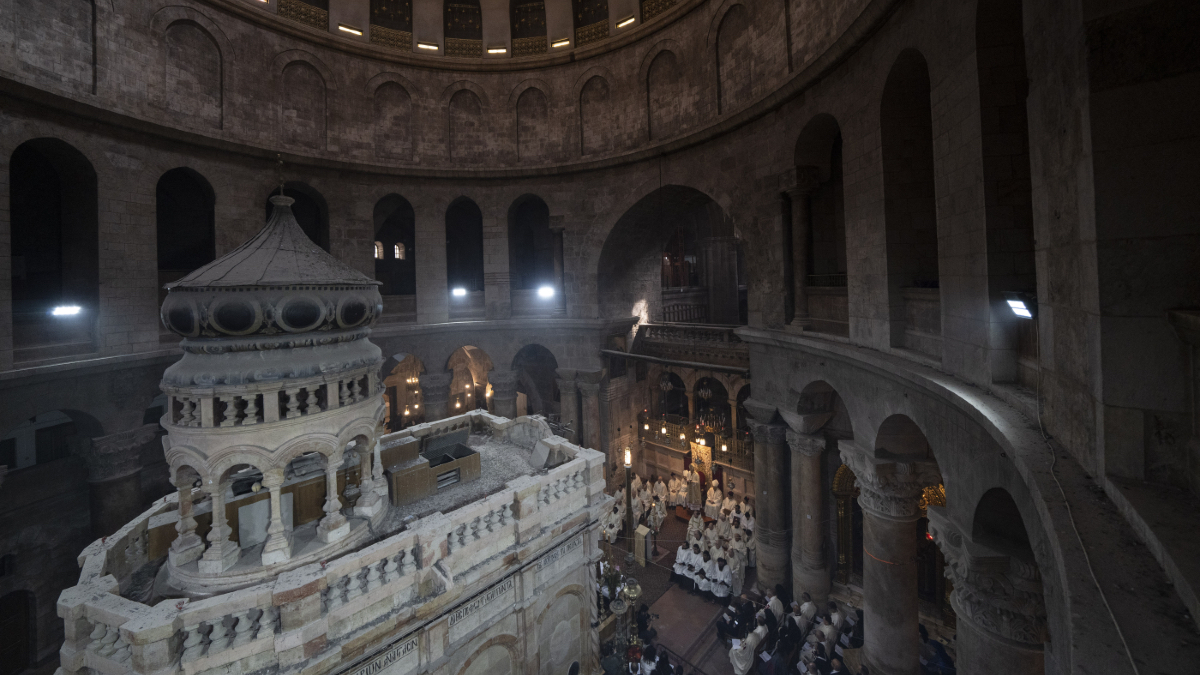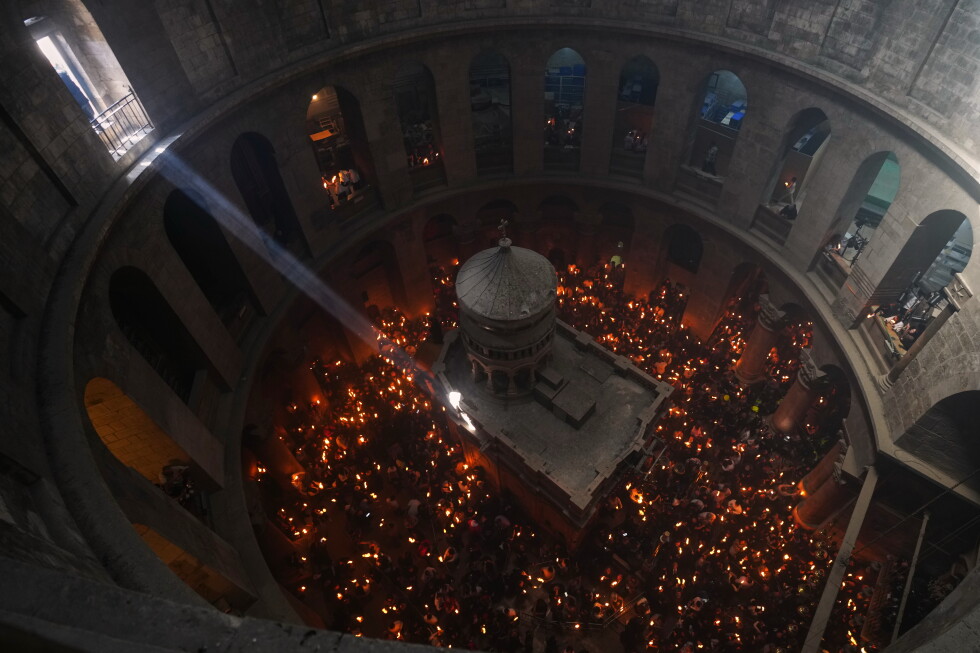
JERUSALEM (AP) — The enormous doors were pushed shut, the clanking bolts secured from the outside and several clergy, pilgrims and one journalist — me — were locked for the night inside one of Christianity’s holiest sites in Jerusalem.The Church of the Holy Sepulcher was built over the spots where Christians believe Jesus was crucified, buried and rose from the dead. Through many centuries, as Muslim rulers governed this region and changing politics affected the influence of religious powers, an arrangement evolved as unique as the church’s jumbled architecture. Today, the Armenian Apostolic, Catholic and Greek Orthodox churches share the ownership of the worship space. I watched through a tiny door slot as a representative from a Muslim family — they’ve been entrusted with the basilica’s keys since the 13th century — climbed a small wooden ladder to reach the upper bolt. Then he passed the ladder back through that same opening, which a Greek Orthodox priest locked shut too. Another wished us “Good night!” in English before hurrying away.Most nights, from 9 p.m. to dawn, when the doors are reopened with the same ceremony, about a dozen priests, a smattering of registered pilgrims and a few cats have the sprawling, dark basilica to themselves. While the priests and a few nuns quickly went about their rest or chores, it took us visitors a few quiet, contemplative moments to even decide where to start wandering in the venerated, labyrinthine space.
An AP reporter spends the night locked inside Jerusalem's holiest church with clergy and pilgrims
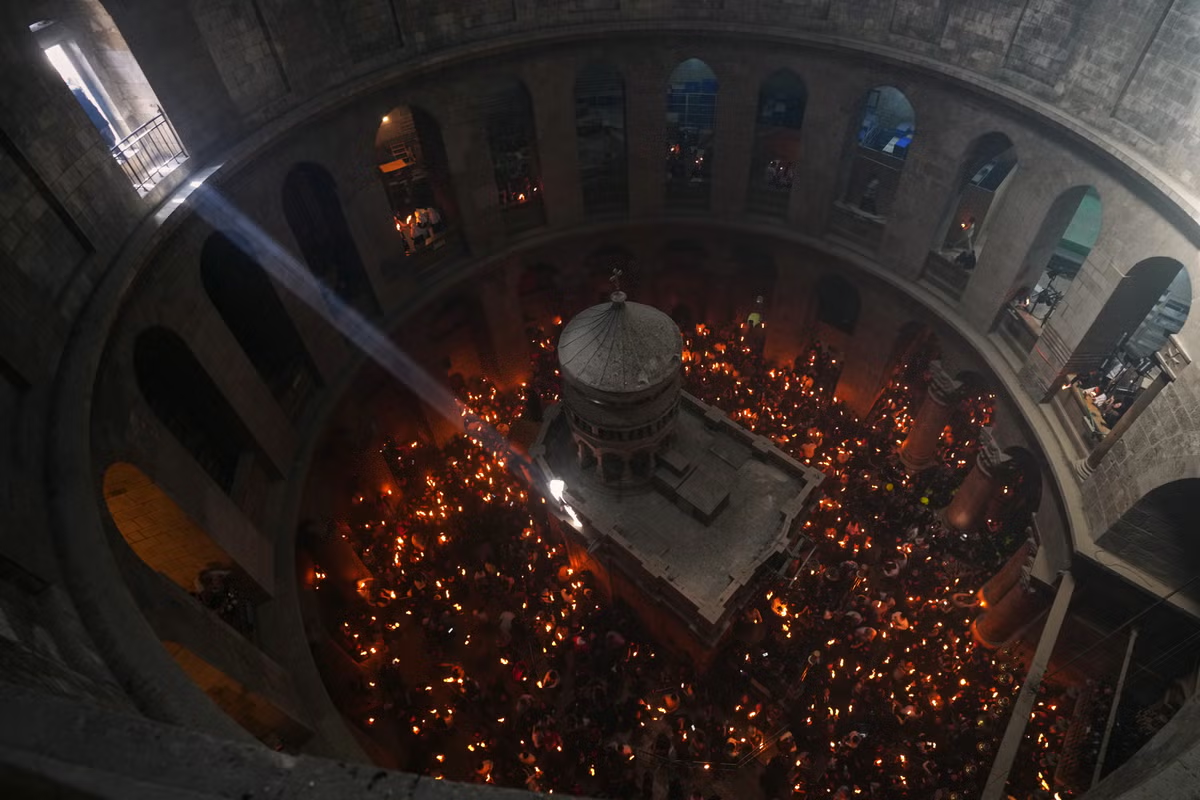
Jerusalem's Church of the Holy Sepulcher was built over the very spots where Christians believe Jesus was crucified, buried and rose from the dead.
1,249 words~6 min read