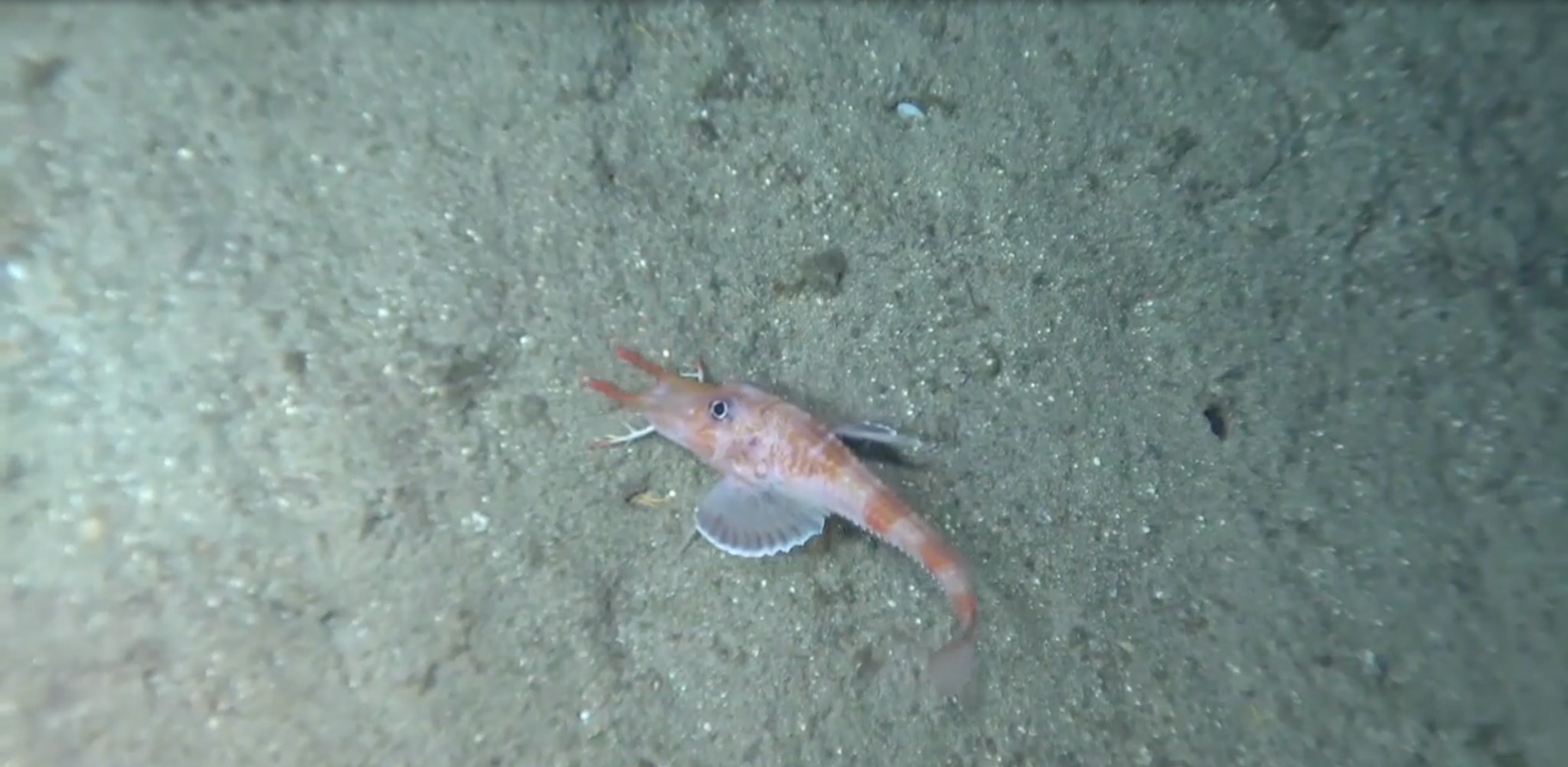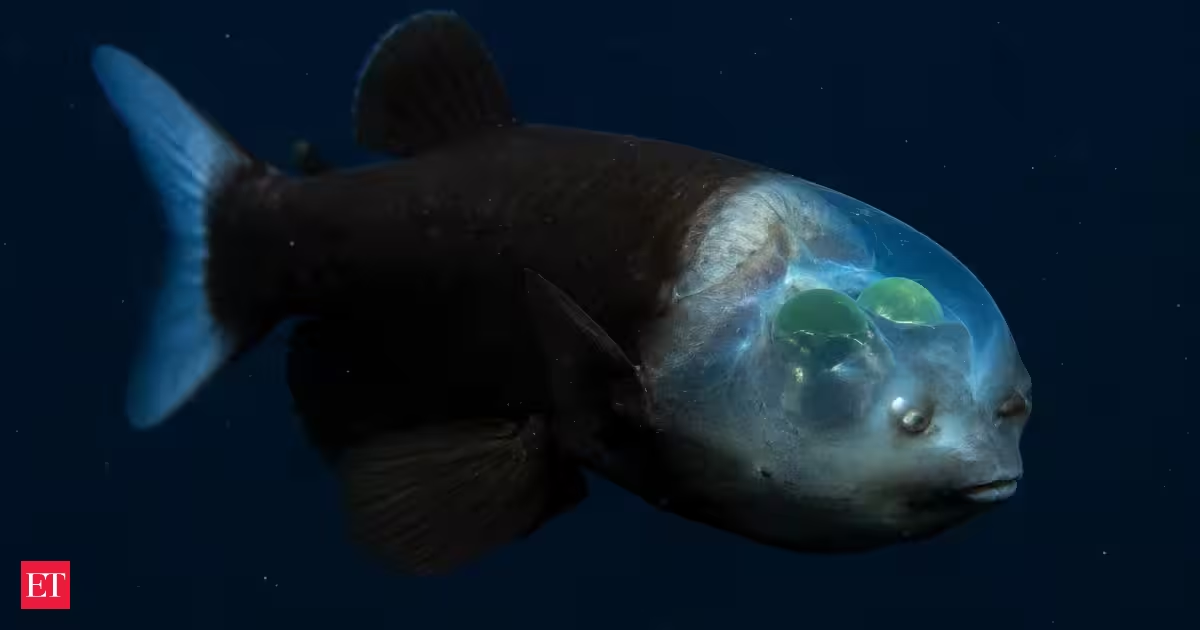
The expansive, abyssal darkness of the deep sea mirrors the mystique and grandeur of outer space. Hauntingly bioluminescent creatures shine like nebulae, 'marine snow' full of fish feces glitters like space dust, and alien-ish glowing sharks prowl the depths. And just like spacecraft, telescopes, and rovers, underwater submersibles can transport us to the oceans' coldest, darkest depths, revealing the creatures that live there. Traditional taxonomic studies often observed sea animals that were captured, killed, or washed ashore, but modern submersibles let us see them as they actually are, in their aquatic abodes, without destroying them. This can deliver some revelatory observations.Researchers in China have just filmed a weird shrimp-like fish scuttling sideways along the seafloor like a crab and even 'moonwalking' backward – a movement that has never been observed in any other fish.This dynamic behavior is enabled by a dizzying array of features that the researchers got a better look at in action. Scalicus engyceros, a species of armored searobin found in the western Pacific Ocean, was first described in 1872 and was already known for its 'walk'. The new footage, from the South China Sea, confirms that these fish use their thick, stiffened fin rays to scuttle around like shrimp and even jump in a jerky leap when threatened. "These walking fish harbor far more novel behavioral and evolutionary adaptations than previously assumed," says Han Tian, a marine scientist at Sun Yat-sen University and the study's first author. In the journal Ocean-Land-Atmosphere Research, the researchers also report observations of two other species of armored searobins (family Peristediidae) that were sighted between 350 and 500 meters (1,148 and 1,640 feet) using the human-occupied vehicle Shenhaiyongshi (meaning deep-sea warrior) and the remotely operated vehicle Haiqin. "By observing deep-sea animals alive in their surrounding environment, we can gain insight into the adaptation and evolution of the species," Tian says.
Scientists Filmed an Alien-Looking Fish Moonwalking Across The Seafloor
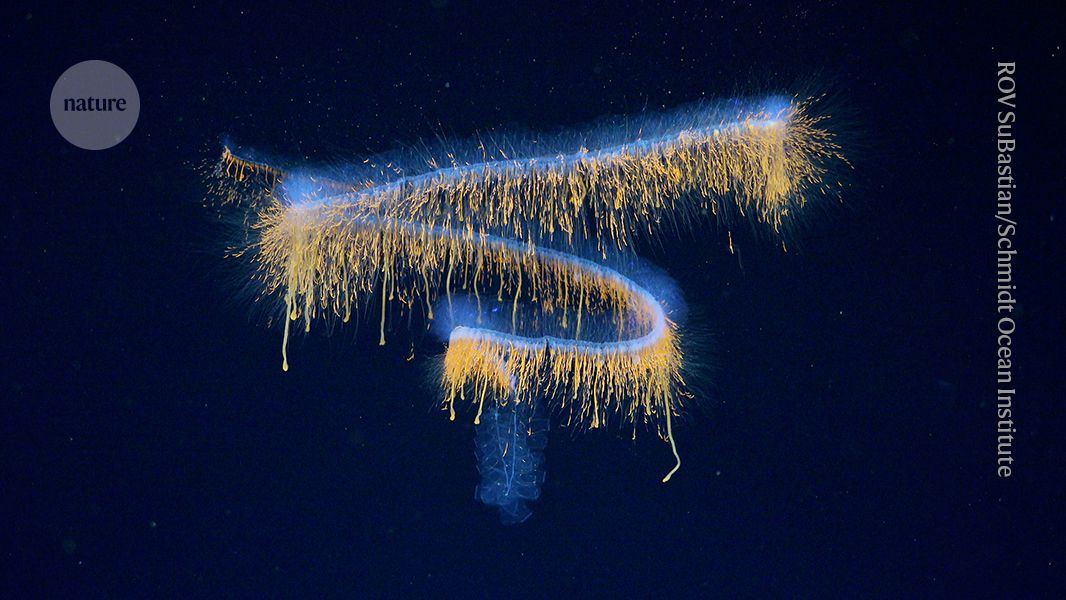
The expansive, abyssal darkness of the deep sea mirrors the mystique and grandeur of outer space. Hauntingly bioluminescent creatures shine like nebulae, 'marine snow' full of fish feces glitters like space dust, and alien-ish glowing sharks prowl the depths. And just like spacecraft, telescopes, and rovers, underwater submersibles can transport us to the oceans' coldest, darkest depths, revealing the creatures that live there.
846 words~4 min read