The month’s sharpest science shots, selected by Nature’s photo team.
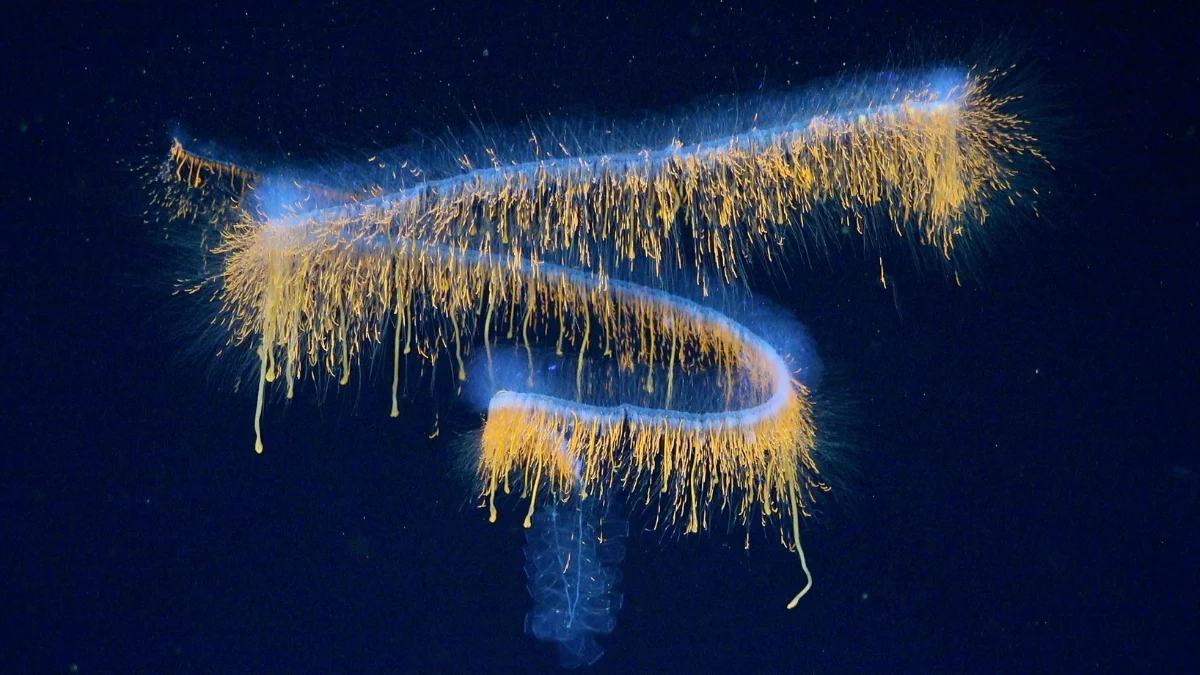
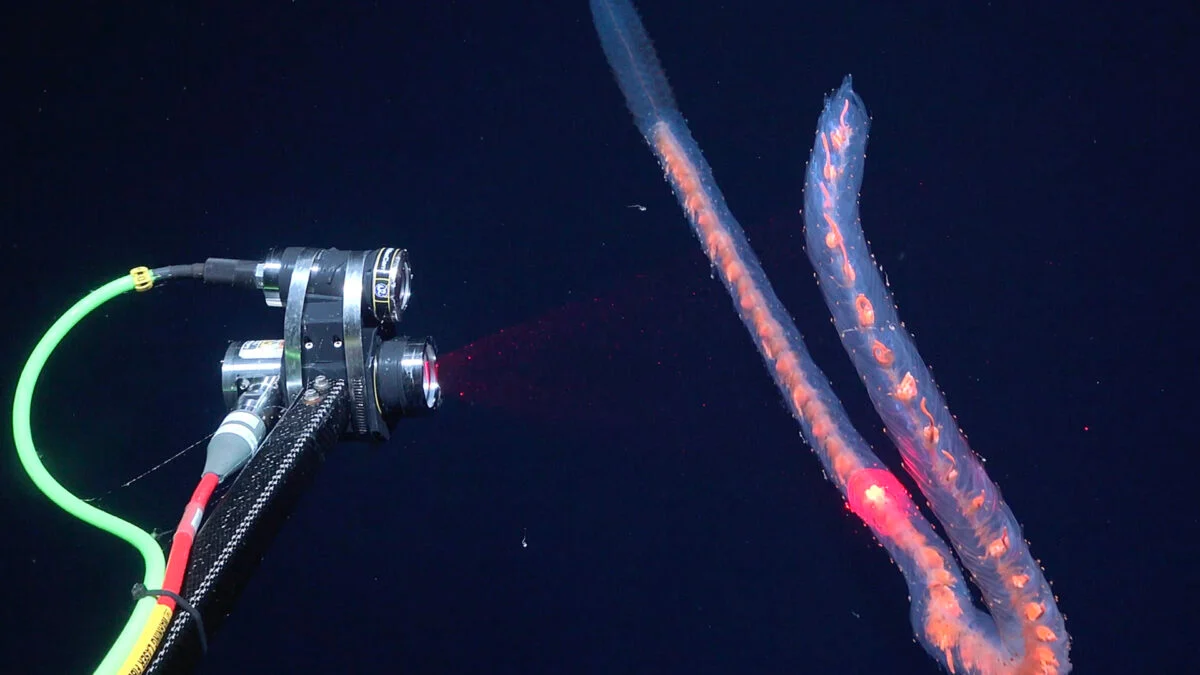
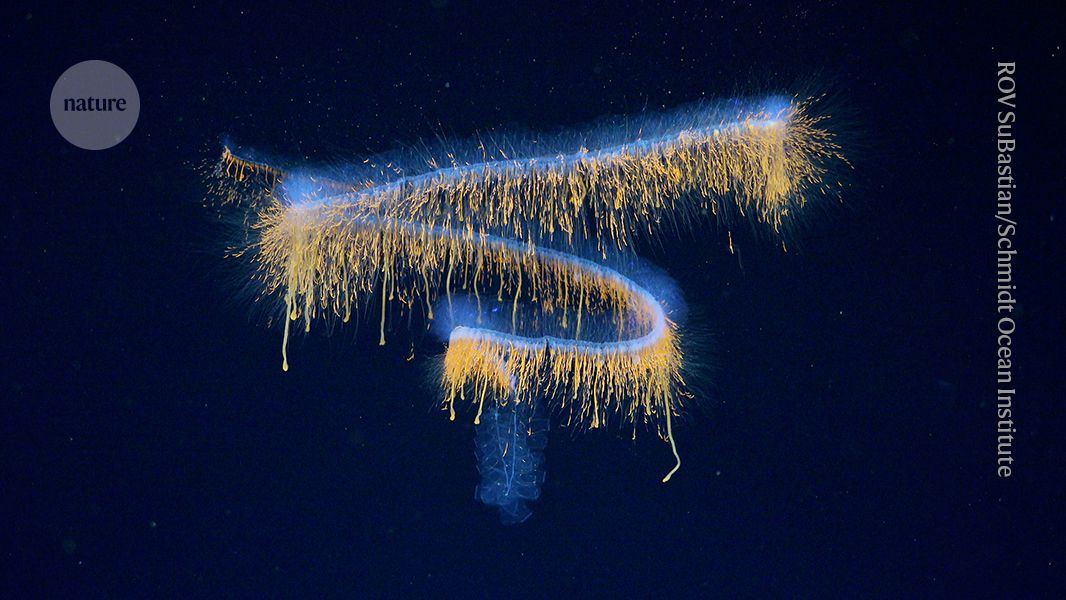
Deep-sea oddities. An invertebrate known as siphonophore swims 552 metres deep in the tropical South Atlantic Ocean — and is one of 31 species discovered during a deep-sea expedition off the coast of Brazil. The researchers explored the ocean’s midwater, an area that stretches from just below the sunlit surface to the sea floor, and forms the largest habitable ecosystem on Earth. With laser-imaging tools, the team captured 3D, millimetre-scale footage of animals in their natural habitat. The new species include a gossamer worm, nine jellyfish, seven siphonophores and seven comb jellies. Researchers say that the siphonophore in this image might belong to an undescribed genus.
Green aurora arching over Earth’s horizon and clouds, captured from the International Space Station., image
Aurora down under. From aboard the International Space Station, astronaut Jessica Meir captured these stunning images of the southern lights (aurora australis) above the Indian Ocean and southwest of Perth, Australia. The arc of light is caused by the interaction between charged particles from the Sun, known as the solar wind, and Earth’s magnetic field. Green is produced at lower heights and red at higher altitudes, as seen in the image.