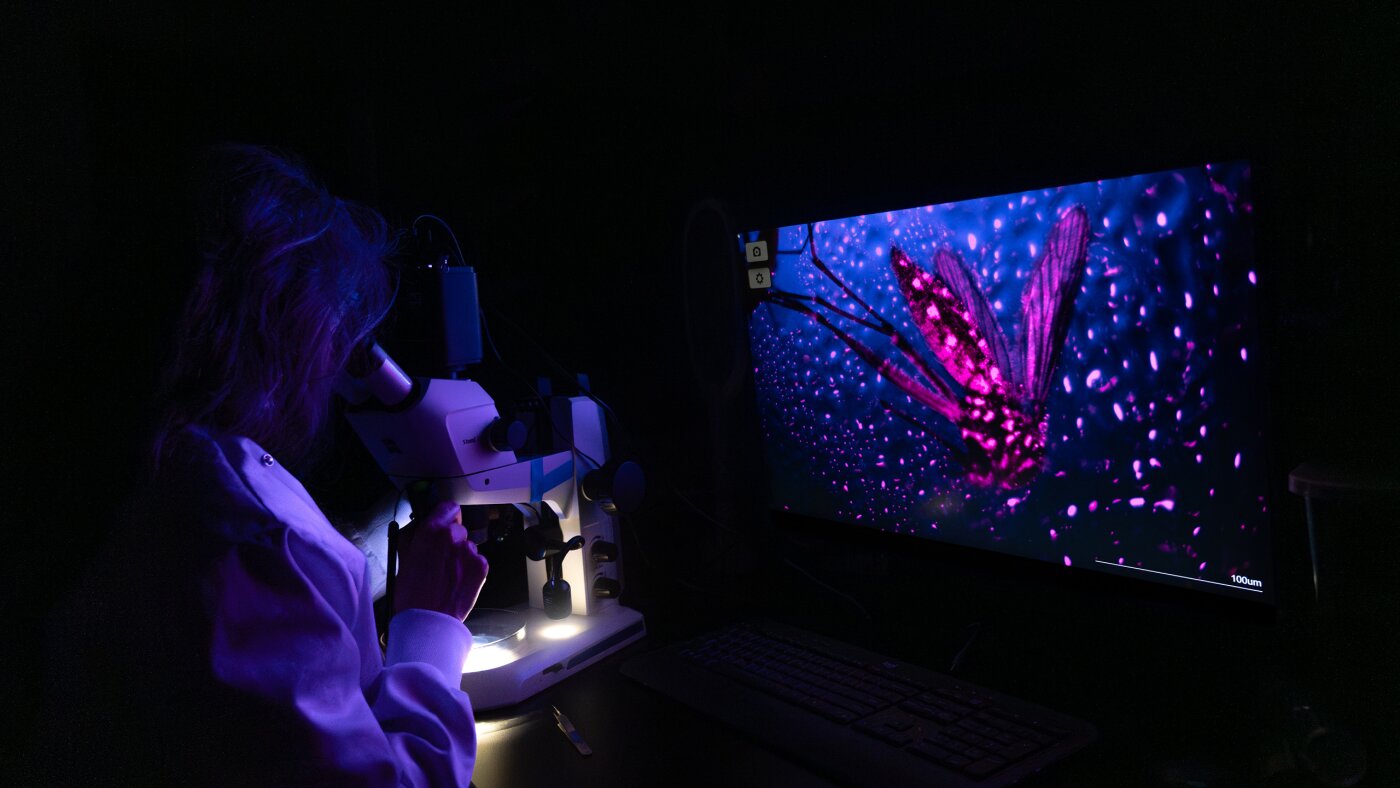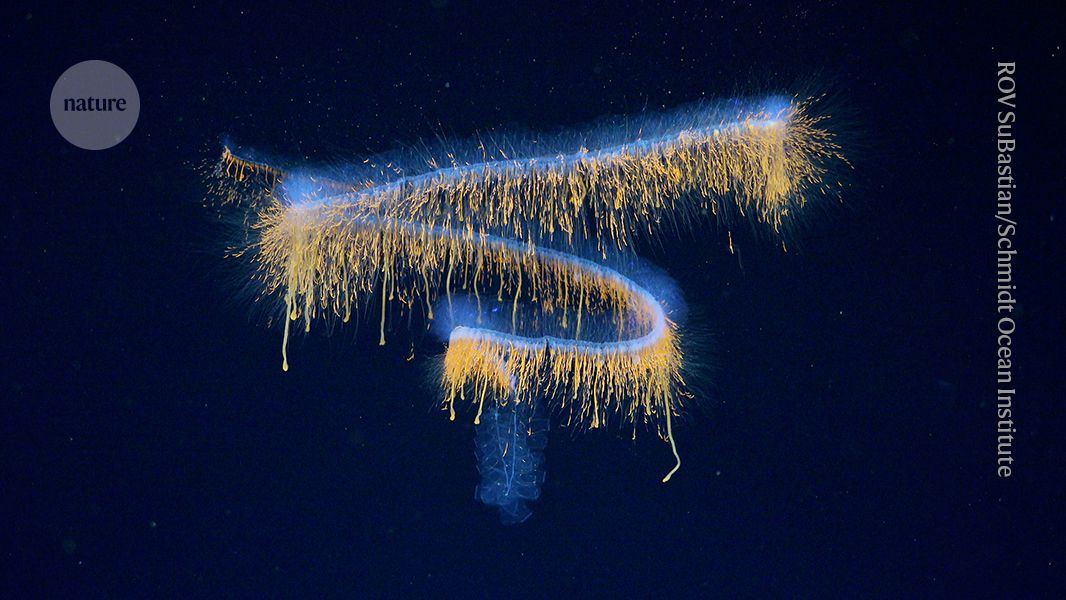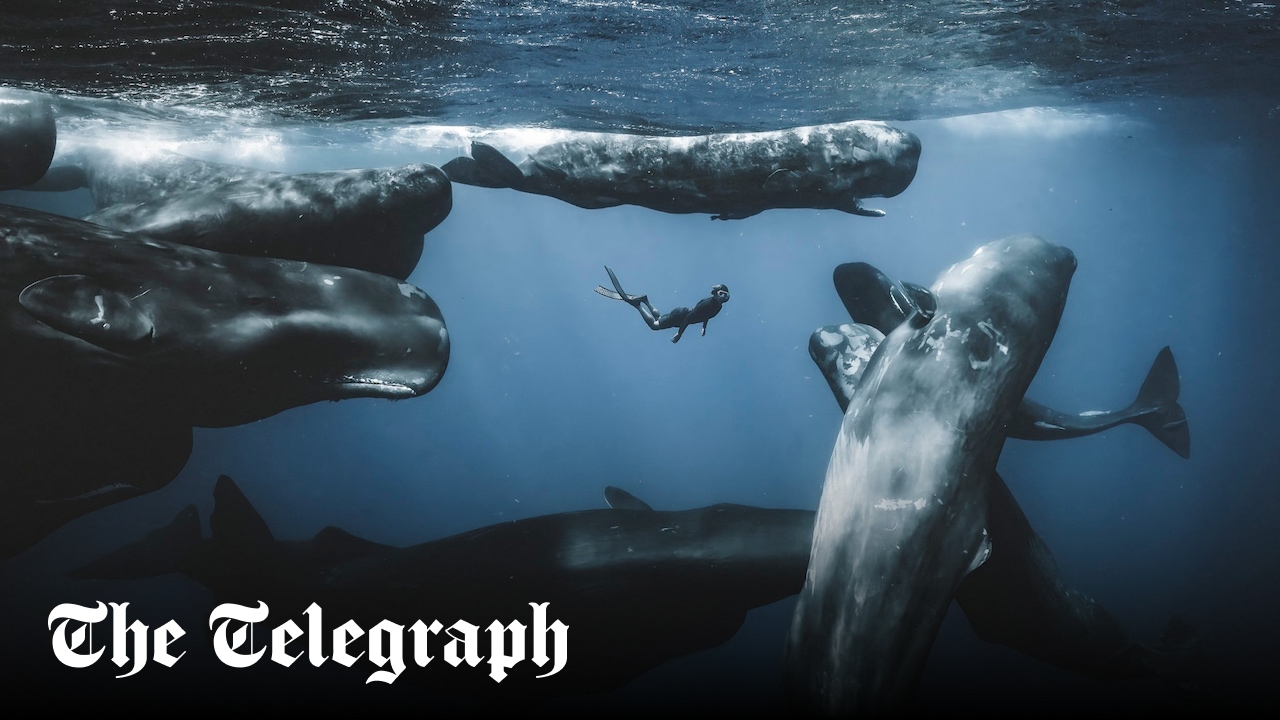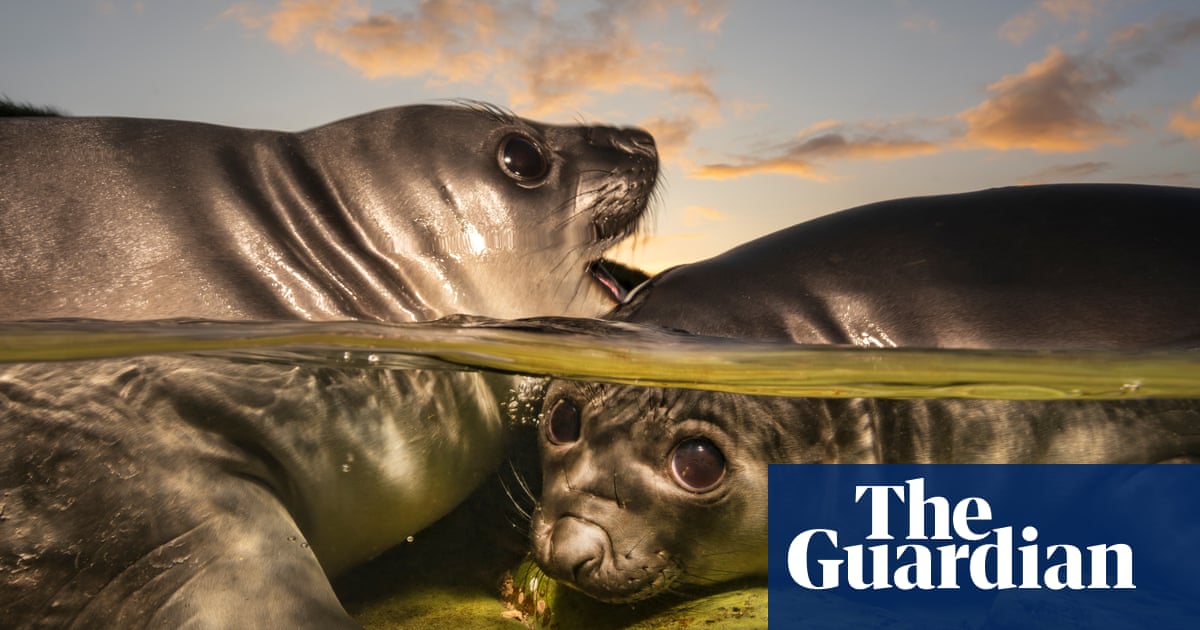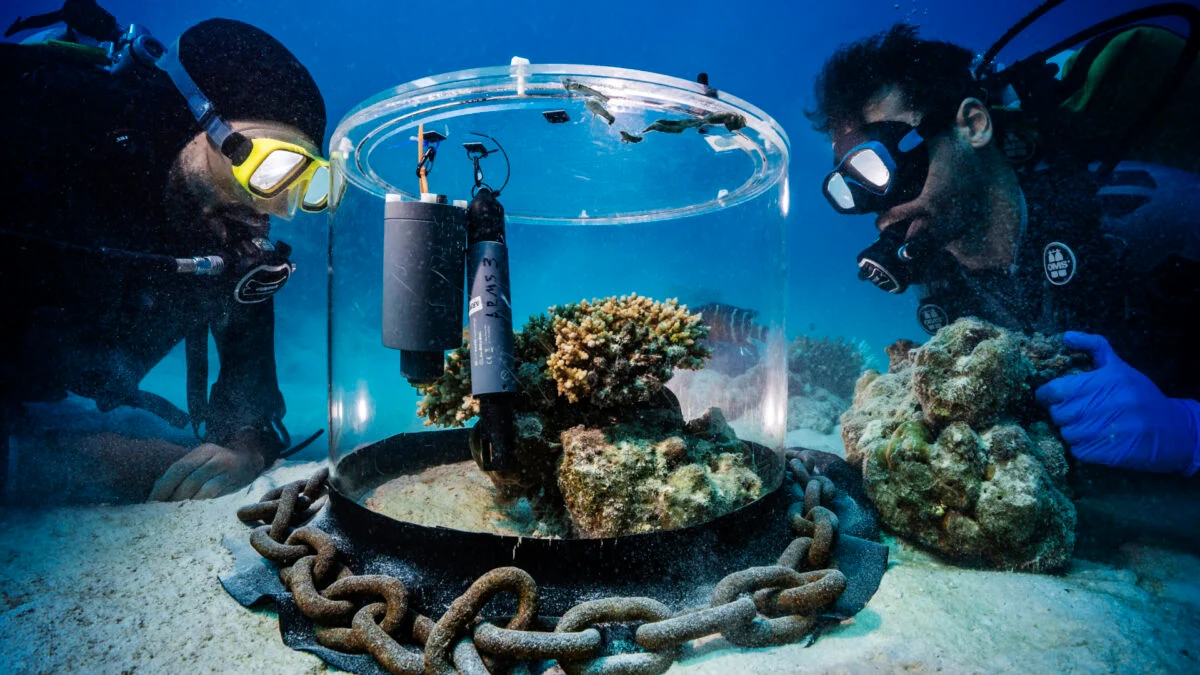
In the photo above, marine biologists Nauras Daraghmeh and Yusuf El-Khaled install an incubation chamber over a coral reef community deep underwater in the Red Sea. The chambers measure the amount of oxygen consumed and produced by corals and their symbiotic algae, allowing researchers to sneak a peek into how this valuable yet endangered ecosystem operates. But this photograph—captured by freelance marine biologist Uli Kunz—is also special in that it offers a rare snapshot into the people behind essential research. Accordingly, the image was one of five finalists in this year’s Scientists at Work competition, hosted by Nature. This year, scientists across the world submitted more than 220 entries, and a panel consisting of Nature’s staff selected the winners, which can be seen here. Algal bloom Credit: Haolun (Allen) Tian Seen from above, the toxic algal blooms in Dog Lake, Ontario, instill a certain calmness that underlies their menacing presence. Things are even worse if you’re actually on the tiny boat, according to Haolun “Allen” Tian, a PhD student at Queen’s University in Canada, who took this winning photograph. Nearer to the lake surface, there’s a distinct “toxic, vile-smelling layer of rot,” Tian told Nature News.
These Award-Winning Science Photos Capture the Beauty—and Weirdness—of Research
From fluorescent mosquitoes to scientists swimming alongside whale sharks, Nature's annual photo contest offers a rare look at science in action.
TL;DRAI
Nature's photography competition selected winners from 220+ entries on research documentation—coral monitoring, algae tracking, wildlife studies—signaling visual communication as critical to modern science. Tech leaders should note: research credibility and funding now depend on visual storytelling alongside methodology; communication is competitive advantage, not afterthought.
574 words~3 min read