Originally published on tamiz.pro.
The headline is not clickbait; it is a diagnostic artifact. In the current wave of AI developer tooling, we are witnessing a painful but necessary maturation phase. We have moved past the "chat with a bot" era into the "autonomous agent" era, where LLMs are no longer just generating text but executing multi-step workflows, calling APIs, and managing state.
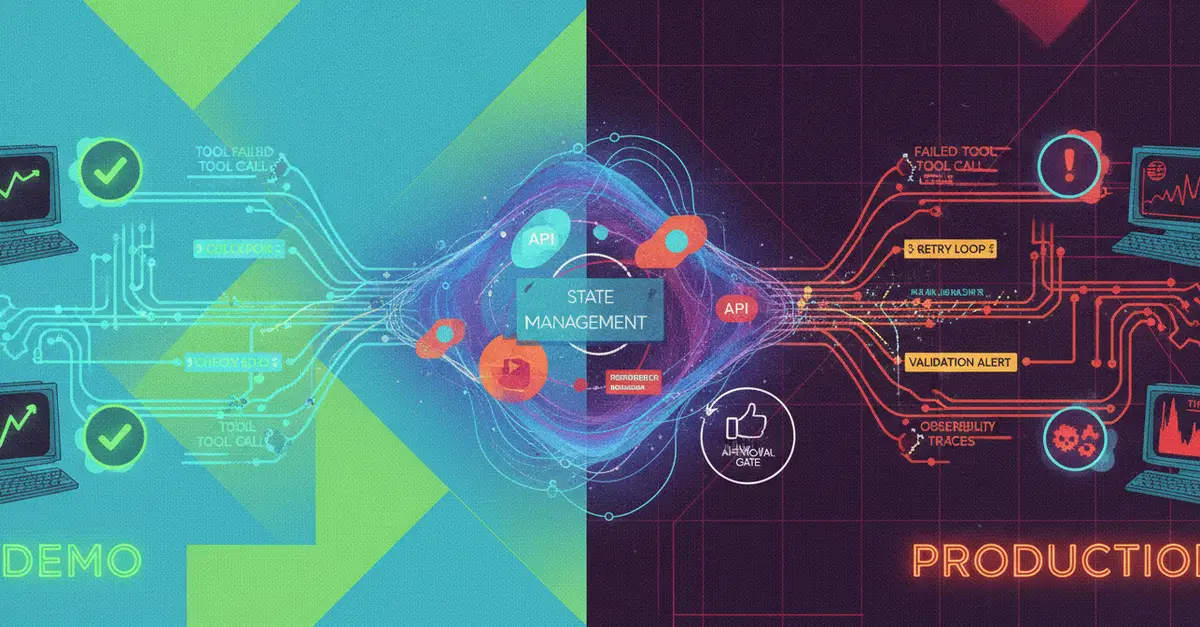
However, this capability comes with a brutal statistical reality: the compounding probability of failure. If each step in an agent's chain has a 95% success rate, a 10-step task has only a ~60% chance of completion. A 20-step task drops to ~35%. This is the "Trust Gap" that is currently breaking production deployments.
This article analyzes why agents refuse, loop, or fail silently, and how emerging infrastructure from companies like GStack and Orca is attempting to close this gap by treating agent reliability as a systems engineering problem, not just a prompt engineering one.
The Mathematics of Refusal