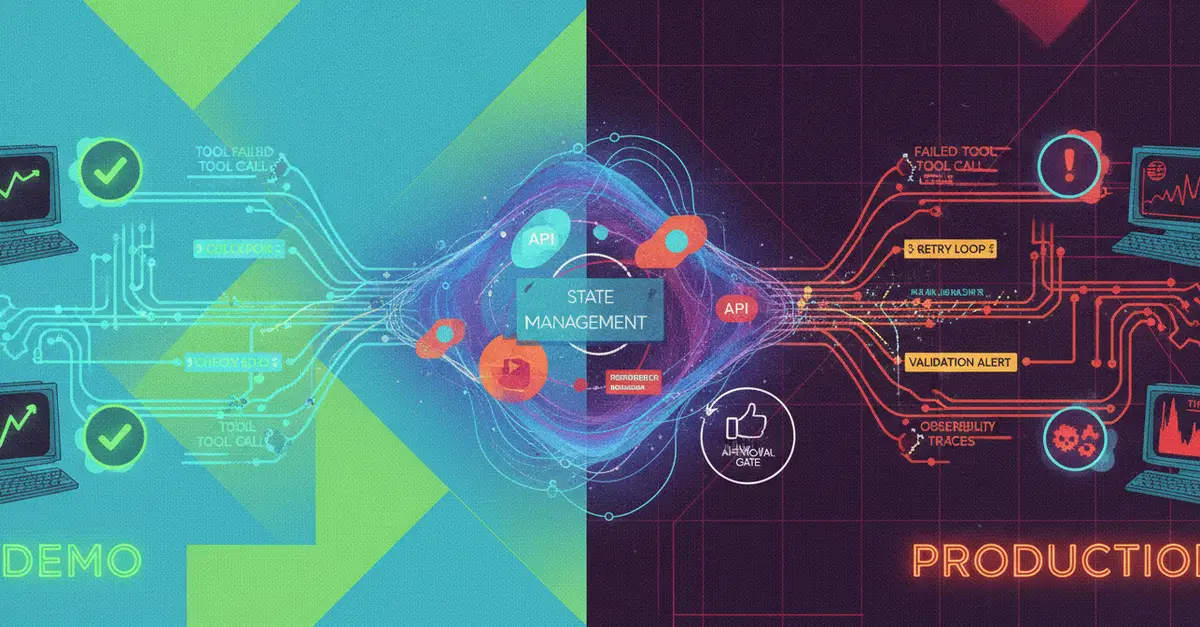
Why Our AI Agent Still Stumbles on Full-Stack Apps
We've all been there. You're riding high on the AI hype, picturing your agent effortlessly spinning up features, leaving you free for higher-level architectural decisions. You feed it a prompt like, "Build me a simple user profile page with authentication, connected to a database, using Next.js and TypeScript." You hit enter, grab a coffee, and expect magic.
More often than not, what you get back is… well, it's something. It might be syntactically correct, perhaps even impressive in parts. But when you try to integrate it, to make the pieces talk to each other harmoniously, it often feels like trying to connect a square peg to a round hole. The agent struggles, and frankly, so do we trying to fix its output.
The Seams, Not Just the Parts: Why Full-Stack is More Than Sum of Its Halves
In my experience, AI agents, especially Large Language Models, are fantastic at generating code for isolated problems. Need a React component? A SQL query? A utility function? They'll often nail it. But a full-stack application isn't just a collection of frontend, backend, and database parts. It's the intricate, often implicit, contracts between them.