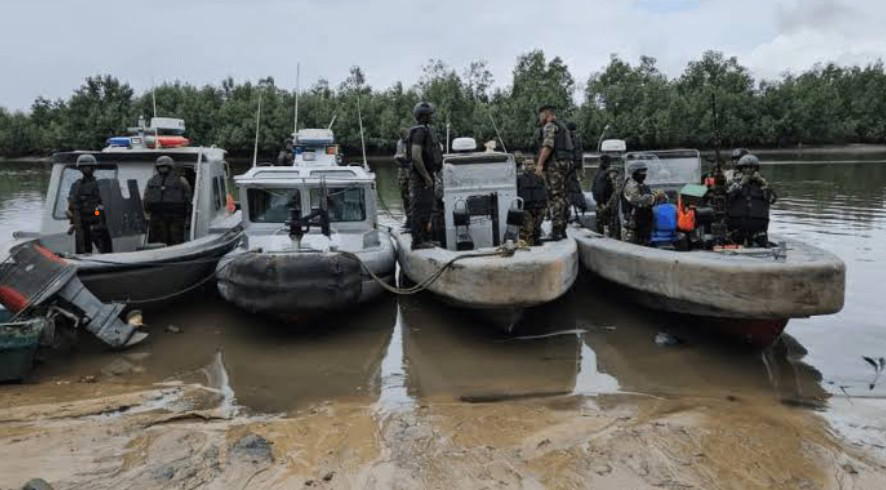
To tackle illegal, unreported and unregulated fishing and protect Nigeria’s marine resources, the Nigerian Navy recently launched Operation Abo Eja, a joint patrol crackdown with the Federal Department of Fisheries and Aquaculture. By the time the operation ended, three fishing trawlers had been intercepted and about 30 crew members arrested over suspected fisheries violations. The arrests came at a time when Nigeria imports more than 70 per cent of its fish requirements, making the protection of local fish stocks critical to food security, coastal livelihoods and the country’s blue economy ambitions. Chiemelie Ezeobi reports
Nigeria’s fish crisis is no longer just about what happens in the markets. It begins much farther offshore, where illegal fishing is steadily taking a bite out of the country’s fish stocks, depriving legitimate fishermen of catches, denying government revenue and putting further pressure on a country that already imports more than 70 per cent of its fish requirements.
‘Measuring’ the Deficit, Damage
Nigeria’s annual fish demand is estimated at about 3.6 million tonnes, against local production of roughly 1.1 million tonnes, leaving a deficit of about 2.5 million tonnes. At the same time, estimates of what the country loses to illegal, unreported and unregulated (IUU) fishing range from more than $30 million annually in a United Nations assessment to about $70 million, according to the Fisheries Cooperative Federation of Nigeria.