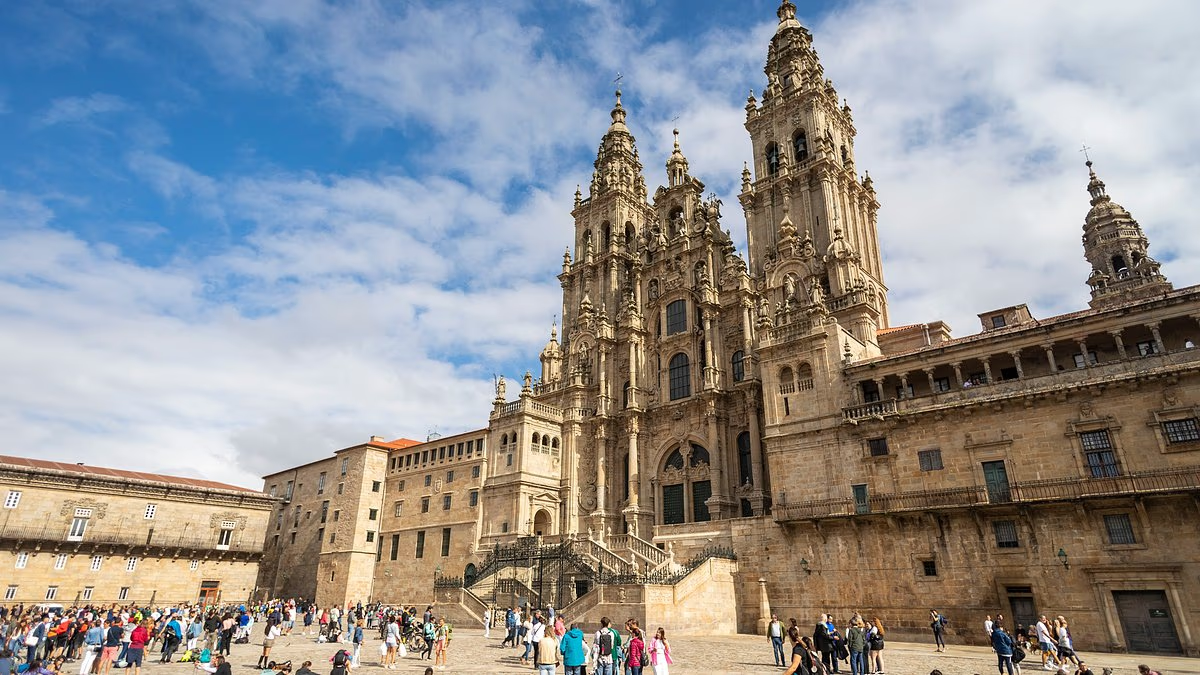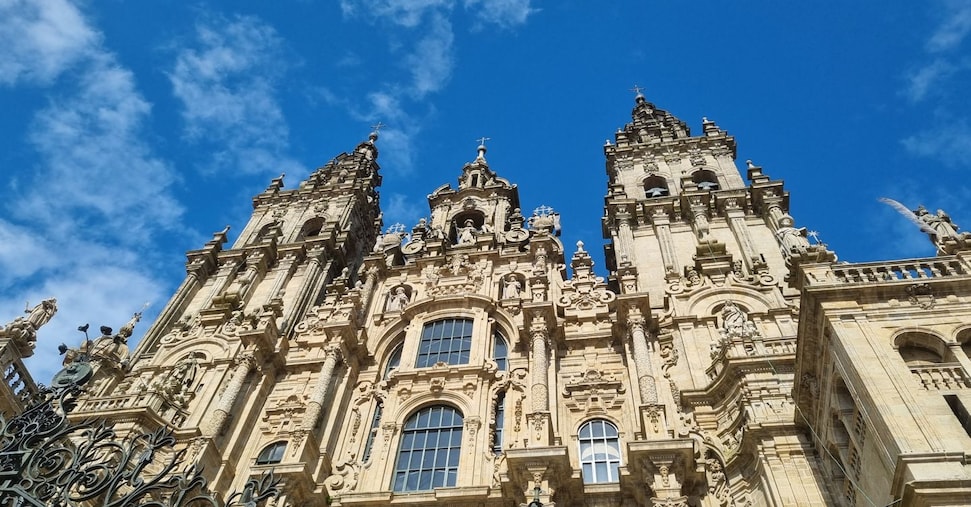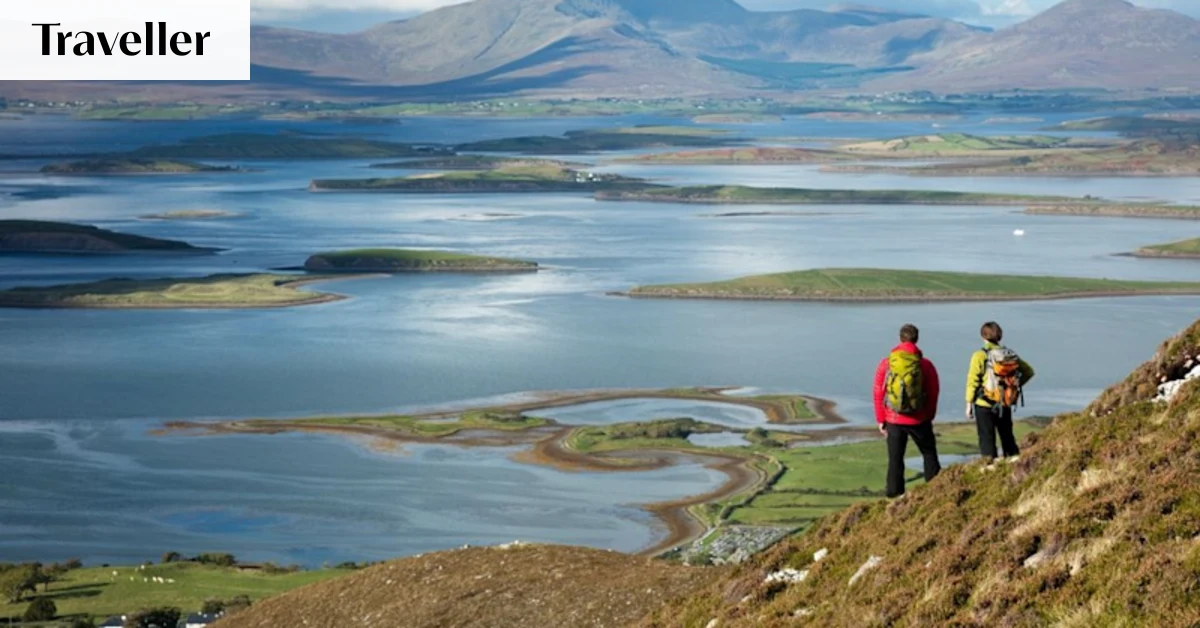
August 31, 2026 — 5:00amI’m not a great fan of Irish jokes, but there’s one that makes me chuckle. When a lost tourist in a remote Irish village stops to ask directions to Dublin, she’s told “well, I wouldn’t start from here”.If “doing the Camino” is something you’re planning, beginning the hike in Ireland may not be front of mind. But now you can begin your camino (the Spanish word for “way”) in Ireland, and it contributes towards “el camino”, the popular pilgrimage that terminates at the shrine of St James (Santiago in Spanish) in the Galitian capital of Santiago de Compostela in north-west Spain.Walkers on the slopes of Croagh Patrick, above Clew Bay in County Mayo, Ireland.Pilgrimages to the shrine date to medieval times when the so-called “cult of St James” took root across Western Europe following the discovery of what was determined to be the burial place of the apostle in Spain. A cathedral – the imposing Catedral Basílica de Santiago de Compostela – was completed in the 13th century on the spot where his remains were found. Pilgrimages from as far away as Ireland became popular in medieval times, but only wealthier believers could afford the trip.According to historian Turlough O’Donnell, the earliest reference we have to the Irish pilgrimage to Santiago is in 1219, just six years after the cathedral was consecrated.St James’ Gate in Dublin, made famous more recently as the site of the Guinness brewery, was one of the traditional departure points for Irish pilgrims pursuing The Way of St James. Others included Cork, Waterford, Galway and the Kerry town of Dingle. Pilgrims would travel from one of these Irish ports to A Coruna or Ferrol on the north-western tip of the Iberian Peninsula. From there, pilgrims continued on foot to the sacred site about 75 kilometres away. This “way” has become a unique pilgrimage route known as the Celtic Camino.Sign up for the Traveller Deals newsletterGet exclusive travel deals delivered straight to your inbox. Sign up now.Walkers on the Boyne Valley Camino, which meanders through Ireland’s ancient east.A Boyne Valley Camino sign near Townley Hall Woods in Co Louth, Ireland. Billy CantwellThe distance is significant because these days, to receive your official compostela (the certificate that proves you’ve completed the route), you must have walked at least 100 kilometres. Making up the other 25 kilometres has led to the establishment of a network of authentic caminos across Ireland that can contribute to your compostela. The Irish Society of the Camino de Santiago (now also known as the Camino Society Ireland) issues the “passport” and, once you’ve collected the requisite stamps, the certificate confirming that you have completed this route. You must then present your certificate at the Pilgrim’s Office when you finish your Camino de Santiago in Spain.There are 10 routes to choose from if you want to kick off your camino in Ireland. For keen hikers, the circuit offers a perfect smorgasbord of diverse Irish landscapes, cosy villages, local legend and monastic history.For instance, the 63-kilometre Croagh Patrick Heritage Trail in County Mayo on Ireland’s Atlantic coast extends from the town of Balla, an early Christian monastic site, westwards via the gloriously named Ballintubber to the picturesque seaside village of Murrisk which sits at the foot of Croagh Patrick (764 metres), a popular pilgrimage destination in its own right.Hikers on Croagh Patrick in County Mayo, part of the camino.Further south, the 57-kilometre Kerry Camino, part of the Kerry Way, stretches from Tralee to Dingle and is usually navigated over three days. It follows in the footsteps of St Brendan the Navigator (the locals, if you believe them, will tell you St Brendan reached the Americas 1000 years before Columbus) and crosses rugged mountain and coastal landscapes. Happily, it’s punctuated by cosy pubs in the villages of Camp and Annascaul.Nearer the capital, St Kevin’s Way (32 kilometres) takes you through the hills of Wicklow to the stunning valley of Glendalough where the saint spent the last part of his life in solitary prayer and contemplation. After Kevin’s death in AD618, what had been a humble hermit’s retreat developed into an impressive monastic city, the ruins of which – including Glendalough’s magnificent round tower – are still standing.I took on the Boyne Valley Camino, a 25-kilometre picturesque hike that stretches from the haunting ruins of the 12th century Old Mellifont Abbey – Ireland’s first Cistercian monastery – through the riverside Townley Hall Woods and past the site of the Battle of the Boyne, a pivotal conflict that was to leave a profound legacy for both Britain and Ireland. It was here in 1690 that the Protestant King William of Orange defeated King James II, the last Catholic monarch of England. A visitor centre is now housed in the stately Oldbridge House, where you can find out more about the battle and its legacy.The Boyne Valley contains many extraordinary heritage sites and a short diversion from the camino takes you to Newgrange – a 5200-year-old passage tomb that predates both Stonehenge and the Great Pyramids of Giza.Back on the trail, you can get your “passport” stamped at sites along the way, including at the Morning Star pub in the sleepy village of Tullyallen. At the time I visited, the pub, sadly, was closed. Never mind, it’s a perfect excuse to go back, and then I can worry about the Spanish bit.THE DETAILSWALKSelf-guided Celtic Camino walk packages including accommodation and luggage transfer are available through operators such as Hilltop Treks. See hilltoptreks.comYou can order your pilgrim passport (€10/$16.50) online from Camino Society Ireland or pick one up in person by visiting the sacristy at St James’ Church, James Street, Dublin 8.See caminosociety.ieFLYAirlines including Qatar, Etihad and Emirates offer one-stop flights to Dublin from Sydney and Melbourne.The writer travelled at his own expense.From our partners
One of the world’s greatest walks can now begin in an unusual place
If you intend to do “the Camino”, you’re probably not thinking about beginning the hike starting in a place separated from Spain by a stretch of ocean.
968 words~4 min read