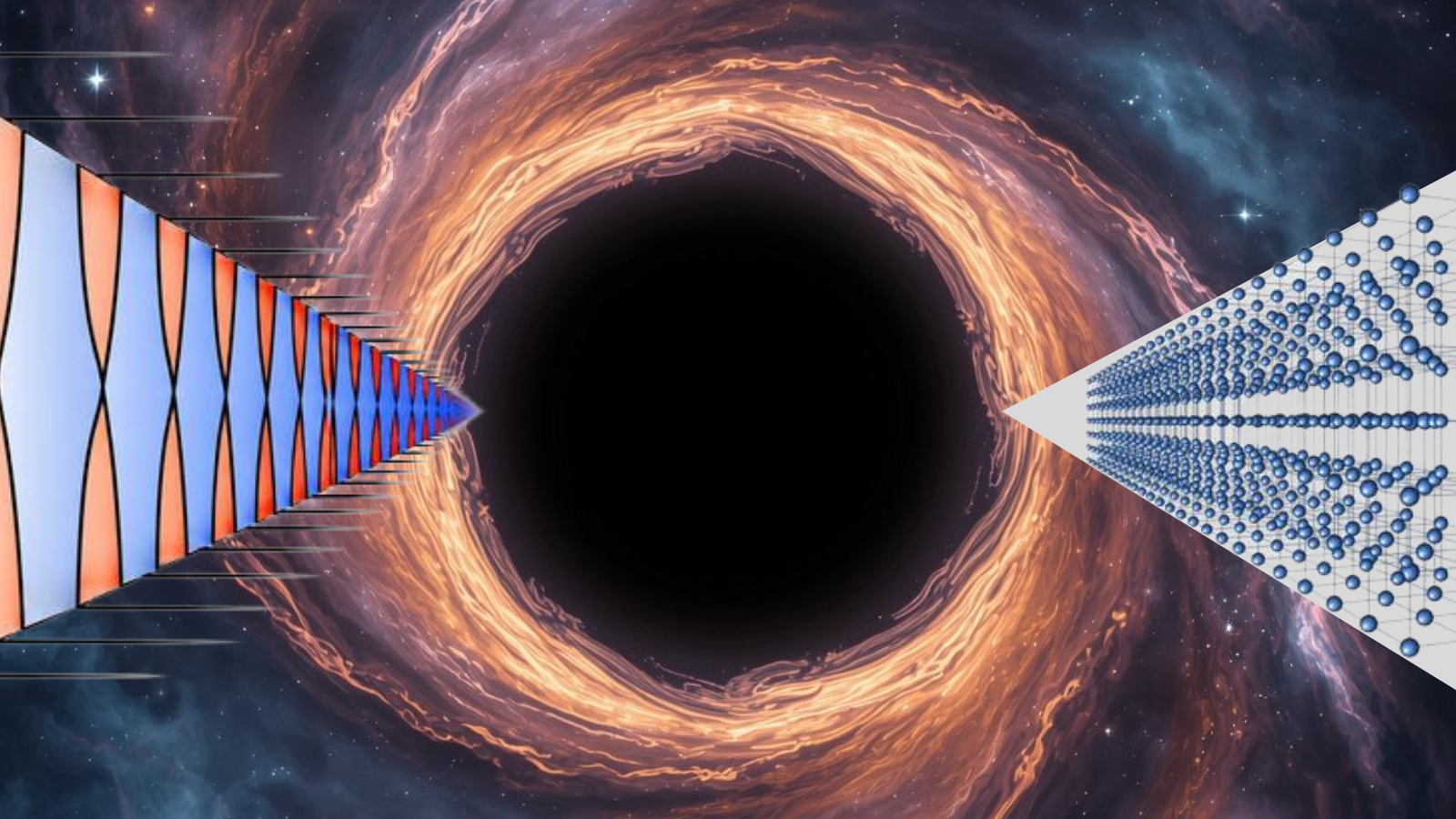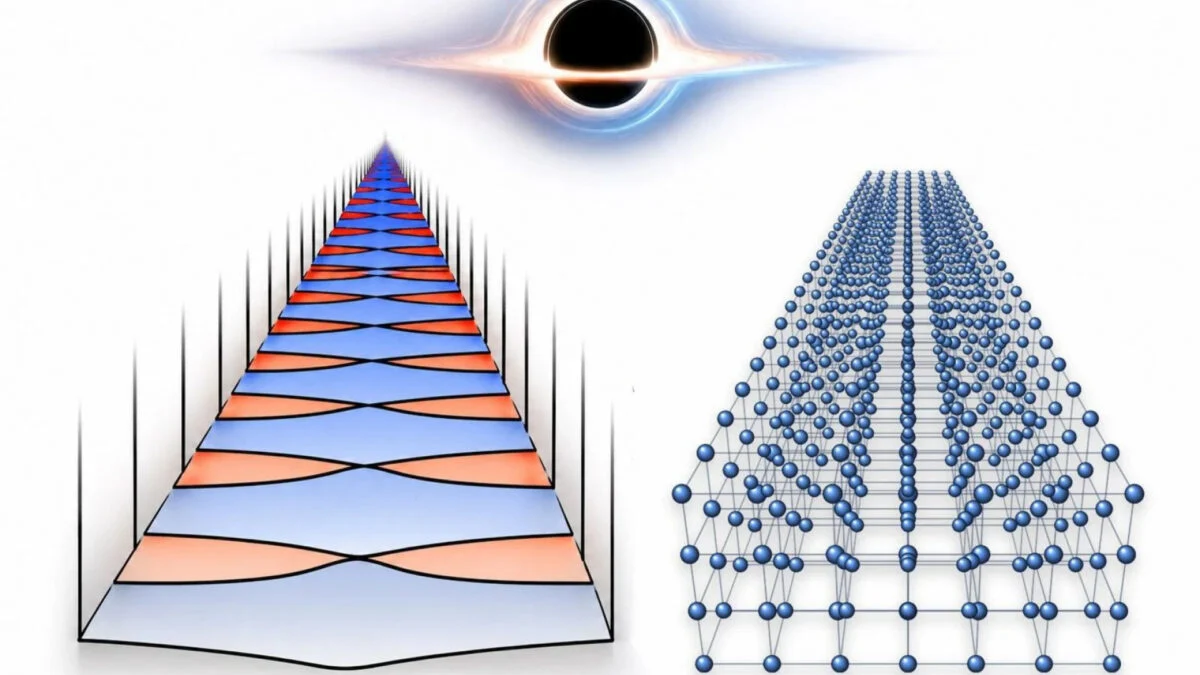
Physics allows for black holes far smaller than the enormous objects typically found at the centers of galaxies or created when massive stars collapse. Under the right conditions, microscopic black holes could also form when spacetime enters an unusual critical state and organizes into a repeating, crystal-like pattern.
Researchers from Goethe University Frankfurt and TU Wien have now found a way to describe this process mathematically. For the first time, they derived an exact formula for the phenomenon by using an unconventional mathematical approach.
Microscopic Black Holes and Critical Collapse
Most familiar black holes are associated with violent cosmic events, including the deaths of massive stars. In theory, however, there is no strict lower size limit. Extremely small black holes could arise from special critical states in which even a tiny addition of energy can determine whether the system disperses or collapses.
Conditions like these may have existed in the early universe, shortly after the Big Bang, when matter and energy were packed into an intensely chaotic environment. Such circumstances could potentially have produced primordial black holes.