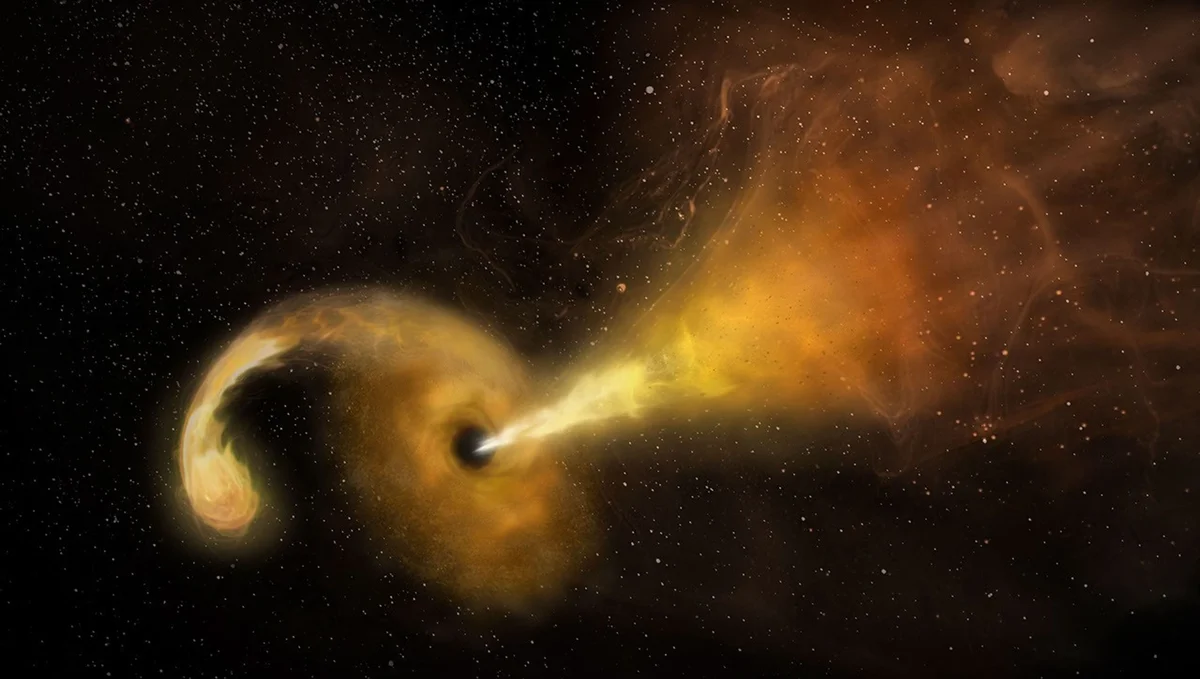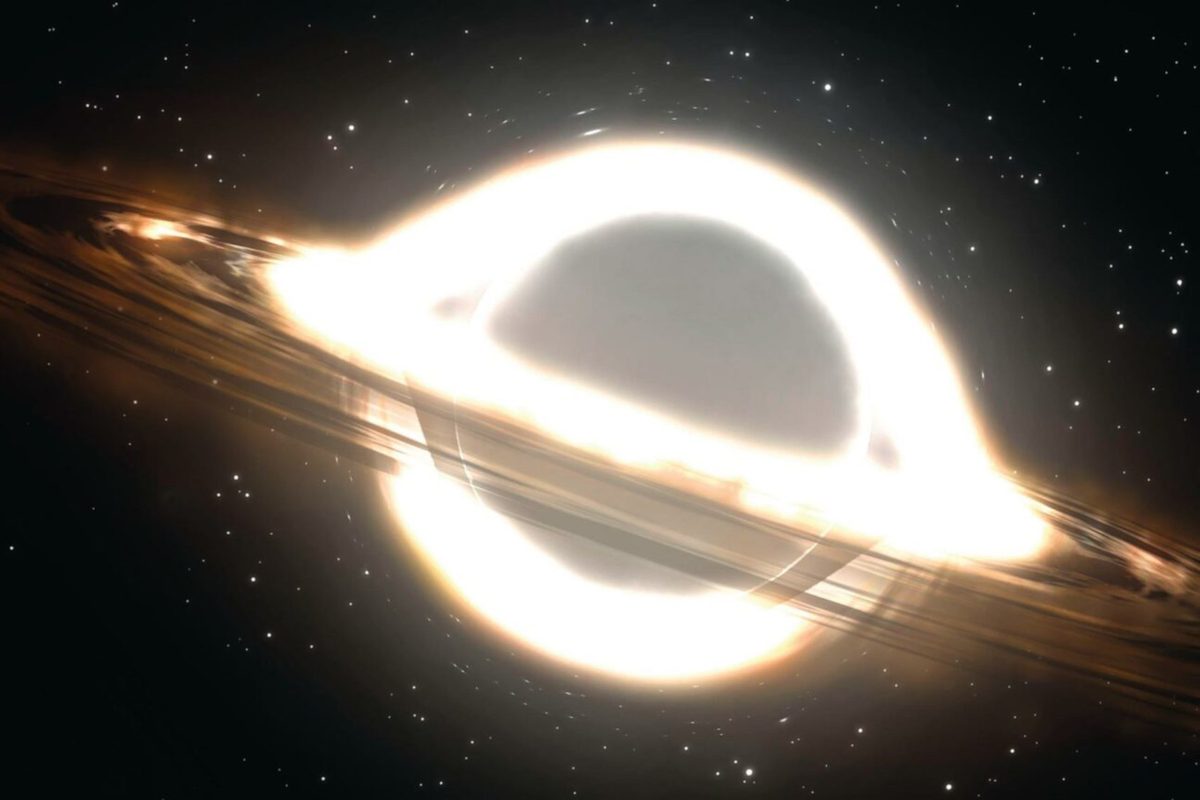
A general-relativistic visualization of a disk and jet around a black hole. Andrew J. S. Hamilton
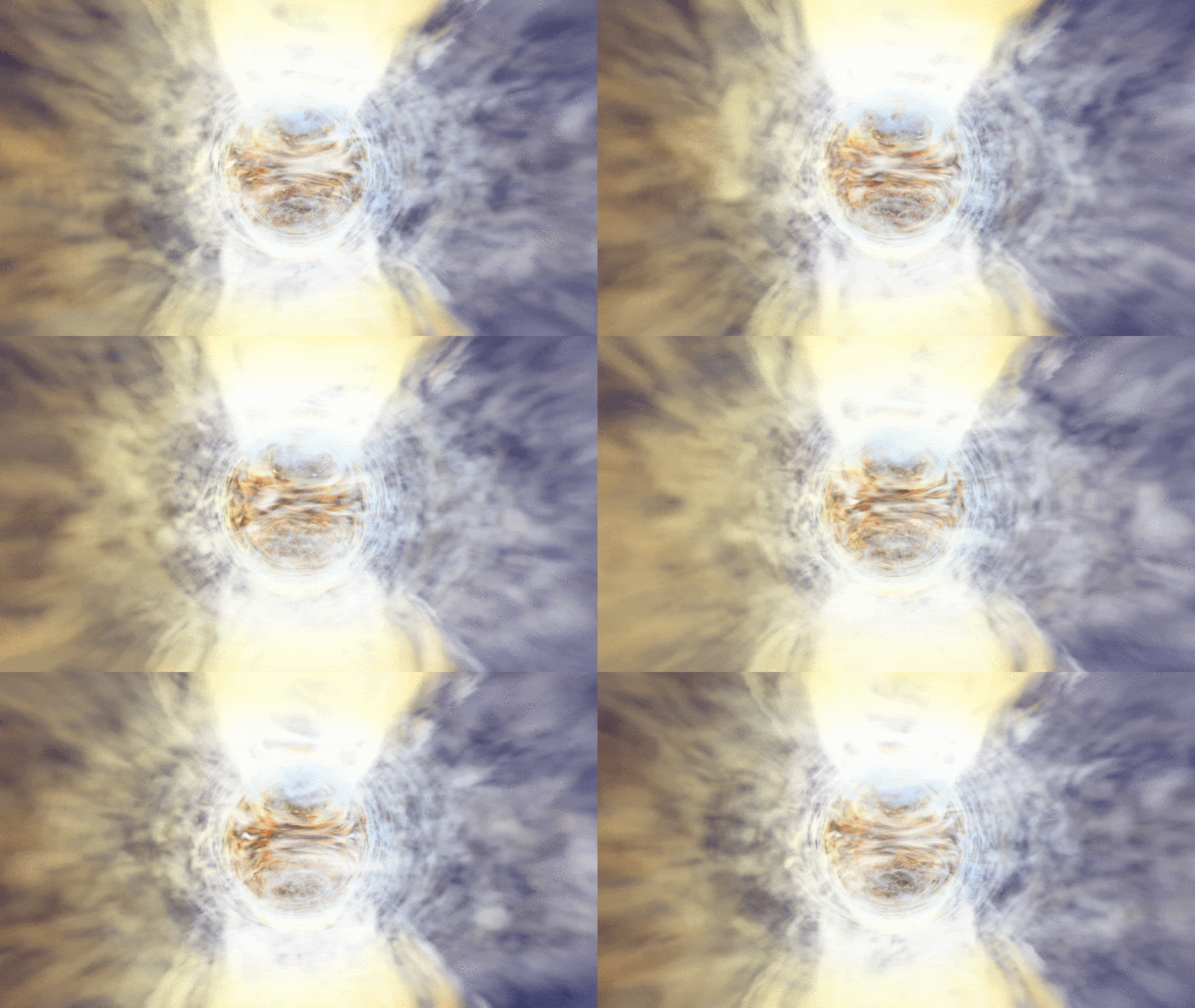
What lies beyond a black hole's event horizon is a mystery.It's the boundary that marks the distance at which light can no longer escape a black hole – leaving us striving for answers about what a black hole actually looks like without a way to see inside.For simplicity's sake, textbooks usually describe the singularity hidden beyond the event horizon as a zero-dimensional point of infinite density.According to a new paper set to be published in Physical Review D, that simplification may have taken a step too far.Instead, theoretical physicists Andrew J. S. Hamilton of the University of Colorado Boulder and Tyler McMaken of the University of Mary argue that the singularity is better understood as a flat, three-dimensional surface."I joke to my students that black holes always defy my intuition," Hamilton told ScienceAlert."Yes, it was a surprise. At the same time, it made sense of the flat appearance of the Schwarzschild singularity."What the view might look like to an observer falling through the event horizon. (Andrew J. S. Hamilton)Inside a black hole, space falls faster than light towards the singularity. By the 1930s, physicists had come to picture that singularity as a point.Then, in the 1960s, the picture started to change. In a Kerr black hole – one that rotates – physicists found that the motion of that fall towards the singularity is slowed by centrifugal repulsion, with the end result that the singularity is not a point, but a ring.For a Schwarzschild black hole – one that is not rotating – the singularity remained a point. It's easy to draw, easy to teach, and relatively easy to understand, so the model persisted.However, even decades ago, Hamilton had begun to develop an uncomfortable inkling that the point was a poor representation of Schwarzschild black hole physics.