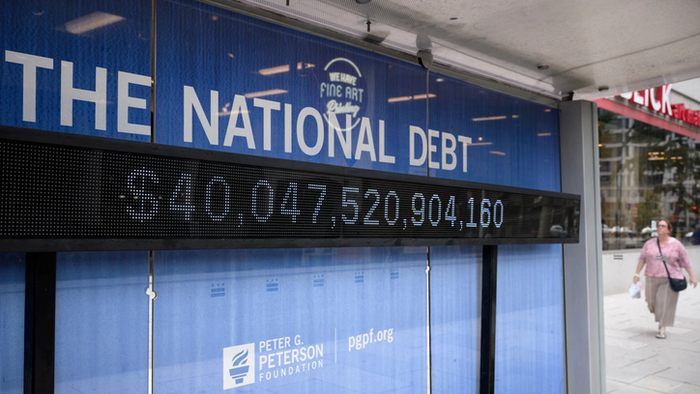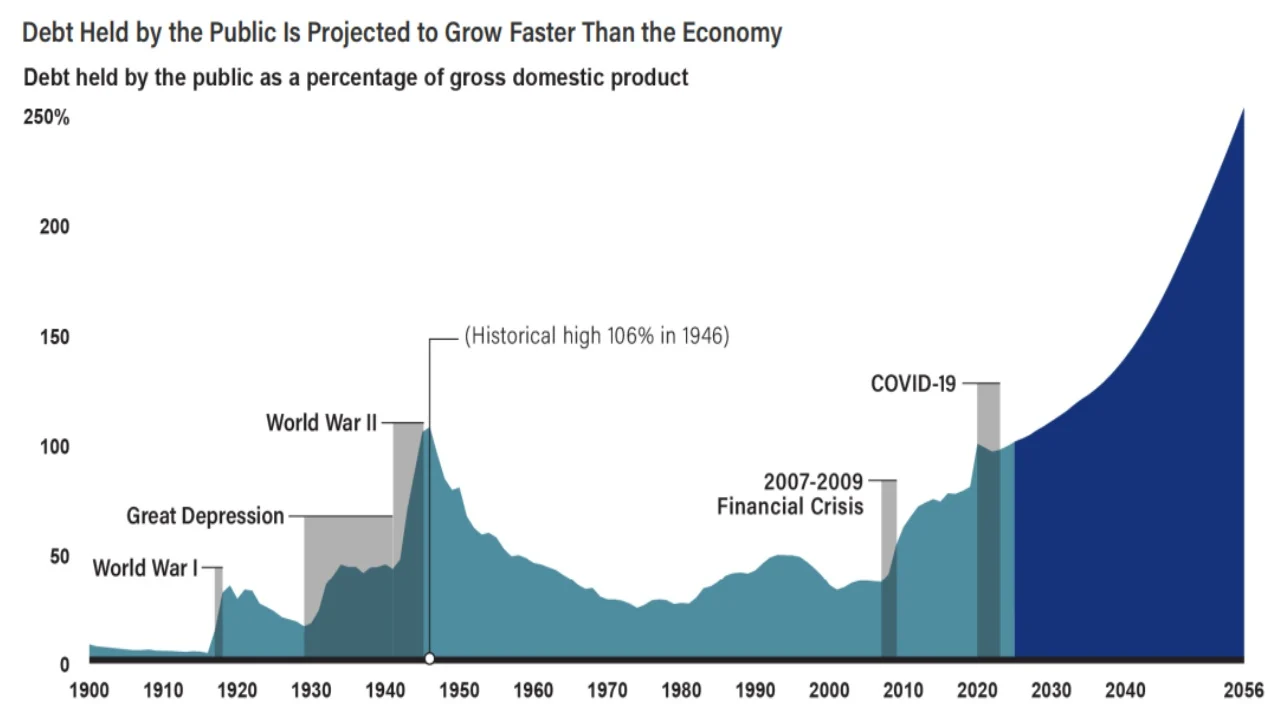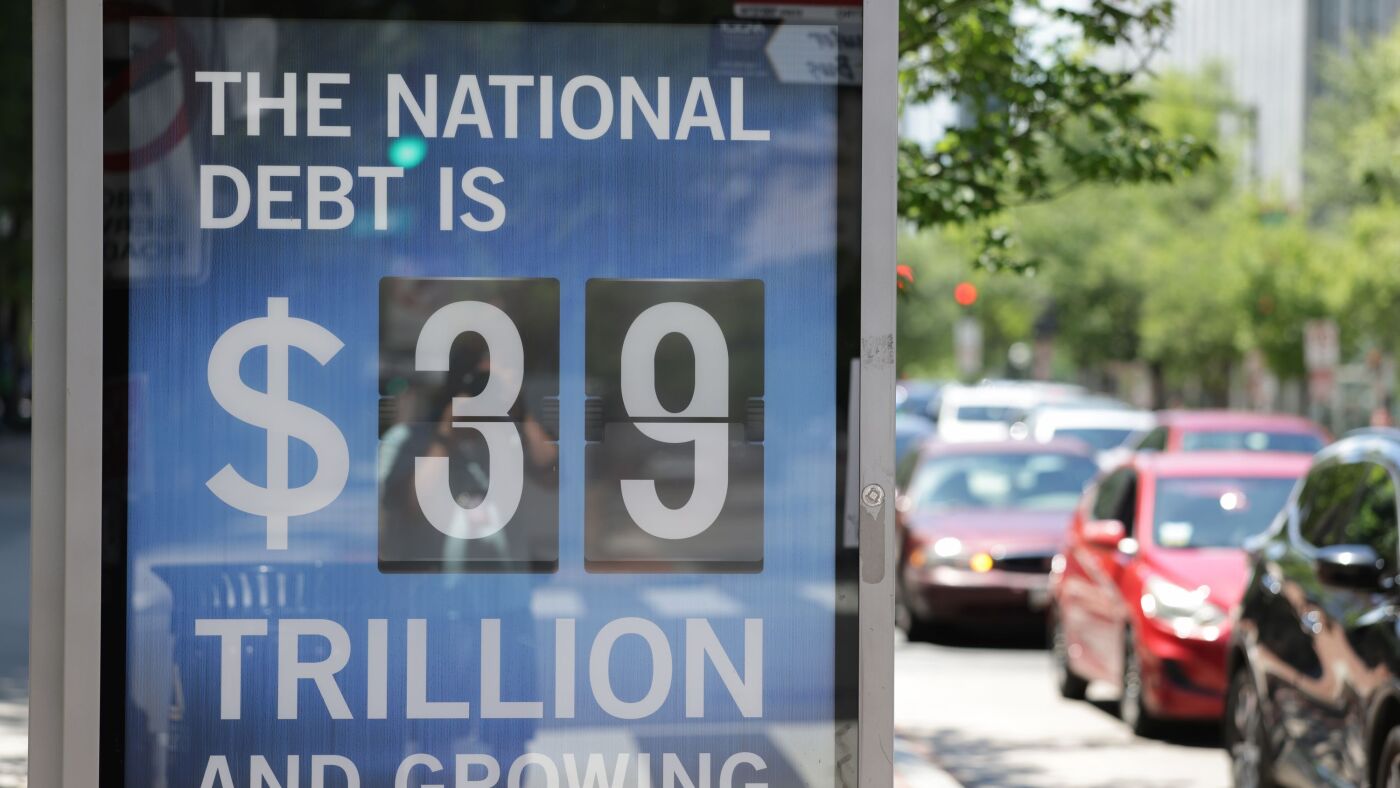
US government debt has reached a record $40 trillion. The huge debt pile is raising fresh concerns about what it could mean for the stock market over the next 10 years. The concern is not only about a possible stock market crash. Tom Essaye, founder of Sevens Report Research, warned that investors could instead face a long period in which stocks deliver weak returns because inflation stays high.US debt hits $40 trillion, raising inflation fears. (Pexel/Representative image) (Pexel)High stock valuations were already creating fears of a “lost decade.” Investors have warned for years that expensive stock valuations could limit future returns. Now, the rising US national debt is becoming another major risk, Business Insider reported.US debt and inflation riskThe US has limited easy options to reduce its debt. Policymakers could raise taxes or cut government spending to bring down the debt burden. But Essaye believes they are more likely to allow higher inflation to help reduce the real burden of the debt. This is linked to the so-called “debasement trade.” The idea is that governments may allow the value of money to weaken through inflation rather than make painful spending cuts or tax increases. Essaye sees this as an important reason for the recent rise in long-term Treasury yields.Long-term US bond yields have already moved sharply higher. Yields on 10-year and 30-year US Treasurys have reached some of their highest levels in about two decades. Several factors are pushing investors to worry about inflation. These include strong economic growth, higher oil prices and large levels of government spending, according to Business Insider.Why stocks could face pressureHigher bond yields can put pressure on stocks. When Treasurys offer more attractive returns, investors may become less willing to take the extra risk of owning stocks. But Essaye says the bigger danger could be a slow loss of purchasing power. Instead of stocks suddenly crashing, investors could see their portfolios remain stable in dollar terms while inflation steadily reduces what that money can actually buy.This is the “lost decade” scenario Essaye is warning about. He said high and persistent inflation could eat into the real returns investors earn from stocks over a long period. Essaye pointed to 1966-1981 as an example. During that period, stock values largely went nowhere. But because inflation was high, the real value of investors’ portfolios fell by around 50%, according to Essaye.The key difference is nominal returns versus real returns. A portfolio might appear to hold its value when measured in dollars, but its purchasing power can fall sharply when prices rise faster than investments. Essaye said this is the real 10-year risk for investors. He argued that the danger is not necessarily a major market crash, but a decade in which account balances look fine while inflation quietly destroys their purchasing power.Also read: How did US debt go from a projected $0 by 2009 to more than $40 trillion in 2026?Why long-term bonds may struggleHigh inflation could also weaken the traditional role of bonds. Investors often hold long-term government bonds as protection when stocks perform badly. But Essaye said this protection can fail when inflation remains high. Why do long-term bonds struggle during inflation? If investors expect inflation to stay high, they demand higher yields from new bonds to make up for the loss of purchasing power.When bond yields rise, existing bond prices fall. This means investors holding long-duration bonds can suffer losses even if they are holding US government debt. Essaye said this problem was also visible between 1966 and 1981. During that period, stocks and bonds could fall together in real terms instead of bonds acting as a cushion when stocks struggled.That creates a problem for the traditional 60/40 portfolio. The strategy normally combines 60% stocks and 40% bonds, with the idea that bonds can help protect investors when stocks fall. But inflation can weaken that protection. Essaye said the “airbag” of the 60/40 portfolio can fail in markets where inflation and government finances dominate investment conditions.What investors can considerEssaye therefore does not see long-term bonds as the safest protection in this scenario. He described long-dated bonds as the “epicenter” of the risk if high inflation becomes a lasting problem. He instead favours shorter-term and intermediate-term bonds. These bonds are less sensitive to changes in interest rates than very long-term bonds, making them potentially better suited to an inflationary environment.Treasury Inflation-Protected Securities, or TIPS, are another option. TIPS are designed to provide protection against inflation because their principal adjusts with changes in consumer prices. Essaye also sees certain types of stocks as better positioned for inflation. He said investors should look for companies that have strong pricing power, growing dividends and positive cash flow after taking inflation into account.Pricing power is important because companies can raise prices. Businesses that can pass higher costs on to customers may be better able to protect profits when inflation rises. Growing dividends can also help investors. Companies that regularly increase dividends can provide an additional source of returns during periods when stock prices struggle.Gold, commodities and other assetsPositive inflation-adjusted cash flow is another key factor. Essaye favours companies that continue generating real cash after accounting for the impact of rising prices. Tangible assets could also benefit from a debasement environment. Essaye said assets linked to real-world resources can provide a direct hedge against a decline in the purchasing power of money.Gold is one such asset. Essaye included gold among the investments that could potentially perform better if investors become increasingly worried about currency debasement. Natural-resource stocks are another option. Companies linked to resources could benefit from higher prices for commodities and other physical assets during inflationary periods.Also read: Intel stock falls 2.85%: 14A chip progress improves outlook, but foundry losses remain a big concernEmerging-market stocks could also provide exposure outside the US. Essaye included emerging markets among the areas investors could consider in this type of environment. Commodities are another possible inflation hedge. Because commodities are physical assets, their prices can rise when inflation and demand for real resources increase.ETFs investors can look atSeveral ETFs provide exposure to these strategies. Essaye cited the Schwab Short-Term US Treasury ETF for shorter-duration bonds and the Invesco Bloomberg Pricing Power ETF for companies with pricing power. For natural resources, Essaye pointed to the State Street SPDR S&P Global Natural Resources ETF. The fund provides exposure to companies connected to the global natural resources sector.For emerging markets, he cited the iShares Core MSCI Emerging Markets ETF. The fund provides exposure to stocks across emerging-market economies. For dividend-focused stocks, he mentioned the Vanguard Dividend Appreciation ETF. The fund focuses on companies with a history of increasing dividends. For gold exposure, he cited the SPDR Gold Trust. Gold can act as a potential hedge when investors are worried about inflation and the declining value of money.What the $40 trillion debt meansThe main warning for investors is about what their money will be worth in real terms. Even if the stock market does not suffer a huge crash, high inflation could leave investors with much less purchasing power after a decade. The $40 trillion US debt burden makes this risk more important, according to Essaye. If policymakers rely heavily on inflation instead of higher taxes or spending cuts, investors could face a market where both stocks and long-term bonds struggle to protect wealth.So the “lost decade” may not look like a market collapse. It could look much quieter: stock portfolios stay around the same level, but inflation keeps reducing the amount those portfolios can buy. For investors, the key issue is therefore not just market returns but real returns. Essaye’s argument is that protecting purchasing power could become more important than simply avoiding a stock market crash if high inflation lasts for years.
US debt hits $40 trillion: Why high inflation could cause a ‘lost decade’ for stocks
US debt hits $40 trillion, raising inflation fears. Experts warn high prices could hurt stock returns and purchasing power, creating a possible lost decade. | Business News
1,286 words~6 min read