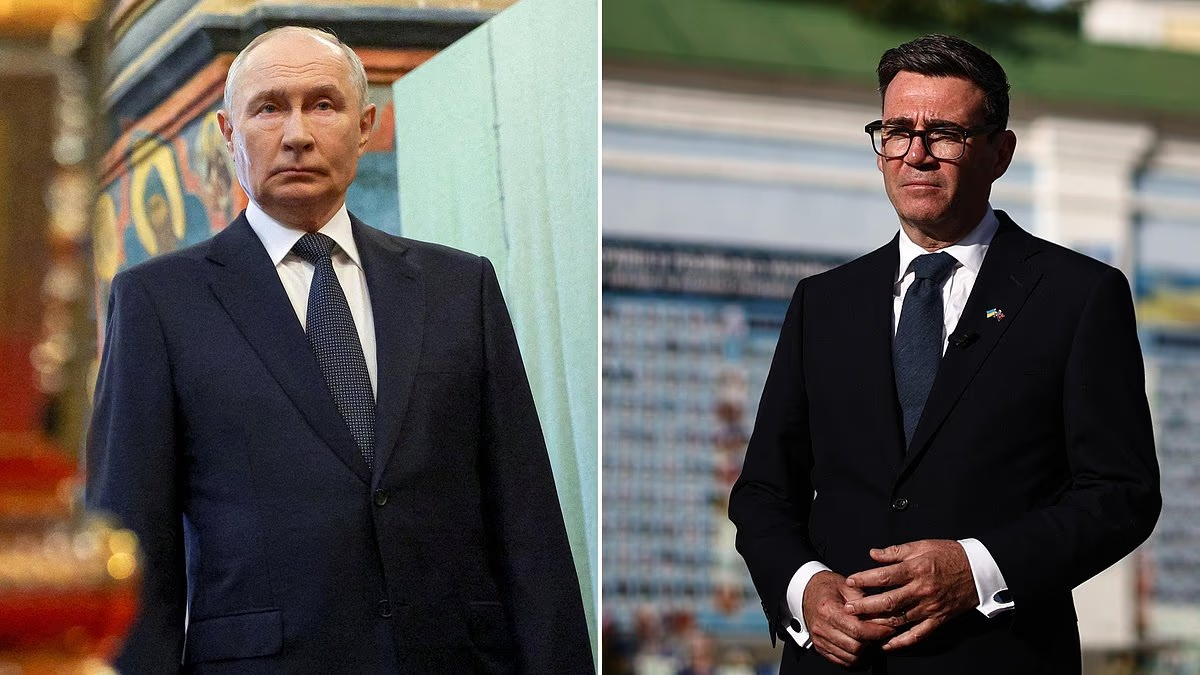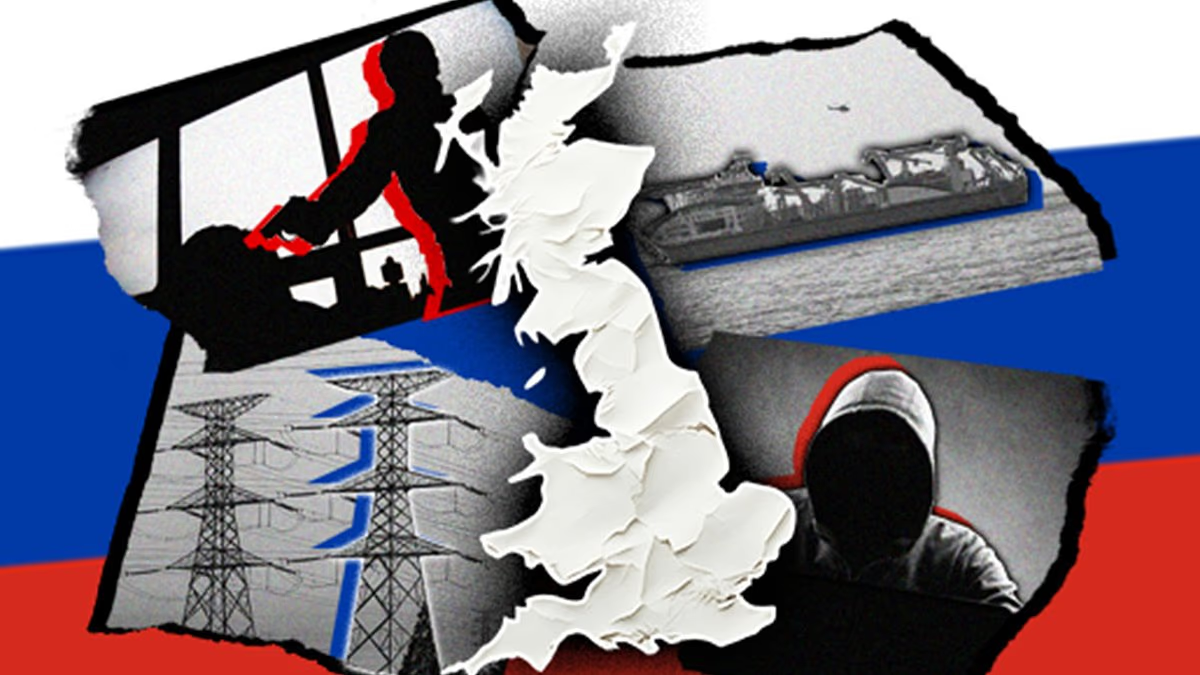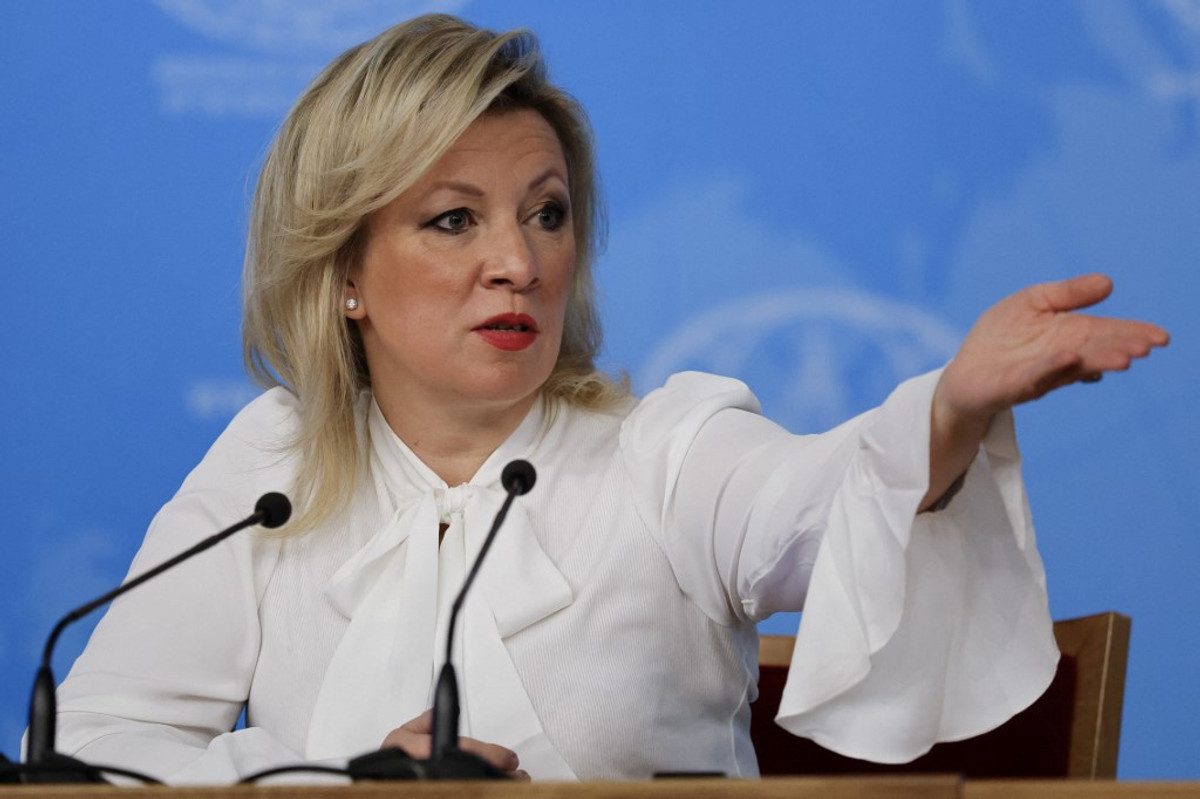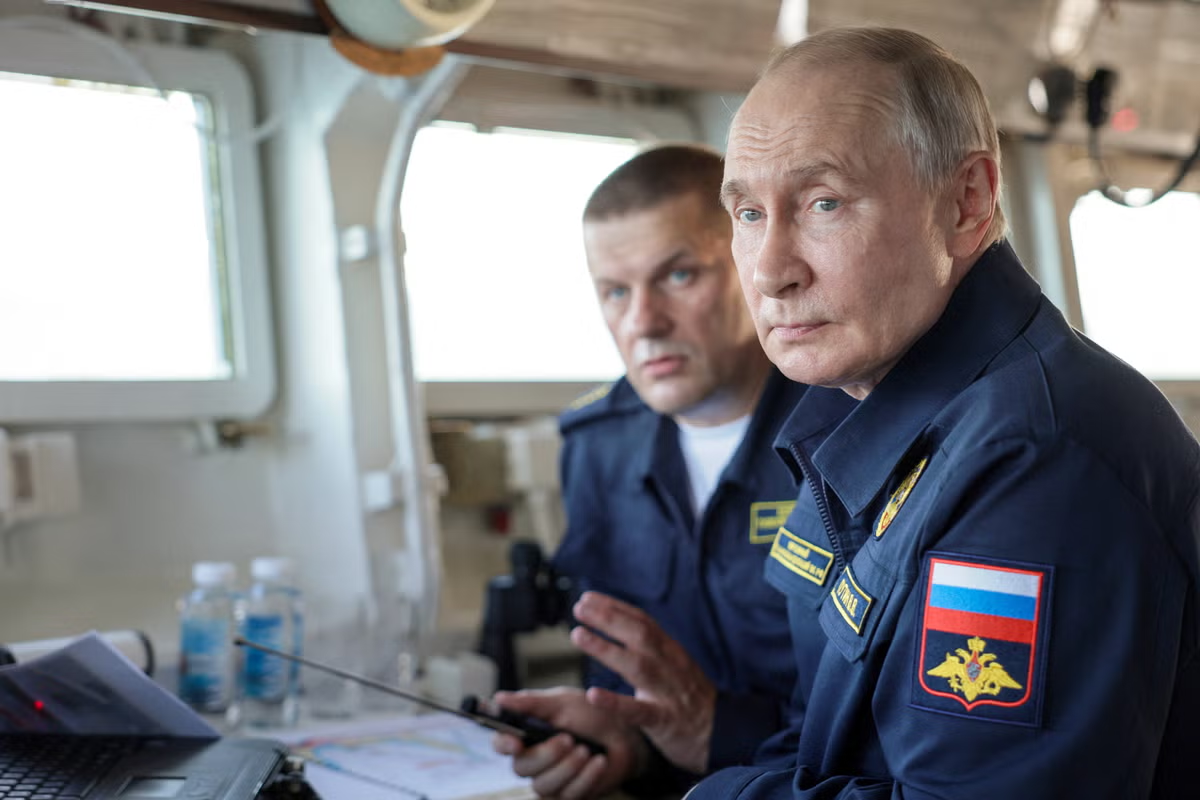
Andrey Fedorov says Russian leaders are considering sabotage or arson rather than a direct military strike, naming British defence sites as ‘legitimate targets’ as Moscow’s threats against London intensifyynet|A senior adviser to Russian President Vladimir Putin has issued another threat against Britain, claiming Moscow is prepared to target sites in the country and that senior Russian officials are considering sabotage or arson rather than a direct military attack.Andrey Fedorov, a former Russian deputy foreign minister, told the Daily Mail that Moscow now regards a missile company and a factory operated by Ukrainian drone manufacturer Ukrspecsystems as “legitimate targets.” The factory, which has British-Ukrainian ownership, is located near RAF Mildenhall.Gallery(Photo: Sirena Telegram channel via AP, Diego Fedele/Getty Images)Fedorov said “the highest levels of the Russian government are considering a combined attack such as sabotage or arson,” arguing that such operations were more likely than an overt military strike because Britain is a NATO member and a direct attack could trigger a wider response by the alliance.“Britain is evil No. 1,” he said, linking Moscow’s anger to reports that British-made drones had been used against Russian oil refineries. “This has become a focus of great anger in Russia. Various experts are calling for Britain to be punished through an attack, and this would receive the support of most Russian citizens.”The warning comes amid an increasingly heated confrontation between Moscow and London over Britain’s military support for Ukraine. Prime Minister Andy Burnham’s government has reaffirmed its backing for Kyiv, while Russia has repeatedly accused Britain of enabling Ukrainian strikes inside Russian territory. Burnham hosted Ukrainian President Volodymyr Zelenskyy aboard HMS Queen Elizabeth in Portsmouth in July and pledged continued British military support.Britain’s ambassador to Russia, Nigel Casey, has instructed officials not to confirm whether British weapons are being transferred to Ukraine, according to the report, in an effort to avoid further escalation. Fedorov claimed Putin and those around him were particularly angered by Burnham’s decision to provide Ukraine with plans for producing long-range missiles that could be used against targets inside Russia.Elisabeth Braw, a security expert at the Atlantic Council, told the Daily Mail that such hybrid attacks deliberately put countries like Britain in a difficult position over how to respond. She calls it a “defender’s dilemma.”“How exactly is the country supposed to retaliate?” she said. “Because if it uses military means, it could really lead to World War III.”British Defence Secretary Wes Streeting rejected Moscow’s threats on Saturday night, saying the Kremlin’s “reckless rhetoric and attempts at intimidation” reflected weakness rather than strength and insisting Britain would not be deterred. Streeting has repeatedly said the UK intends to maintain its support for Ukraine despite Russian pressure.Russia has previously been accused of conducting or directing covert operations inside Britain since the start of its war against Ukraine.In March 2024, a warehouse in east London storing aid destined for Ukraine was set on fire in an attack British prosecutors linked to Russia’s Wagner mercenary network. More recently, British authorities have prosecuted suspects over arson attacks against property connected to prominent political figures.The concern extends well beyond Britain. Western governments and intelligence agencies have increasingly warned of Russian “gray zone” activity across Europe, including sabotage, cyberattacks, drone incursions and the recruitment of local operatives to carry out attacks. Such operations are designed to remain below the threshold of conventional warfare while testing how NATO governments will respond.British Prime Minister Andy Burnham with Ukrainian President Volodymyr Zelenskyy aboard HMS Queen Elizabeth in Portsmouth (Photo: Simon Jones / POOL / AFP)Finland, however, has played down the likelihood of a direct Russian attack on NATO territory. Finnish President Alexander Stubb told Germany’s Bild that he did not believe Moscow would risk testing the alliance militarily.“If someone has a crystal ball, great, but I don’t see evidence or facts supporting that,” he said. “It makes no sense that any power would want to test the most powerful military alliance in the world.”Stubb, whose country joined NATO in 2023, argued that Ukraine itself remains one of Europe’s most important lines of defence against Russia. “We have to understand, you in Germany and we in Finland, that Ukraine is the best security guarantee we have against Russia. If Ukraine loses, we lose.”Western officials have nevertheless warned that Russian hybrid operations against European states, including cyberattacks and sabotage, could eventually trigger a direct confrontation with NATO. German officials have also warned that Russia could develop the military capacity to attack a NATO member before the end of the decade.Fedorov’s comments follow a string of Russian warnings directed at Britain over the past week.Russian Foreign Ministry spokeswoman Maria Zakharova said Moscow could strike British military targets in response to Ukraine’s use of British-made weapons and accused London of maintaining a “hostile position” toward Russia. She also said Britain and France were “playing with fire” by giving Ukraine access to missile technology.CIA Director John Ratcliffe (Photo: REUTERS/Evan Vucci)The Washington Post reported that Ratcliffe’s trip followed U.S. intelligence indicating that the Kremlin increasingly viewed Washington as weakened by its war with Iran. His unusually visible visit was intended in part to reinforce Washington’s commitment to NATO and warn Moscow against crossing the alliance’s red lines.For now, Western assessments continue to distinguish between a conventional Russian attack on NATO and the lower-level campaign already playing out across Europe. A direct strike on Britain could bring the alliance into war with Moscow. Sabotage, cyberattacks and other covert operations present a more difficult question: how far Russia can go without provoking exactly the confrontation it appears determined to avoid.
Russia threatens attacks inside Britain over weapons supplied to Ukraine
Andrey Fedorov says Russian leaders are considering sabotage or arson rather than a direct military strike, naming British defence sites as ‘legitimate targets’ as Moscow’s threats against London intensify
921 words~4 min read