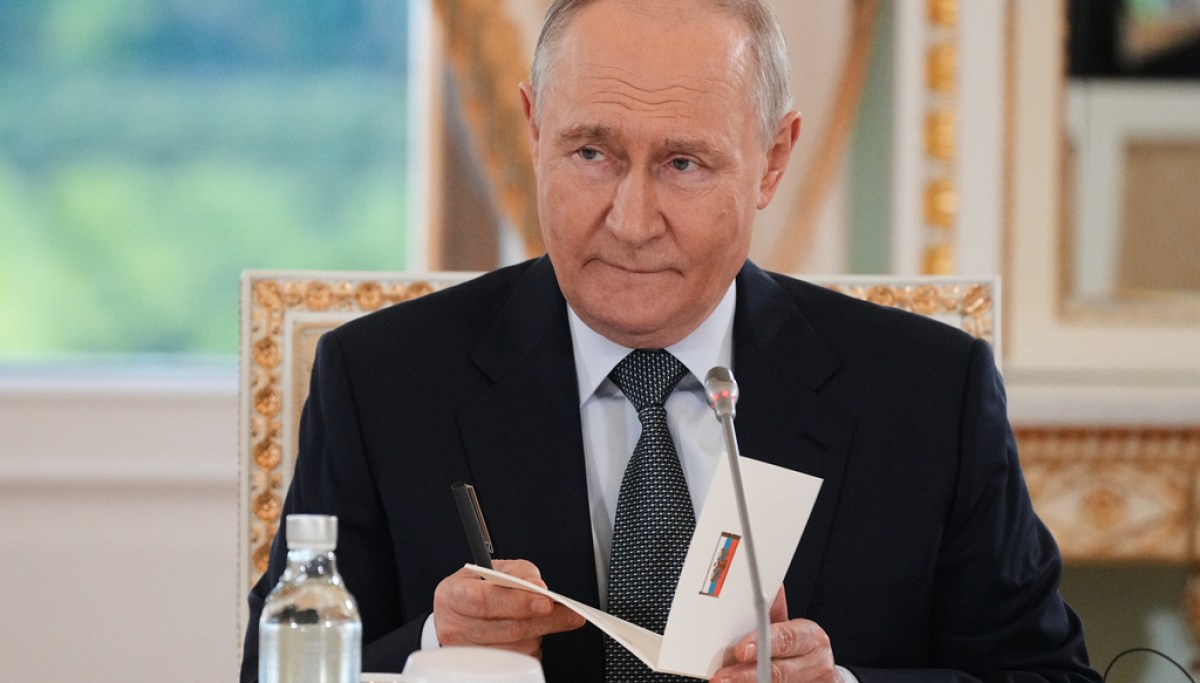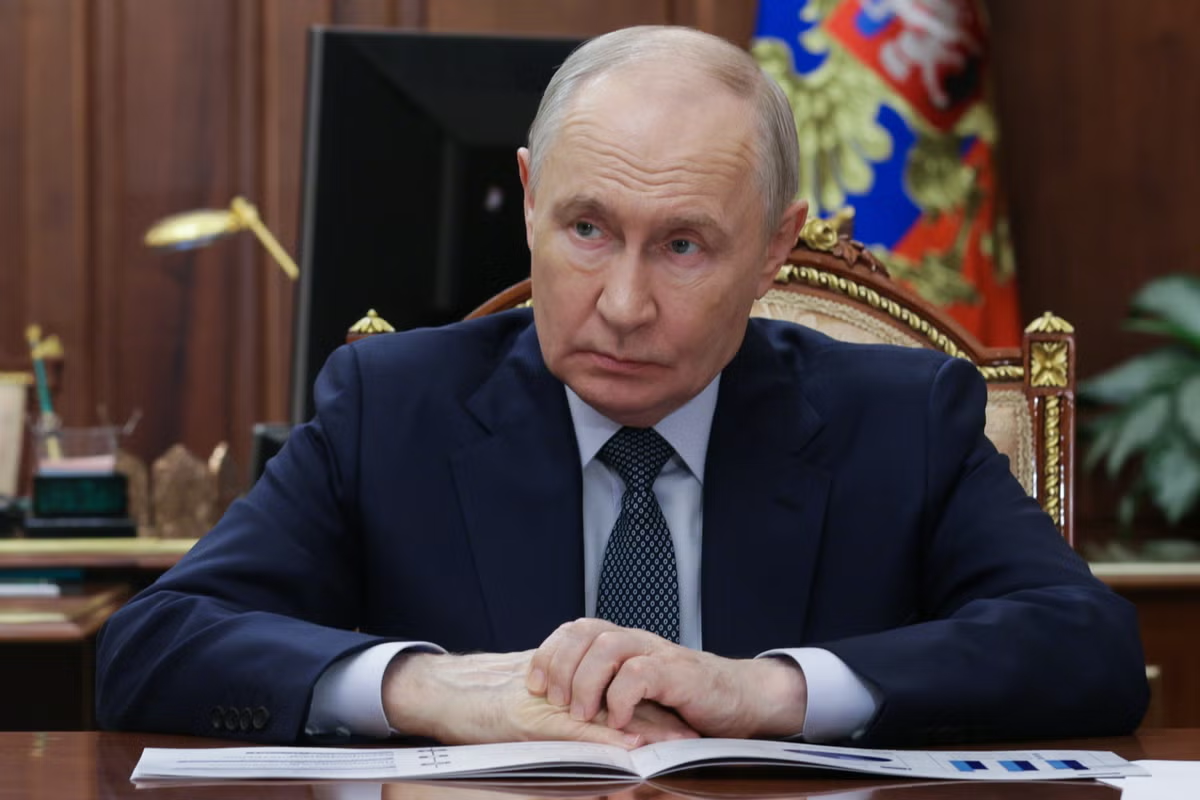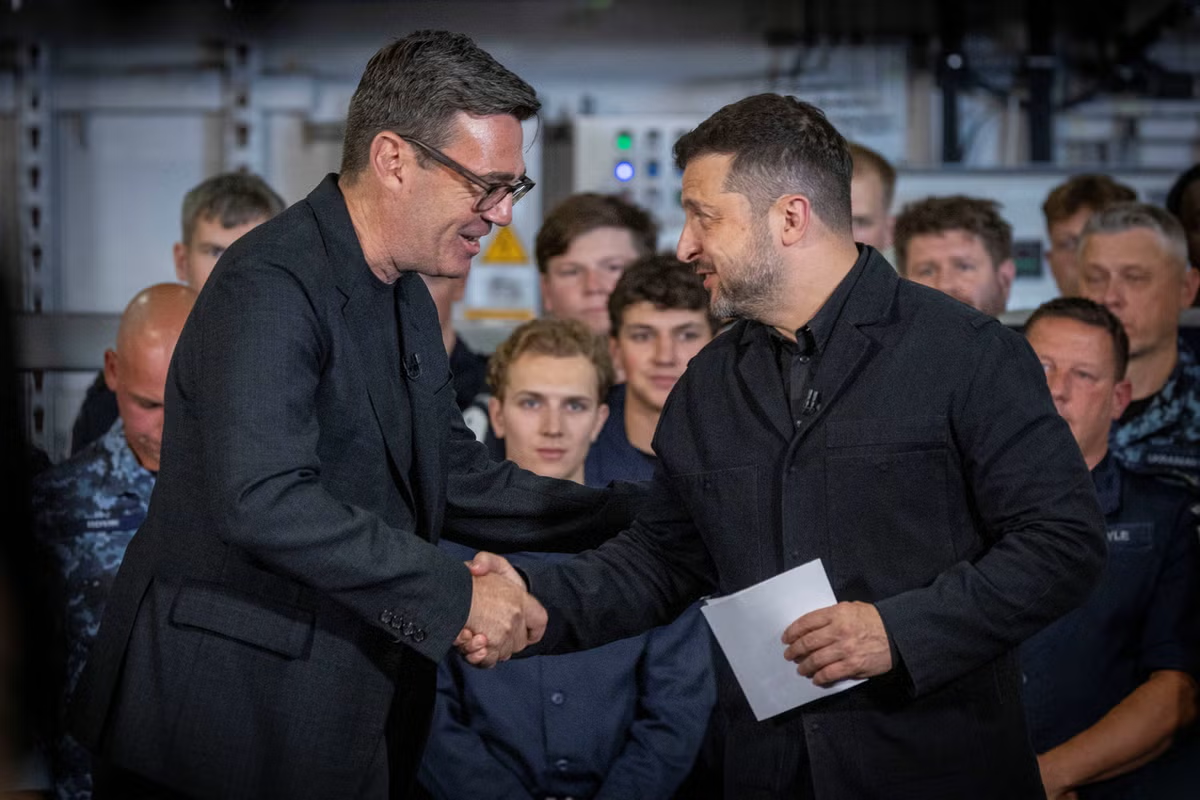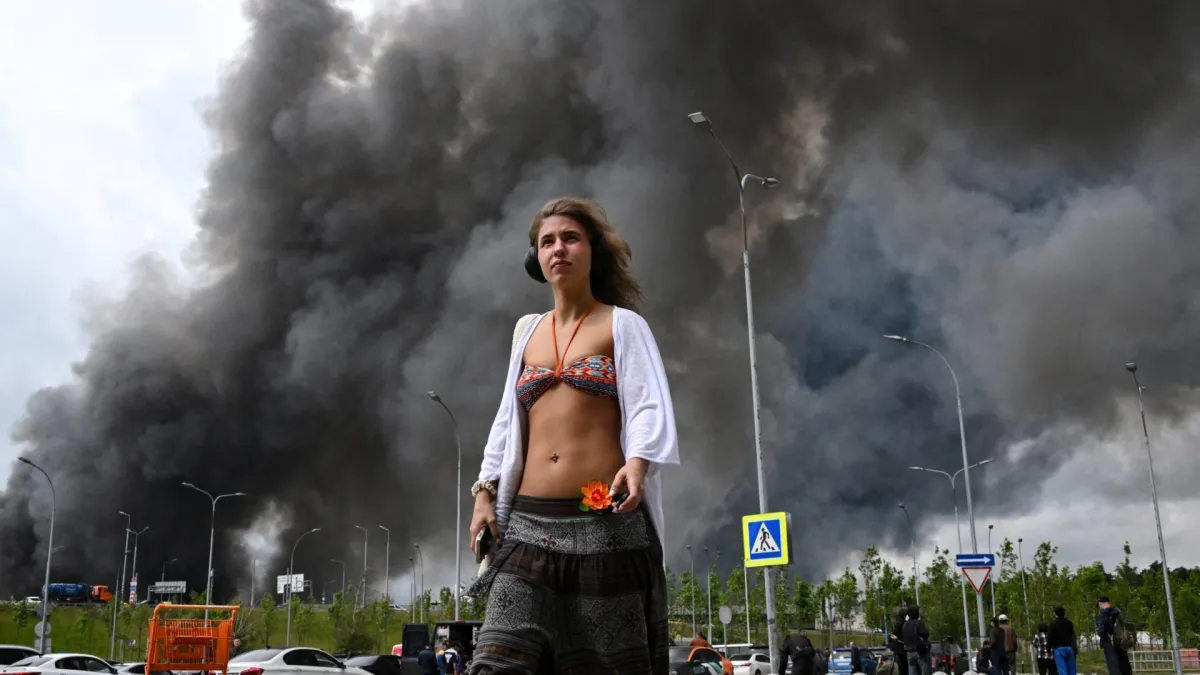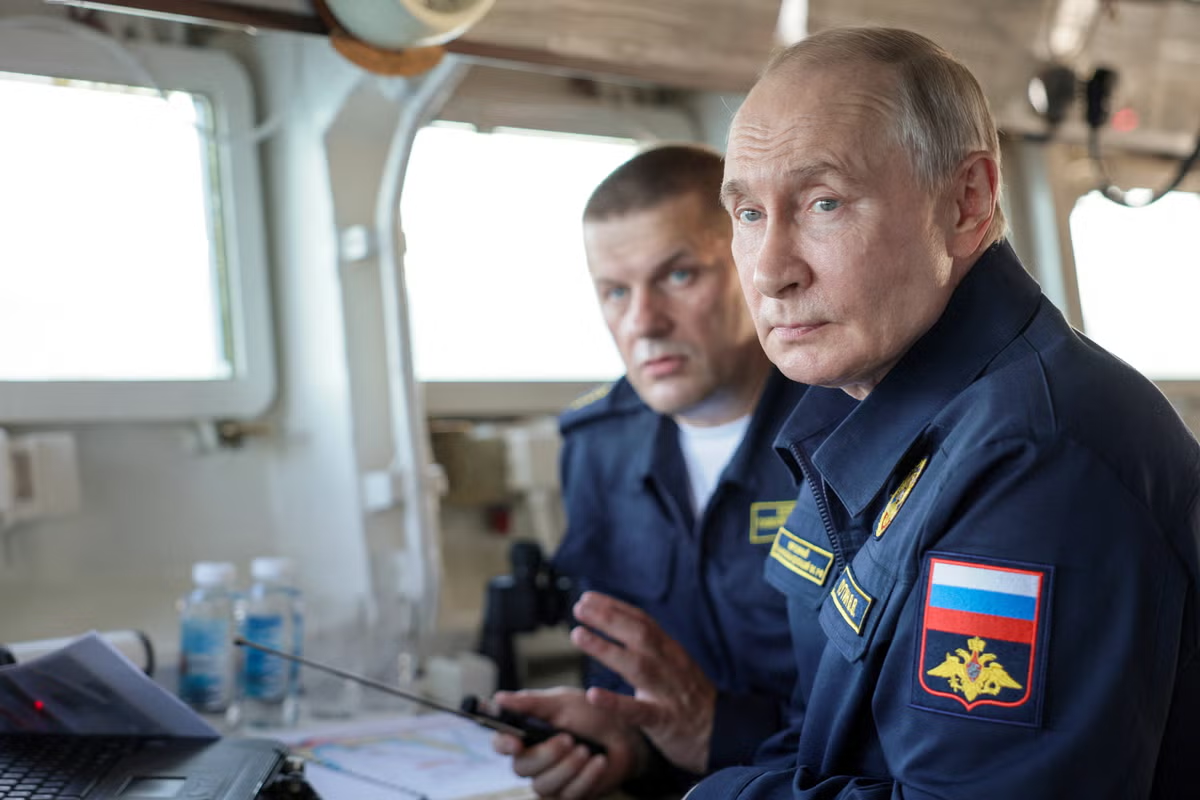
The Kremlin’s reaction to news that British-built long-range drones had been used in the latest Ukrainian attacks deep inside Russian territory was predictably furious. And once again it came with a threat of retaliation.“The United Kingdom is acting as an accomplice and co-perpetrator of the bloody crimes and terrorist attacks committed by Ukrainian neo-Nazis,” thundered the Russian Embassy in London in a statement. “London’s actions will inevitably carry consequences for which it will have to answer … The deeper its involvement in the conflict and the greater its support of Kiev’s terrorist machinery, the higher the price it will pay.”Putin has threatened the UK with ‘serious consequences’ after British-built drones were used to attack deep inside Russian territory (Reuters)This is by no means the first time blustering threats of this sort have been directed at the UK. Soon after Boris Johnson emerged as one of the most energetic cheerleaders for Ukraine in the wake of Putin’s February 2022 invasion, Kremlin media began to issue regular, blood-curdling warnings to London. Firebrand pro-war TV presenter Vladimir Solovyov spoke often and fondly of nuking the UK with Sarmat missiles – which he was convinced would sink the British Isles beneath the waves. “Give the British three days to learn to breathe underwater,” Solovyov ranted. His Rossiya 1 colleague Olga Skabeeva regularly hosted guests who – flatteringly for our security services – often spoke of Whitehall and MI6 as the true evil masterminds behind all Western policy. Such accusations were followed, more often than not, by the usual threats to nuke Perfidious Albion into non-existence. It’s easy to see why the UK is the focus for the Kremlin’s attack dogs. Firstly, Russians have a long and deep love-hate relationship with Britain’s legendary spies and fictional detectives. Secondly, compared to the US, the UK is unimportant and can be kicked about with impunity – whereas the Kremlin has an important and complicated on-again, off-again relationship with Donald Trump’s White House. But the problem for Britain’s security chiefs is that not all Russia’s threats are empty. Ken McCallum, director-general of MI5 warned in his annual threat update last October that “my teams are routinely uncovering attempts by state actors to commission surveillance, sabotage, arson or physical violence, right here in the UK”. He also warned that Russian spy agencies were hiring thugs online to do their dirty work, “instructing them via encrypted apps, and offering payment in cryptocurrencies”.These were the kinds of desperadoes who were responsible for the first major Kremlin-orchestrated physical attack on US soil since the Ukraine invasion, when a warehouse in Leyton, London, tied to a Ukrainian-owned business went up in flames in March 2024. Of the seven people charged with aggravated arson and accepting payment from a foreign intelligence agency, several admitted carrying out the attack on behalf of Russia. Another fire was started at a DHL transport warehouse in Minworth, Birmingham, in July 2024 when a package detonated after arriving from Vilnius. Lithuanian prosecutors uncovered a Europe-wide plot by Russia’s GU military intelligence to sabotage DHL centres with similar parcel bombs in Leipzig and Warsaw.2024: Firefighters tackle a blaze following a Kremlin-orchestrated attack on a warehouse in Leyton, London (London Fire Brigade)Other plots thwarted by MI5 include the so-called “Minions” case when a senior Russian espionage officer recruited a gang of dim-bulb Eastern European crooks in London with the intention of assassinating journalists and activists hostile to the Kremlin. Another involved a gang tasked with organising arson attacks on Sir Keir Starmer’s car and former residence. Two men were convicted after being recruited by a Russian-speaking online handler who was linked to a pro-Kremlin sabotage network, although the criminal proceedings did not establish that the Russian state itself ordered the attacksSo far, so pathetic. It’s not clear what the Kremlin’s aggravated hooliganism is intended to achieve – except to confirm how powerless, stupid and desperate the successors of the once-mighty KGB have become. And yet there are very real, and very much more dangerous, weapons in Russia’s covert arsenal that lie just a couple of levels of escalation away. ‘We see you’: a Russian spy-ship was spotted lurking in British waters earlier this year (UK MOD/Crown copyright)In April, the Yantar – a Russian spy-ship posing as an oceanographical vessel – was spotted lurking along the British coast. Such vessels were “designed to survey underwater infrastructure during peacetime, and sabotage it in conflict”, said then-defence secretary John Healey, directly warning the Kremlin that “we see you, we see your activity over our cables and pipelines. And you should know that any attempt to damage them will not be tolerated.”Britain and Ireland’s electricity, internet and gas supplies all depend on a network of fragile and unprotected undersea cables that can easily be blown up or simply cut by dragging anchors – as sporadic supposedly “accidental” damage to cables between Finland and Estonia in recent years has shown. There’s also been a disturbing escalation last week when a small drone carrying explosives was intercepted at Leipzig airport in Germany – a major logistics hub for the international shipping company DHL as well as Ukrainian-operated aircraft. While there’s no smoking gun linking this attempted attack to Russia (yet), blowing up a civilian aircraft at a European airport would come very close to an act of war. There are very real, and very much more dangerous, weapons in Russia’s covert arsenal that lie just a couple of levels of escalation awayBut it’s Britain, not Germany, that many Russian “Z-bloggers” consider a combatant in the Ukraine war. That’s because the UK is the only one of Kyiv’s international allies which has allowed its weaponry - first Storm Shadow cruise missiles and, now, BAe-made Nyan drones – to be used in Ukrainian attacks inside Russia itself. Germany and the US, by contrast, have refused to allow their ATACMs rocket artillery or Taurus cruise missiles to be used in deep strikes precisely for fear of triggering escalation, restricting their weaponry solely to battlefields in Russian-occupied Ukraine.Does that make Britain a combatant against Russia – and, by extension, a legitimate military target? The Kremlin faces a dilemma when it comes to responding to the Nyan strikes. Militarily, the small British drone makes little difference to Ukraine’s world-leading military drone production, which is expected to reach 7 million units by the end of this year. Yet at the same time the UK is the biggest cash contributor to Ukraine’s war effort now that Trump has cut off US funding almost entirely. Would some kind of attack on Britain scare Andrew Burnham’s new government into pulling back its support for Kyiv – or would it, conversely, unite Europe and Nato into intensifying and escalating its support for Ukraine? Burnham responded defiantly to the Kremlin’s threats, insisting that the “UK is doing what it has long said it would do, which is to support Ukraine 100 per cent against this illegal war led by Vladimir Putin.” He described the use of British-made Nyan jet-propelled drones as “support so that Ukraine can defend itself” and vowed that Britain was not a “fair-weather friend … and that won’t change”.Burnham reiterated Britain’s support for Ukraine after the Kremlin’s threats (PA)That’s easy to say as long as Russian interventions remain on the level of minor arson attacks ineptly executed by mercenary morons. But what if the kind of assassination plot that German police uncovered against Armin Papperger, CEO of Germany’s Rheinmetall arms corporation, in 2024, becomes a deadly reality on British soil? Or if a DHL cargo plane explodes on the runway at Birmingham Airport, or the vital connectors linking the UK and France’s electrical grids are “accidentally” severed by a tanker’s seven-ton anchor? If the Kremlin’s threatened “price” is a direct challenge to escalate all the way to the brink of a shooting war, will Burnham be able to persuade the British people that their country should go to war over a disputed sliver of Ukraine? So far, such an escalation remains remote – but only because Putin believes that his army’s slow advance across Donbas means that he will eventually crush Ukraine’s resistance. However, as I wrote last month for The Independent, trouble for Putin is much closer to home, with increasing tensions inside Russia’s elite between business interests exhausted by the war and those securocrats who owe power and incomes to continued conflict. A cornered, desperate Putin will be far more dangerous, and more unpredictable and last month two senior Kremlin sources, one of whom meets regularly with the president, were quoted as saying they predicted a “high probability” of escalation in the coming months.Two things are clear – one, that Britain is extremely vulnerable and unprepared for attack, whether it’s in cyberspace or on its critical infrastructure. The other is that Russian spies and soldiers have been methodically probing our weaknesses, ready to strike if and when the Kremlin grows sufficiently reckless to give the order.
Putin is threatening Britain again – this time he could do something reckless
It isn’t the first time the Kremlin has warned of consequences for the UK over its support for Ukraine. From arson to sabotage, Russia has been testing Britain’s defences for years. But desperation could lead to a real attack, and it is something we are in no way prepared for, writes Owen Matthews
1,483 words~7 min read