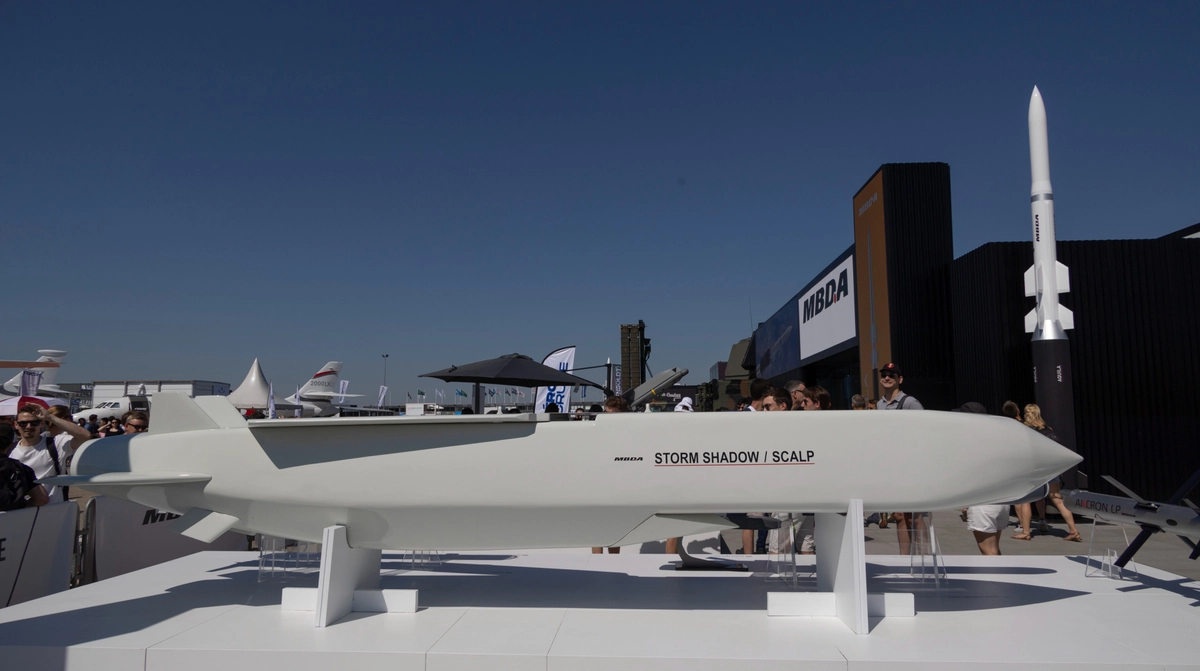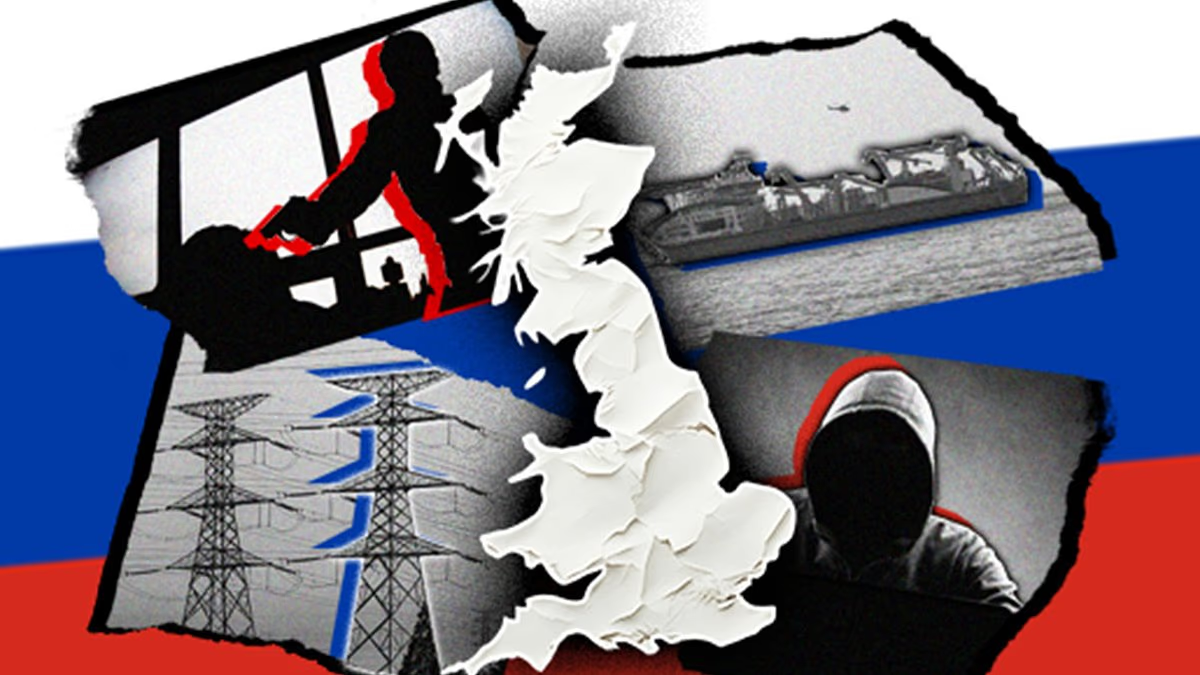
Russia's threat against Britain, issued openly by Kremlin insider Andrei Fedorov on the BBC's Newsnight on Monday, contained a starkly ominous phrase.Not his denunciation of the UK for supplying Storm Shadow missile blueprints to Ukraine and sharing intelligence, which he called 'direct military involvement' in the four-year-long war.And not his insistence, which must have been approved by Russian dictator Vladimir Putin, that Britain will pay a 'higher price' for backing Kyiv.The real threat came in Fedorov's promise that, if and when Russia retaliates, the attacks will come 'from unknown sources'.This was a blatant acknowledgement that Moscow is already engaged in a proxy war against Britain – one now only set to escalate. Instead of waging battle directly with its armed forces, Russia is employing numerous indirect methods that it clearly intends to intensify.These not only give it an element of deniability, but also make it much harder for our security services to guard against attacks. Russia is operating against us on multiple levels, and the need for the public to be on guard has never been more urgent. Putin's Russia is ruthlessly cynical, with no ideological goals. Its only aim is mass disruption, and its tools are every kind of political viewpointOrganised crimeRussia is now a safe haven for criminals – providing their victims are in the West. A tacit agreement is in place: the gangs running hacker attacks against British companies, blackmail scams, online 'phishing' operations and other types of cyber crime will be free to act without interference.And if Western agencies attempt to crack down, the Russian state will do all it can to block our efforts. Moscow will deny all knowledge of the gangs.Proof of this is built into the hackers' malware. These programmes are set up to ignore computers running Cyrillic languages, which means they don't spread into Russian networks. It's an effective safeguard to avoid accidentally disabling the country's banking systems, for example.Last year's ransomware attack on Marks and Spencer, the disruption to Co-Op payment systems and the temporary shutdown of Harrods and Jaguar Land Rover, were just part of the criminal cyberwar unleashed against us.People traffickingRussia has experimented with encouraging the influx of illegal migrants into Europe, by channelling thousands of people across its borders with Norway and Finland. But the Scandinavian authorities have proved effective at combating this, and so Russia has turned to a simpler method – by laundering money for trafficking gangs.Russian financial experts in the Gulf states, particularly the United Arab Emirates, will funnel money through their complex web of dark banking transactions, to wipe the gangs' money clean of criminal taints. And they do this for highly competitive rates, making the traffickers' business models even more lucrative.This supercharges illegal migration routes, placing massive pressure on Western governments.Social divisionDuring the Cold War, the USSR's efforts to undermine European society were driven by dogma. But Putin's Russia is ruthlessly cynical, with no ideological goals. Its only aim is mass disruption, and its tools are every kind of political viewpoint, from extreme nationalism to climate change alarmism.So-called 'troll farms' employ thousands of people to flood UK social media with bile and disinformation, all intended to make the public more angry, more discontented and more divided.AI has accelerated this tactic, by enabling the disruptors to target highly specific demographics. It's no longer necessary to swamp X or Instagram with memes and fake news in the hope that a few social media users will swallow the bait. Now each lie can be aimed at a small number of individuals, according to data harvested on their location, social class, income, hobbies, family life and practically every other scrap of personal information.Enemy agentsInstead of infiltrating the UK with 'sleepers' and moles, Moscow now hires small-time crooks to carry out its dirty work, as needed. The arson attacks on properties and a car connected to Sir Keir Starmer, for instance, were delegated to a couple of Ukrainian petty criminals.Disposable agents are cheaper to employ, require little training, and are valueless to UK security services when captured. Typically, they will be paid no more than a few thousand pounds for a job.Major outagesIf he chooses, Putin can order attacks that would cause chaos and, probably, serious loss of life. Potential enemy action includes using trawlers to cut the internet cables connecting our island to the global web, or bombarding NHS computer systems with viruses that could shut down hospitals, wipe health records and paralyse medical supply chains.Banks, energy companies and rail networks are other likely targets. As Fedorov hinted, acts of violence against arms manufacturers have not been ruled out. Assassinations are a possibility.All these, though, represent a massive escalation. Britain has proved itself dogged in its determination to defend against state terrorism, and the Kremlin has a healthy respect for our security services. Putin will also be well aware that any large-scale attack will draw a strong response.Before braving such a confrontation, Russia will test Nato's resolve by attacking a weaker nation, such as one of the Baltic states. Putin is looking for signs of weakness. We cannot afford to show him any.Mark Galeotti is Honorary Professor at the University College London School of Slavonic and East European Studies.
MARK GALEOTTI: Putin could order attacks that cause serious casualties
Russia's threat against Britain, issued openly by Kremlin insider Andrei Fedorov on the BBC's Newsnight on Monday, contained a starkly ominous phrase.
862 words~4 min read