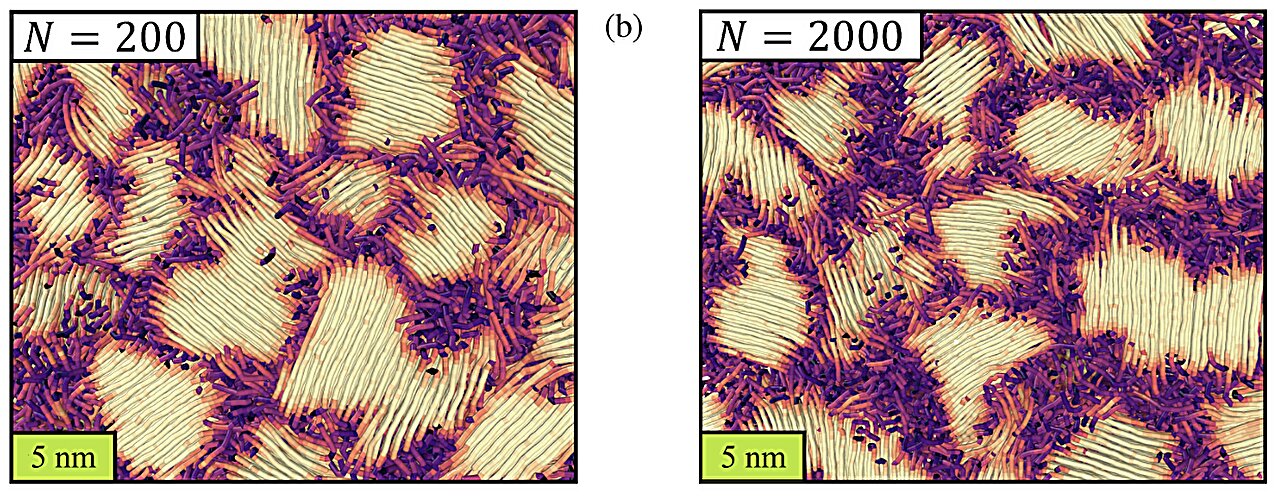
Simulating the molecular structure of a plastic surface as it cools. Credit: Michele Valsecchi et al.
Welding plastic is a critically important part of everyday engineering—especially for preventing leaks in underground water and gas pipes. For decades, engineers have understood that a properly welded joint in polyethylene pipe can be just as strong as the pipe itself, if not stronger. However, the reason for this strength has remained a mystery.
Through new research published in Physical Review Letters, a team led by Michele Valsecchi at Columbia University, New York, has used detailed computer simulations to understand the molecular origins of the phenomenon. Their findings could help industry weld plastic more reliably, including recycled material.
Crystallizing at the join
Polyethylene is a type of plastic made of long, tangled molecular chains. When two heated surfaces are pressed together, chains from each side need to intermingle and retangle across the join to restore strength.