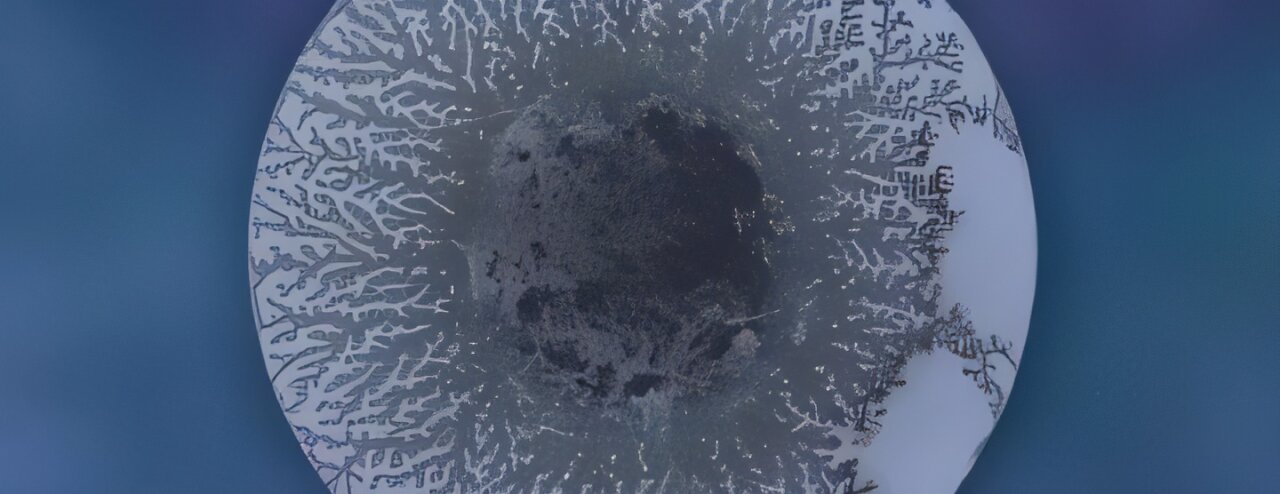
Researchers discovered a way to track and suppress harmful intrusions in dendrites that form in solid-state batteries. This top view of the electrolyte shows the dendrites that propagated horizontally. Credit: Greg Stewart/SLAC National Accelerator Laboratory
Lithium-ion batteries power transportation and grid storage and enable our digital lives, but these ubiquitous batteries require frequent recharging and can fail over time. To make batteries more reliable and longer-lasting, researchers are exploring how to replace liquids inside batteries with a solid ceramic material that could improve their performance.
But researchers must first overcome a big problem: cracks filled with lithium that form within the solid material during charging, causing the batteries to quickly short-circuit. When that happens, devices powered by these batteries become useless.
Researchers have long debated whether these cracks and the lithium metal inside them, called dendrites, form at the surface or inside the solid material—a key insight needed to figure out how to stop them from forming.
Now, in a study published in the journal Nature, researchers have discovered a way to track these dendrites and suppress them enough to keep the battery from short-circuiting.