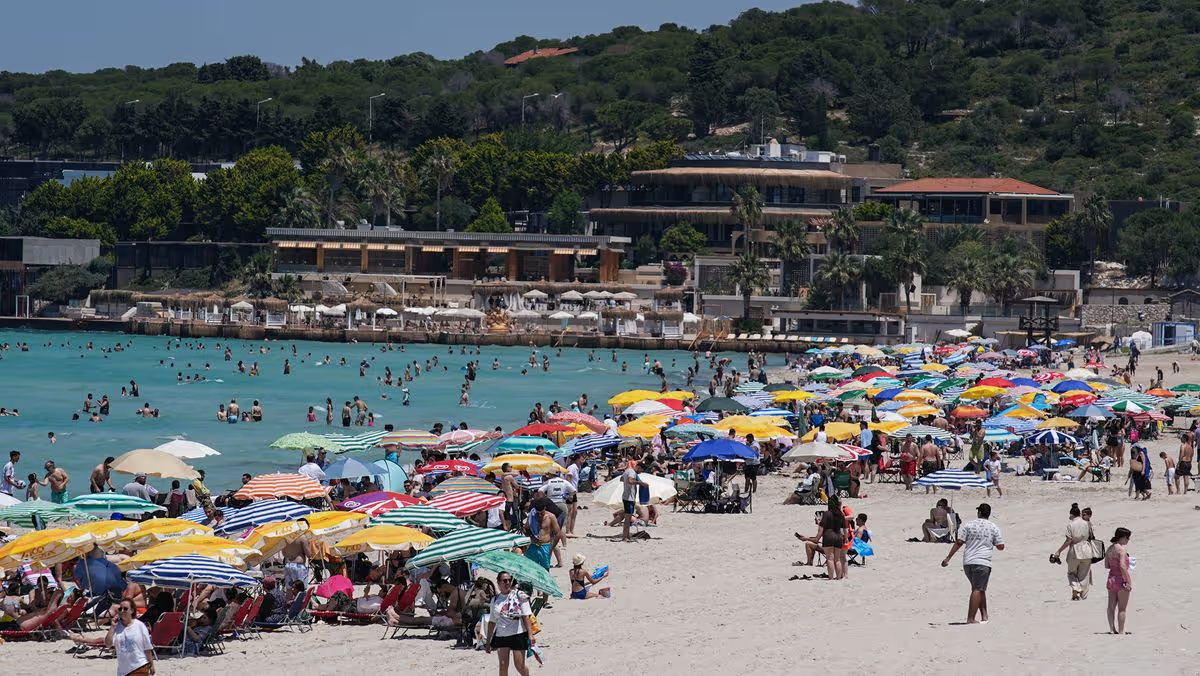
In recent summers, Turkey became a go-to travel destination for UK-based Donna and Dave Needham, who took advantage of the country’s reputation as an affordable getaway on Europe’s doorstep.On a trip to Turkey’s Mediterranean coast this summer, however, they said they experienced a “massive” price difference compared with years past. They were priced out of the resort they’d previously visited and noticed their usual vacation activities had become much more expensive. A 15-minute jet-ski ride, for instance, had jumped to £90 ($122) from £20 just a year ago.Also Read: Singapore records over 600,000 Indian visitors in first half of 2026The Needhams, schoolteachers who also run a small travel agency, said they’ve visited Turkey with their children five times since 2021. Donna Needham added, “It won’t be our first choice next year.”One culprit is Turkey’s exchange rate policy, in which the pace of the lira’s depreciation is kept below that of inflation. With the exchange rate often seen as a barometer of Turkey’s economic health, officials want to stem the effects that the currency’s weakness has on costs. The aim is to ease inflation and the burden on Turkish consumers, but it also makes the country more expensive to visitors arriving with foreign currencies.Also Read: Air India, Drukair announce interline partnership to boost India-Bhutan connectivityTour operators and travel agencies say this and other factors, such as the proximity of the Iran war, are affecting tourists’ appetite to visit the country as well as operators’ ability to continue to market Turkish destinations affordably.“A lot of people used to treat Turkey as a cheap destination,” said Tony Basoglu, who runs a trading company and rents villas in Antalya province, a tourism hotspot. “That’s no longer the case. People come here and still have a lovely time, but it’s no longer cheap as chips.”Bloomberg
Turkey’s cheap travel reputation is being undone by high costs - The Economic Times
Turkey's tourism sector is experiencing significant price increases for visitors. This makes the country less affordable compared to previous years. European tourists, including those from the UK, are showing a notable decline in arrivals. Domestic travel within Turkey has also seen a contraction in recent times. However, higher spending by fewer foreign tourists is currently supporting tourism revenue.
572 words~3 min read