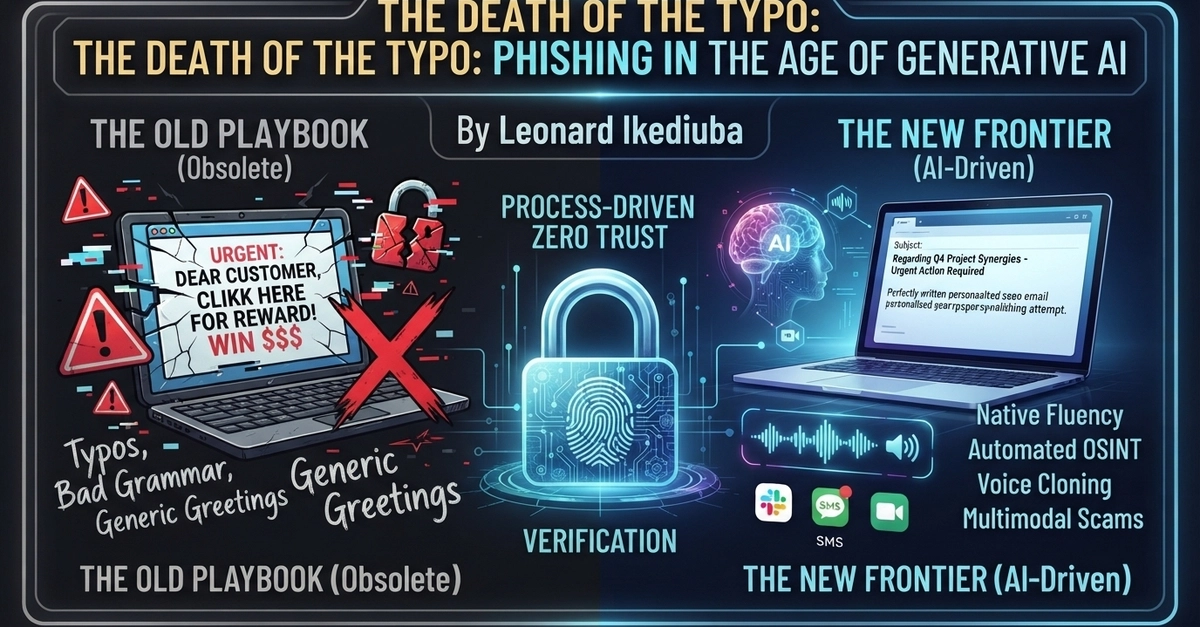
Remember when spotting a phishing email was as easy as scanning for broken English, a generic "Dear Customer" greeting, and a weird sender address that looked like a random string of numbers and letters?
For years, cybersecurity awareness training focused heavily on those exact red flags. We taught teams to look for misspellings, awkward phrasing, and mismatched URLs. We built a collective intuition around digital bad hygiene.
That playbook is officially obsolete.
Generative artificial intelligence and large language models (LLMs) have completely rewritten the rules of social engineering. Bad grammar is gone, hyper-personalization has been automated at scale, and threat actors are no longer just typing—they’re cloning voices, automating OSINT, and orchestrating multi-channel attacks that look breathtakingly real.
The Great Equalizer: How LLMs Murdered the Obvious Clue


 aws.amazon.com