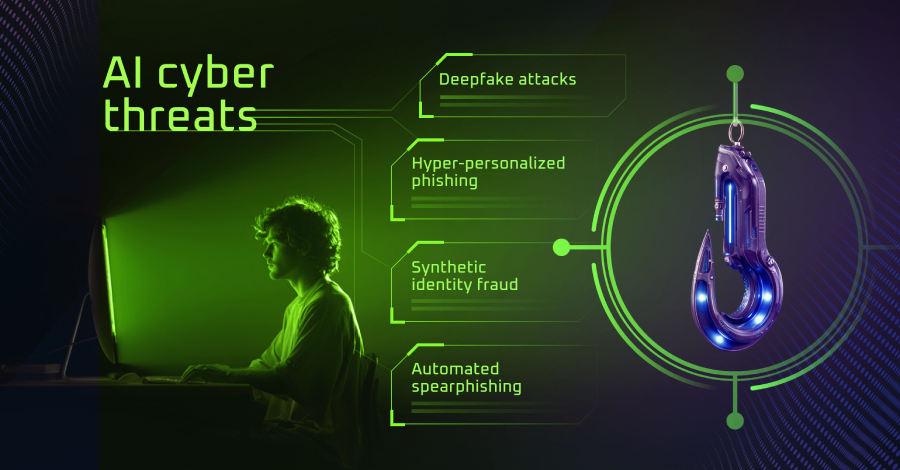
Social engineering through phishing remains one of the most common tactics for launching cyberattacks. AI-generated phishing email messages now pose a new challenge for security teams managing email systems, significantly raising the risk because of their advanced sophistication. Modern social engineers use generative AI and open source intelligence (OSINT) to craft thousands of unique messages with perfect grammar, appropriate context, and personalized details. Today, an indicator of a phishing email message might be a perfectly written, professionally formatted message.
The evolution of phishing
For someone like John, an IT security engineer at a mid-sized firm, the rules of phishing detection were once straightforward: flag the typos, catch the generic salutations, and quarantine anything with a mismatched sender domain. These were the defining characteristics of an earlier era of phishing, when attacks sent millions of generic, error-riddled email messages at scale, relying on volume rather than precision to find victims. Security filters were built exactly for these threats, and for years, they were effective. Poor grammar, generic greetings, and mismatched logos were indicators that gave attackers away.