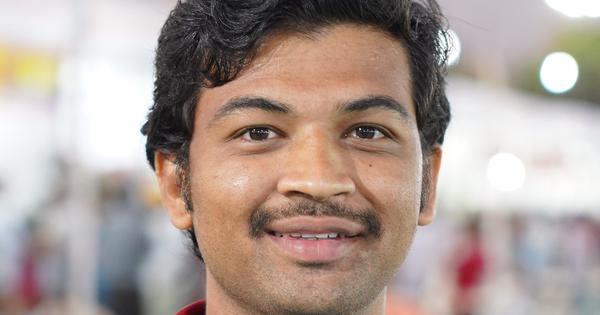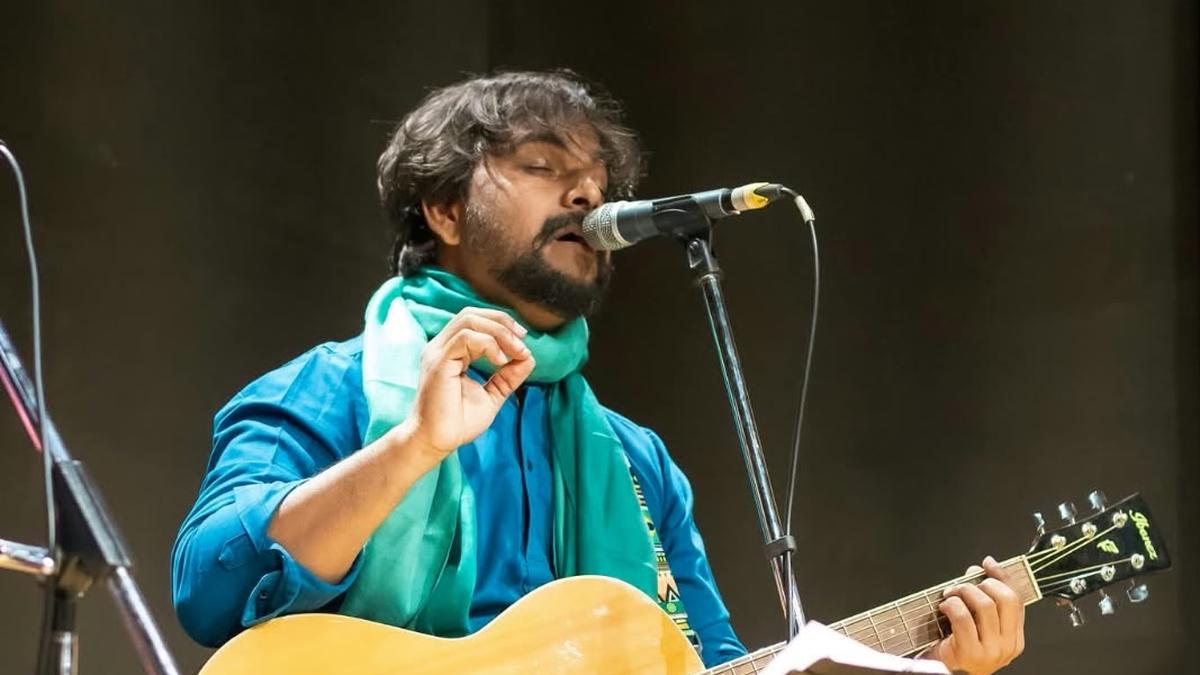
It poured that evening. On the first floor of the Mandiram, Raghav Shreyas Foundation for Arts in Basavanagudi, rain hammered the old Mangalore-tiled roof. Inside, a small gathering sat huddled in the cosy room. The old house, with its unmistakable Bangalore character, had no conventional stage, no fancy lighting. There was just an artiste, his voice, and a room full of people listening.For Dhammarakshit, this intimate setting was something of an experiment. The Mumbai-based Ambedkarite lok shahir is more accustomed to performing with a group of 10–15 singers in the energetic, collective format of shahiri jalsa. This solo concert, revolving around the poetry of the ‘Sathyasodhak’ (truth-seekers), was quieter and more reflective. It also required him to step outside a form in which he is most comfortable.He began with voices that have travelled across centuries: Ravidas, Kabir, Chokhamela, Soyrabai, Tukaram and Mahatma Jyotiba Phule. The songs questioned caste, hierarchy, ritual and the ownership of knowledge. Kabir’s “Nirbhay nirgun gun re’ sat naturally alongside the words of saints whose spiritual search was intertwined with their struggle against social injustice.For Dhammarakshit, these are not simply bhakti poets. He sees them as part of a longer mukti (liberation) movement tradition, a lineage of people who challenged the social order of their time.Among them was Soyrabai, the 14th-century Mahar saint-poet and wife of saint Chokhamela. She and her husband were denied entry into the temple because of their caste. Yet Soyrabai’s poetry went far beyond devotional expression. In Vitaal, she writes, ‘Dehasi vitaal mhanti sakal, Atma to nirmal shuddha-buddha’ questioning the idea of ritual impurity attached to menstruation. She observes that the body is considered impure while the soul remains pure.Her best-known abhang, ‘Avagha rang ek zala’, has entered the classical music world through the renditions of artistes such as Kishori Amonkar, but Dhammarakshit points out that the radicality of Soyrabai and other saint-poets remains relatively unknown.He says what survives as a beautiful song and what gets lost from the original thought is something he is interested in investigating.Dhammarakshit grew up in Satara as son of a Lok Shahir (folk singer). His earliest musical memories came from his father, who sang Ambedkarite songs and patriotic compositions. His understanding of music as a means for social questioning developed later, through his association with the Muktivadi Sangathan in Satara. Study circles, film screenings and readings deepened his thinking around caste, class, religion and gender.
How singer Dhammarakshit draws on centuries-old poetry to spark conversations on social injustice
Mumbai-based Dhammarakshit brings the voices of Kabir, Ravidas, Soyrabai, Chokhamela, Tukaram and Phule alive through his music.
782 words~4 min read