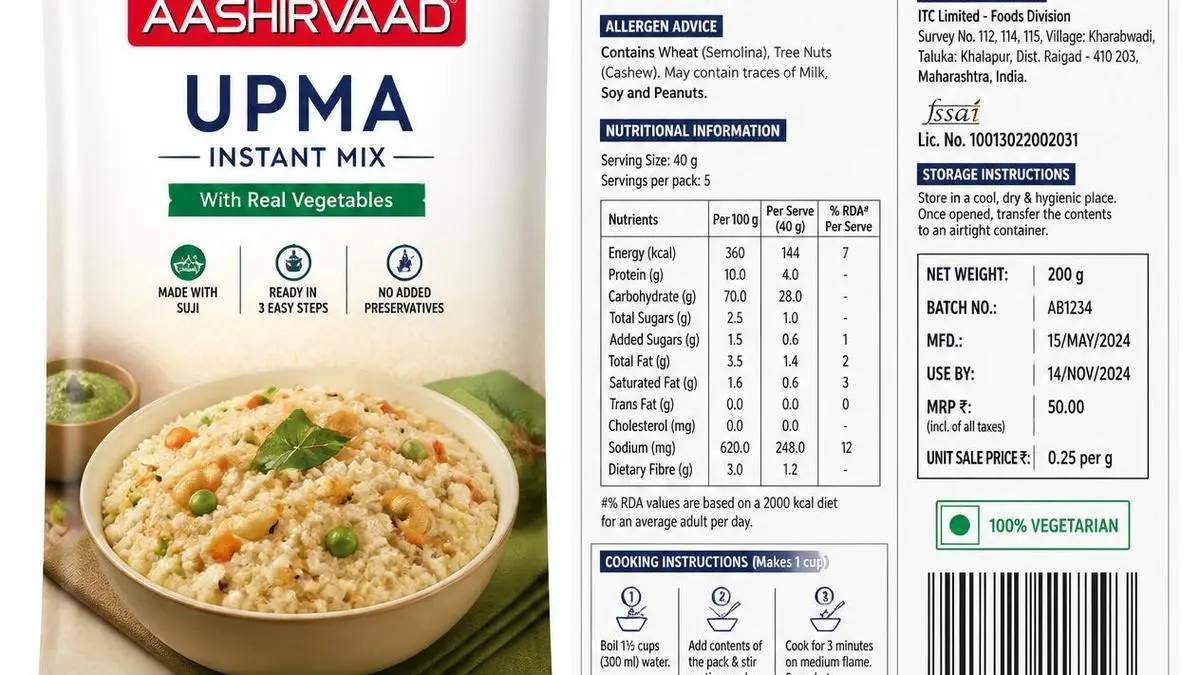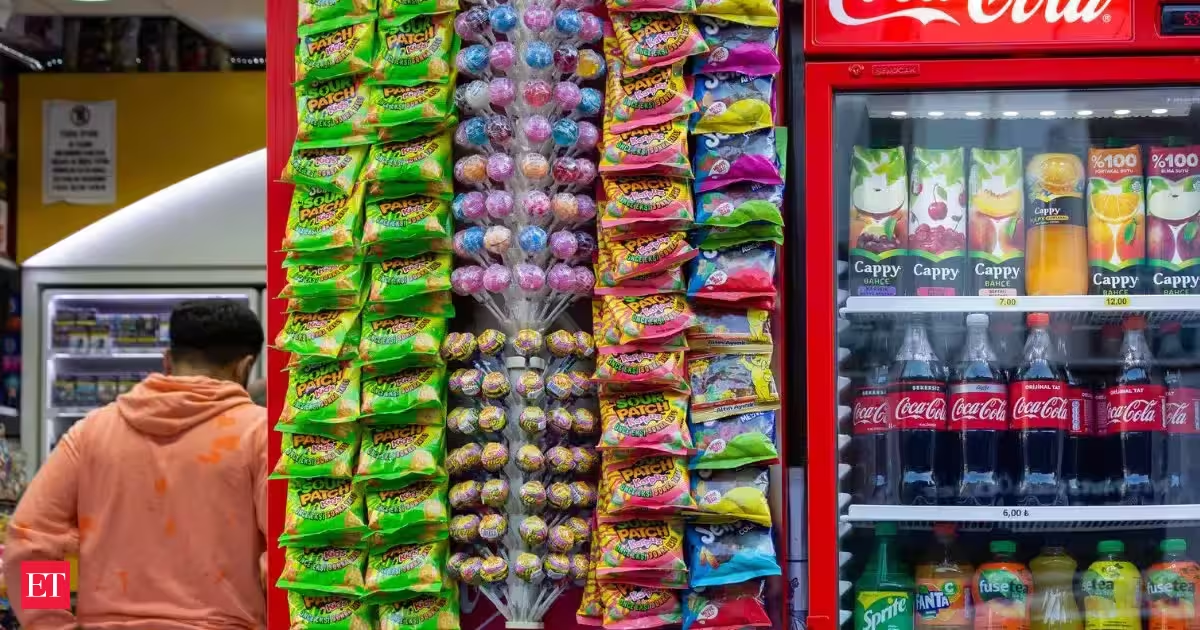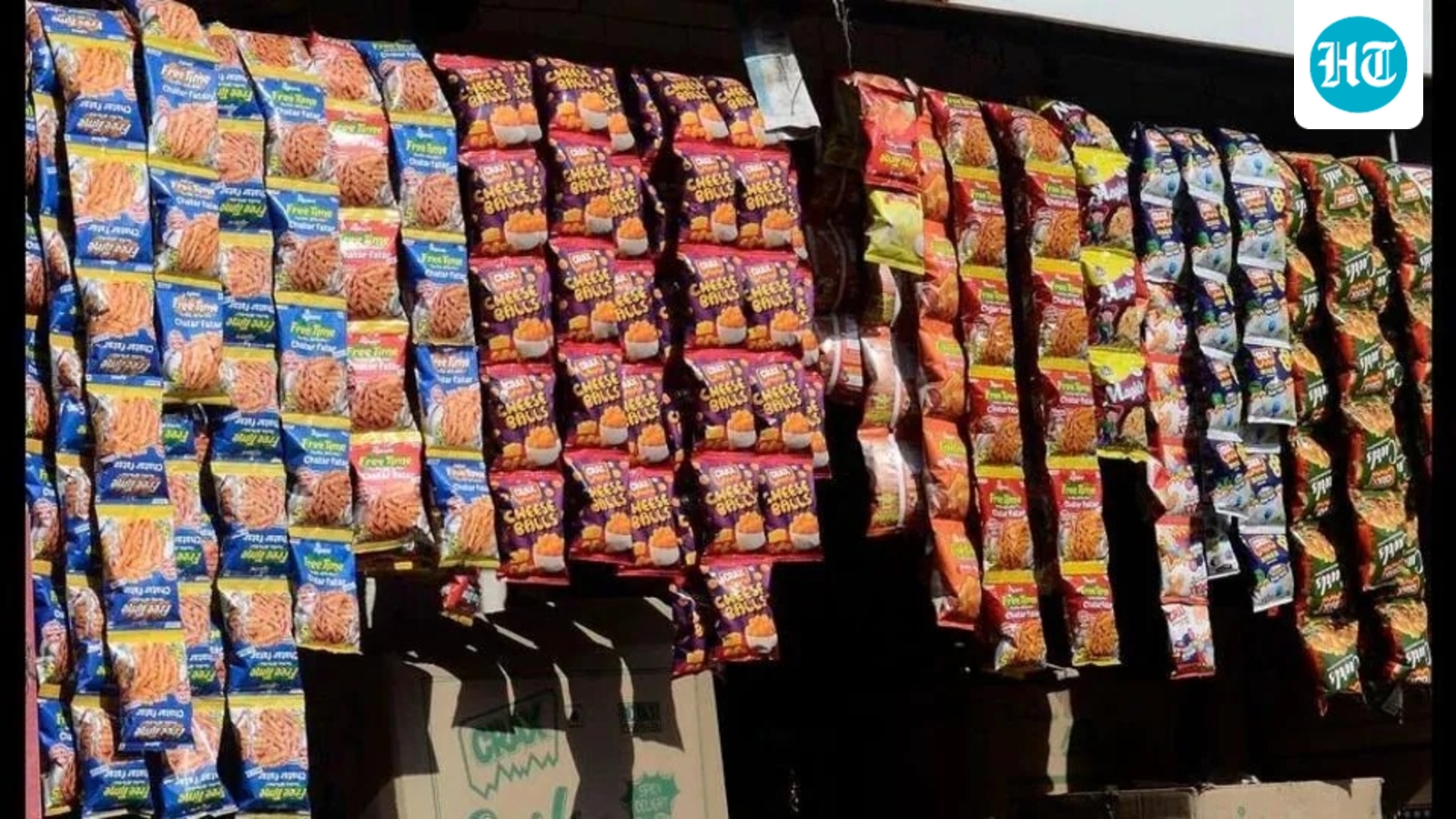
For years, an Indian shopper wanting to know how much sugar, fat or salt sat inside a packet of chips or a bottle of soda has had to turn it over and decode the small print. The Food Safety and Standards Authority of India (FSSAI) now wants to change that.Supreme Court intervention puts focus on warning consumers about packaged foods with potentially harmful levels of salt, sugar and fat. (HT/Made on Canva)Under a proposal placed before the Supreme Court, a red hexagon carrying words such as “HIGH FAT”, “HIGH SUGAR” or “HIGH SALT” could soon become a familiar sight on the front of packaged food in India, wherever the product crosses defined thresholds. The proposal comes almost a fortnight after the Supreme Court questioned the regulator’s reluctance to introduce a front-of-pack warning system and gave it two weeks to take a final decision.The significance of the proposal lies not merely in the shape or colour of a new label, but in the shift in the regulatory approach that has followed the Supreme Court's intervention. For years, India's debate over front-of-pack labelling has centred on how nutrition information should be presented to consumers, with the FSSAI considering a star-rating system and extensive stakeholder consultations.However, the court's intervention has now brought the focus squarely on a more direct question: should consumers be expressly warned, at the point of purchase, when a packaged food is high in levels that can pose health risks? The answer emerging from the regulator's latest affidavit is a proposed warning-based system, albeit one that will be introduced in phases and still has to go through the regulatory process, apart from the Supreme Court’s subsequent directives.The regulator's proposal also came within days of a Reuters investigation that reported on a March 19 meeting at which food industry executives had told FSSAI officials that interpretive food labels were confusing and unsuited to Indian palates. The report also gave the examples of a formulation gap between the same brands sold in India and abroad, i.e. a can of Fanta sold in London, for instance, has 63 calories, while the Indian version carries roughly three times as much sugar and an artificial dye that would have triggered a mandatory health warning in Europe.HT had earlier examined how front-of-pack labelling systems work across major economies — from Chile’s black octagonal warnings and the European Union’s Nutri-Score grades to the US’s proposed simplified box.What exactly is FSSAI proposing?The regulator has proposed a red-coloured hexagonal warning on the front of packaged food where the product is high in any two or more of three specified nutrients — added fat, added sugar and salt — based on thresholds under the Dietary Guidelines for Indians, 2024, issued by the National Institute of Nutrition (ICMR-NIN). The label would spell out the relevant warning: "HIGH FAT", "HIGH SUGAR" and/or "HIGH SALT". Specified sweetened beverages would carry a separate "HIGHLY SWEETENED BEVERAGE" warning.The warnings are intended to be difficult to miss. FSSAI has proposed that they be displayed in a font one point larger than that used in the nutrition information table on the back of the pack. The affidavit also sets out illustrations showing combinations such as "HIGH FAT HIGH SALT", "HIGH SALT HIGH SUGAR" and "HIGH FAT HIGH SUGAR".The system would initially be narrower than a blanket warning for every product high in one of these nutrients.Phase I would cover products high in two or more of the specified nutrients, along with specified sweetened beverages. Phase II would extend the warning to products high in any one of the nutrients. The phased approach is intended to give consumers time to adapt and industry time for reformulation.There would also be exemptions. FSSAI has proposed excluding single-ingredient foods and products (including fresh produce, grains and carbs, fats and pantry staples) inherently rich in fat, sugar or salt, such as ghee, edible oil, salt, sugar, jaggery and honey, subject to other applicable labelling requirements.In practical terms, the proposal could change what consumers see before they turn a packet around to read its nutrition table. Instead of requiring a shopper to interpret grams of sugar, fat or sodium buried in the nutritional information, the front of the packet would provide an immediate warning where the product crosses the prescribed thresholds.Also read: 'Do you not want India to stay healthy?' Top court grills Centre, FSSAI over food labelsThe Supreme Court’s pushThe proposal follows an unusually direct intervention by the Supreme Court in a public interest litigation (PIL) filed by 3S and Our Health Society. On August 13, a bench of justices JB Pardiwala and K Vinod Chandran took exception to the regulator's reluctance to introduce front-of-pack warnings despite the court having earlier asked it to consider the measure.The court described front-of-package labelling (FoPL) as an “assistive device” to help consumers make informed purchasing decisions and healthier dietary choices, saying its purpose was to put readily understood nutrition information on the package at the moment a purchasing decision is made.The bench's concern was particularly focussed on children. It noted that obesity had emerged as a public-health challenge and referred to data showing that the proportion of overweight school-age children and adolescents had risen from 2% in 2000 to 10% in 2022. It also cited a contrast in children's food environments. While around 80% of food and beverages available within schools were freshly cooked meals, nearly 80% of what was available around schools consisted of packaged snacks, it noted.The court also referred to the Economic Survey 2025-26, which recorded that India's ultra-processed food market had increased by more than 150% between 2009 and 2023, during a period when obesity had doubled among men and women. The Survey's cited policy response recommended replacing the proposed Indian Nutrition Rating with warning labels, along with other measures.The intervention was also a response to the government's argument that India could not simply replicate international standards. The court refused that argument. “We do not approve the stance of the Union when it says that it is not possible to match with international standards,” the bench said, asking whether India should remain “an underdeveloped country”. It also added that the world should know India was concerned about the health of its citizens, particularly growing children.The court ultimately gave the Union government and FSSAI two weeks to place their final decision on record, while warning that it could issue further directions if they did not act.Also read: ‘Last chance’: SC warns Centre it will pass directions if FSSAI fails to implement front-of-pack warning labelsHow the proposal compares with othersThe Supreme Court’s August 13 order pointed to the experience of Chile, Israel and Canada, while noting that front-of-pack labelling is internationally prevalent.The FSSAI affidavit referred to the Chilean experience in particular. Chile introduced its warning-label system in phases. In the first phase in 2016, a product was labelled "high sugar content" if it contained more than 22.5 grams of sugar per 100 grams. By the third phase in 2019, that threshold had been lowered to 10 grams per 100 grams. The affidavit says the change resulted in a substantial reduction in consumer appetite, across socioeconomic groups, for products high in salt, sugar, saturated fat and calories.HT had reported that scientific research and studies on the efficacy of label warnings across the world had found merit in introducing them as they deterred consumers from purchasing highly unhealthy processed foods, and also pushed manufacturers to come up with healthier recipes for their products.Canada introduced a similar system in 2022, using front-of-package nutrition symbols. The Canadian initiative, the court noted, was aimed not only at helping consumers make informed dietary choices but also at encouraging manufacturers to reformulate products for better health. This system too provided for different categorisation and exemptions.The broader international picture is that there is no single global FoPL design. The World Health Organization (WHO) identifies front-of-pack labelling as a policy tool to make nutrition information easier to interpret and help consumers make healthier choices. It lists schemes adopted or being evaluated in countries such as Australia, Belgium, Chile, France, Israel, Italy, Mexico, Norway, Spain, Sweden and the UK, though it does not prescribe any particular system.India's proposed approach is therefore closer to warning labels than to a star-rating system. That is significant as the consumer is not being asked to calculate whether a product is healthy or unhealthy from a score. The label is supposed to provide a direct warning when specific thresholds are crossed.Also read: FSSAI notice impact: Dabur, Ferns N Petals, four other firms rectify mistakesWhat could change for consumers and food industry?If implemented, the biggest change could be where and how consumers encounter nutrition information. The current detailed nutritional information is designed to be read and interpreted. The proposed FoPL would put a conspicuous warning on the front of the packet, potentially influencing the purchase decision before the consumer reads the back-of-pack table.For consumers, the stated objective is greater clarity. The Supreme Court said the value of FoPL lies not merely in disclosure but in clarity, drawing a difference between being told something and being informed about it.For manufacturers, the implications could extend beyond packaging. The FSSAI's phased approach expressly recognises the need to give industry time for reformulation, meaning products could be altered to reduce the quantities of nutrients that trigger warnings. The international experience cited by the court suggests that warning systems can operate not only as consumer-information tools but also as an incentive for manufacturers to change product composition.At the same time, the FSSAI proposal is only the beginning of the regulatory process. The regulator has said the changes will be brought through amendments to the relevant regulations after the prescribed procedure is followed.The Supreme Court has, meanwhile, made clear that it sees the issue as more than a question of packaging design. It linked the right to health with Article 21 — the fundamental right to life — saying the constitutional guarantee of life carries a corresponding duty on the State not only to refrain from actions that impair health but also to take affirmative steps to protect it. It also referred to Article 47, which casts a duty on the State to improve public health as a primary obligation.The red hexagon, it appears, may not merely be a new label. If the FSSAI proposal passes the Supreme Court’s muster and the regulatory process, it would mark a shift in India’s food policy.
HIGH FAT, HIGH SUGAR, HIGH SALT: The red hexagon FSSAI now wants on your chips packet & what it would change
The proposal comes after a Supreme Court push. What it covers, what it exempts, and how it could roll out. HT explains.
1,728 words~8 min read