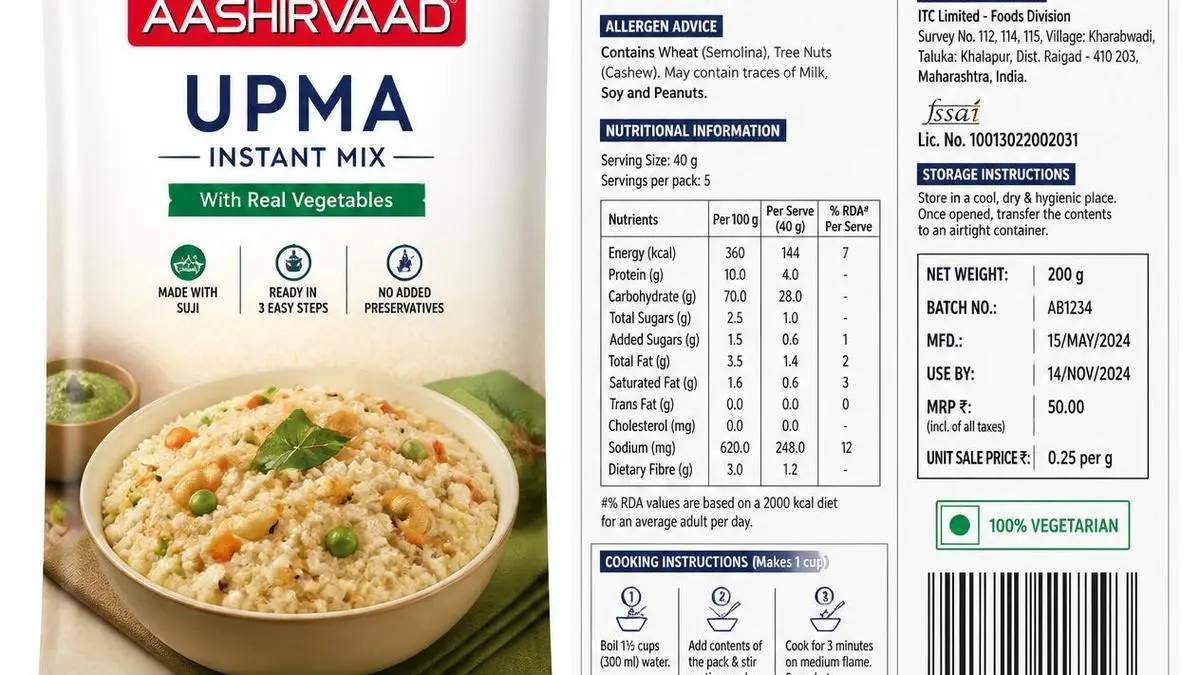
SynopsisIndia's food regulator is considering new front-of-pack nutrition labelling for packaged foods. This system would highlight excessive fat, salt, or sugar content on food packages. The regulator is also exploring varied assessment thresholds based on typical serving sizes. This move follows Supreme Court scrutiny over the prolonged delay in implementing such standards. Industry representatives support clear, science-based nutrition information for consumers.iStockNew Delhi: India's food safety regulator is considering a sweeping change in packaged-food labelling, reviving a decade-long proposal after getting pulled up by the Supreme Court for the protracted delay in implementing standards followed by developed countries.The Food Safety and Standards Authority of India (FSSAI) is considering mandating front-of-pack nutrition labelling (FOPNL) system for packaged foods and beverages on the lines of Canada's pictorial warning system. This would entail a food package prominently displaying the nutrient-fat, salt or sugar-that exceeds prescribed limits, said people aware of the matter.Also read: Nestle wants a seat at the table as India debates food-warning labelsFSSAI is also considering classifying food products into five categories or bands depending on typical serving sizes, to set thresholds for high fat, sugar and salt, or HFSS, determined on the basis. This means different food categories may be assessed using varied quantities rather than applying a uniform 100-gm benchmark across products.For instance, the HFSS content of pickle could be assessed on a 5 gm serving, while buttermilk could be assessed on 100 gm.FSSAI didn't respond to an email query.The discussions come amid heightened scrutiny over the prolonged delay in introducing FOPNL by the regulator. The Supreme Court recently pulled up FSSAI on the matter and gave the Centre two weeks to clarify its position, including whether judicial intervention would be required to move the process forward.ET BureauHFSS Representation DebateThe top court also questioned if the delay was due to the regulator succumbing to pressure from the food industry."Industry supports clear front-of-pack nutrition information," said Harsh Gursahani, partner at PLR Chambers, which specialises in food laws and works with several food companies."We only urge that the thresholds for 'high' sugar, salt and fat be science-based, transparent and suited to Indian dietary patterns, so that consumers receive information that is both meaningful and credible," he said.Also read: FSSAI issues notice to Delhi's JW Marriott, Juniper Hotels over misprinted license, food hygieneCurrently, packaged food companies are required to disclose nutritional information on labels, including total sugar, added sugar, total fat, saturated fat and sodium in bold letters and relatively increased font size per pack along with how much they contribute to the recommended daily limit. There is currently no mandatory front-of-pack warning that explicitly identifies a packaged food as being high in fat, salt or sugar."A per-pack declaration may not be the best way to depict HFFS content in a product, from a consumer perspective," said Mayank Shah, chief marketing officer at Parle Products. He argued that the "assessment should be based on the serving size, which is more consumer-friendly and provides a more accurate representation of the HFSS values in a product."If adopted, the proposed system would represent a significant change in India's packaged-food labelling framework by giving consumers a more visible indication of products containing high levels of fat, salt or sugar.Health activists said a new system could mean further delay in finalising the proposal.Read More News on...moreless
Food packets may have to spill the beans
India's food regulator is considering new front-of-pack nutrition labelling for packaged foods. This system would highlight excessive fat, salt, or sugar content on food packages. The regulator is also exploring varied assessment thresholds based on typical serving sizes. This move follows Supreme Court scrutiny over the prolonged delay in implementing such standards. Industry representatives support clear, science-based nutrition information for consumers.
548 words~2 min read