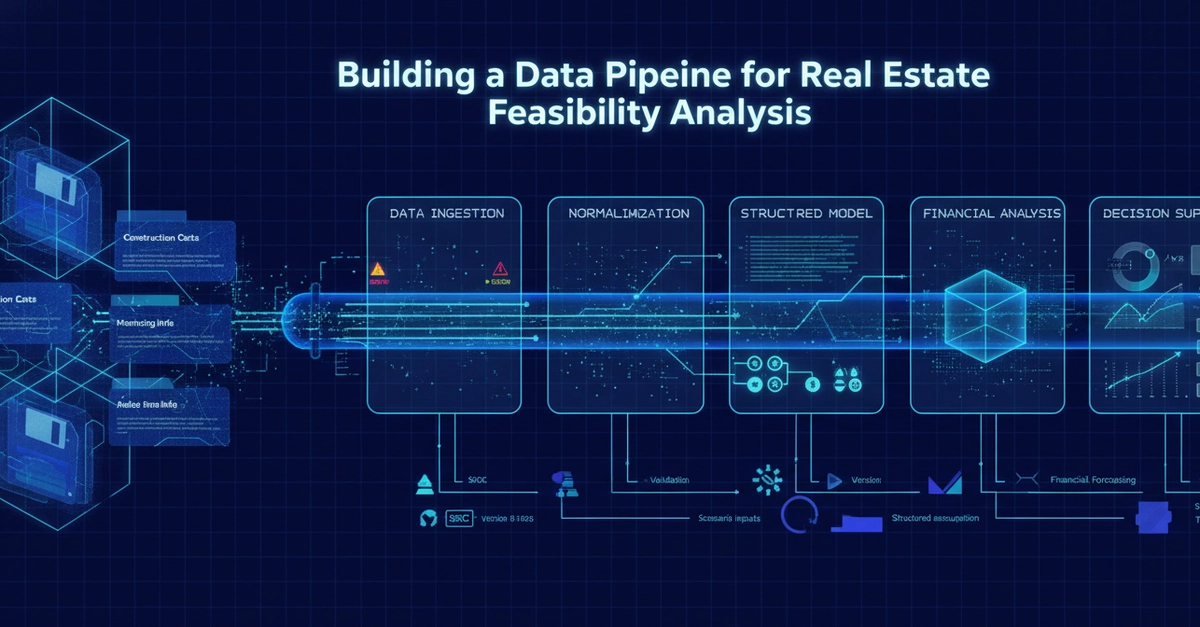
Real estate feasibility analysis is often treated as a financial modeling problem, but the financial model is only as reliable as the data behind it. A project can have perfectly written formulas and still produce misleading results if the underlying assumptions are incomplete, outdated, incorrectly structured, or entered without sufficient context.
Traditional feasibility workflows make this difficult because project information usually comes from many different sources. Land details may come from property records, construction estimates may exist in spreadsheets, financing terms may arrive through lender documents, and market assumptions may be based on reports or analyst research. Someone then has to interpret this information, decide which values matter, and manually transfer them into a financial model.
That workflow can work for individual projects. At scale, however, it becomes a data engineering problem.
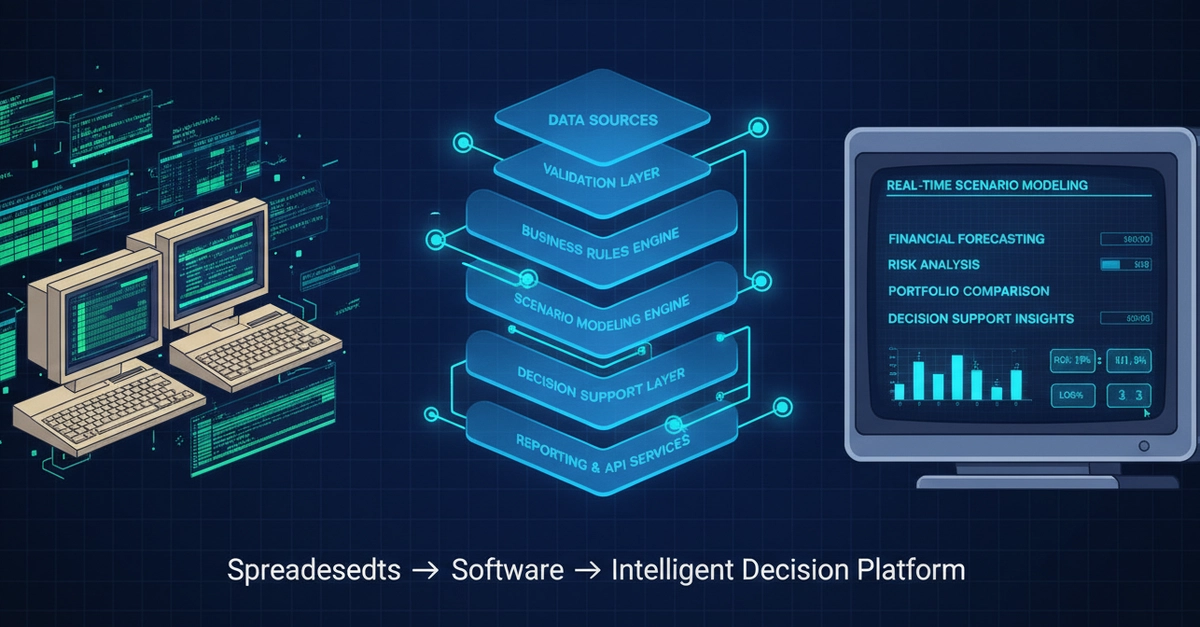
Modern feasibility platforms need a reliable pipeline that can collect, structure, validate, version, and deliver project information to the financial calculation engine. Without that foundation, automation and AI can only make an unreliable process faster.
Why Feasibility Analysis Is a Data Problem