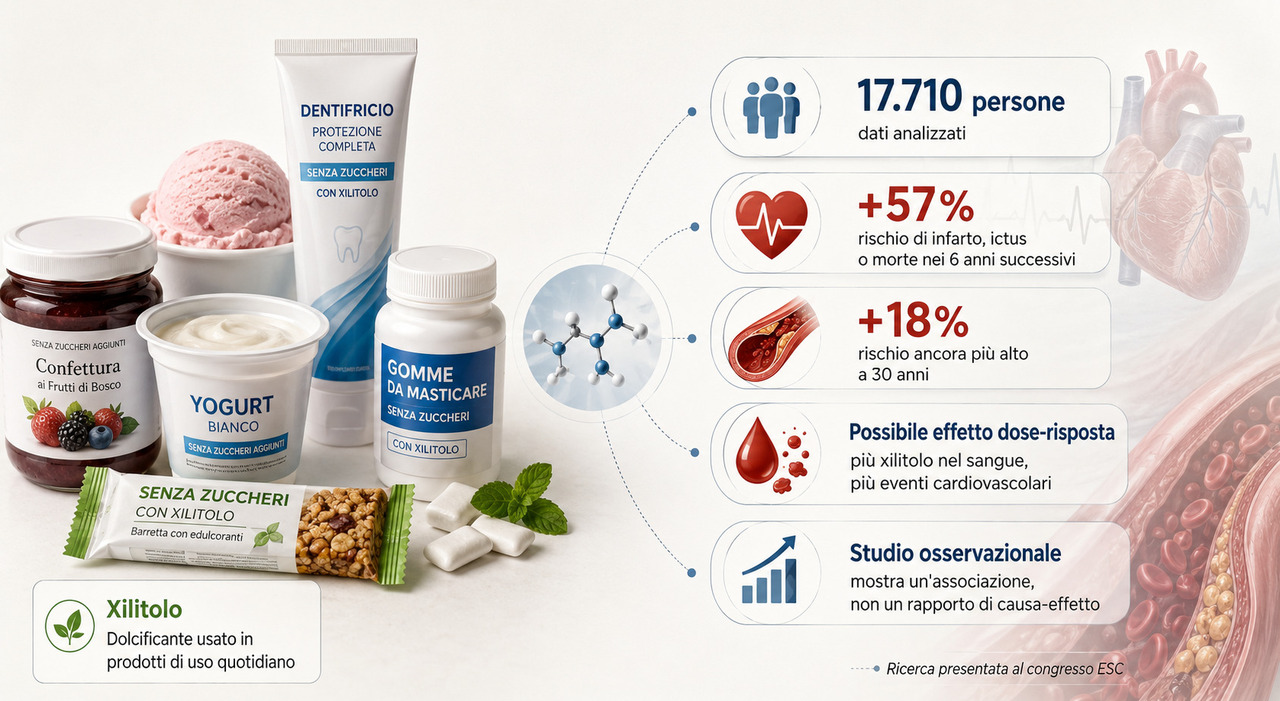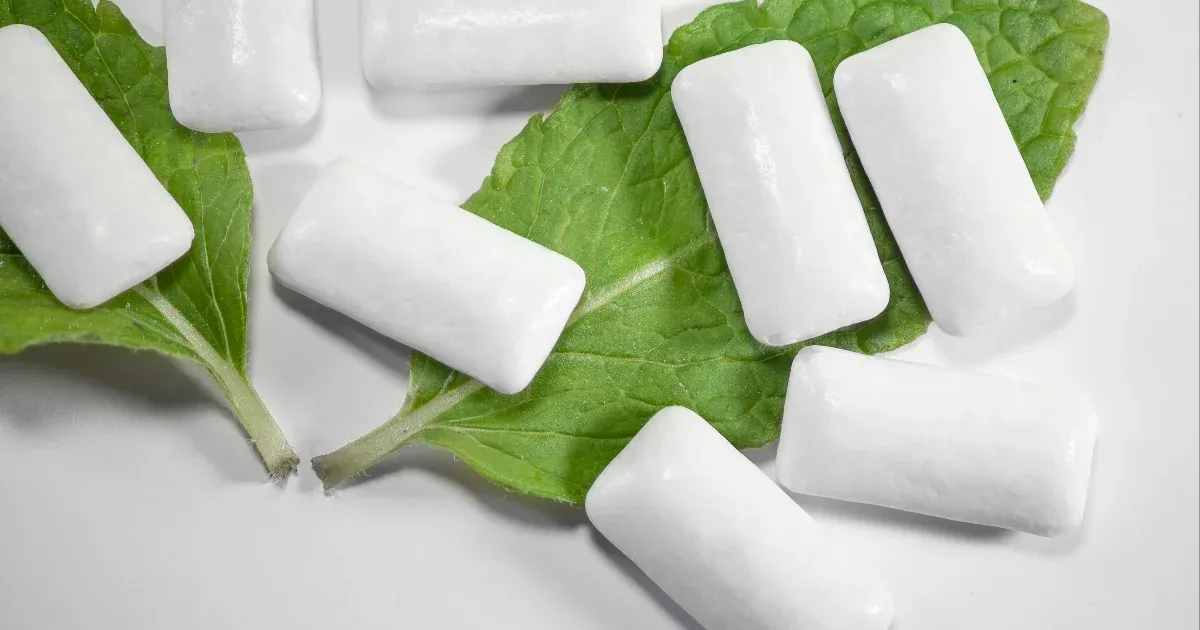
A common sugar substitute found in sugar-free chewing gum, mints, toothpaste and a range of low-calorie foods has been linked to a higher risk of major cardiovascular events in a new study involving nearly 18,000 people.Researchers analyzed blood levels of xylitol in 17,710 participants from two large prospective population studies and found that people with the highest levels of the sweetener had a greater risk of experiencing a major cardiovascular event, including heart attack, stroke and even death, than those with the lowest levels.The findings, which are due to be presented at the European Society of Cardiology (ESC) Congress 2026, do not prove that xylitol causes heart attacks or strokes. But researchers say the results raise concerns about the long-term cardiovascular safety of a sweetener increasingly used as an alternative to sugar.Researchers followed nearly 18,000 people across two major studiesThe research team examined participants from two prospective observational cohorts: the Canadian Longitudinal Study on Aging (CLSA) and the European Prospective Investigation into Cancer (EPIC-Norfolk). The combined analysis included 17,710 people, with an average age of 60.9 years.Researchers divided participants by circulating xylitol levels and compared cardiovascular outcomes between those with the highest and lowest levels.The outcome they tracked was major adverse cardiovascular events (MACE), defined in the study as myocardial infarction, stroke or death.The follow-up periods were notably different between the two cohorts. Participants in the CLSA were followed for 6 years, while those in EPIC-Norfolk were followed for up to 30 years.The highest xylitol levels were associated with greater cardiovascular riskIn the Canadian cohort, people in the highest quartile of xylitol levels had a 57% higher risk of a major cardiovascular event than those in the lowest quartile after researchers adjusted for known cardiovascular risk factors. In the EPIC-Norfolk cohort, the corresponding increase was 18% over 30 years.The researchers reported adjusted hazard ratios of 1.47 in CLSA and 1.18 in EPIC-Norfolk for participants in the highest xylitol group compared with the lowest.The association also appeared to follow a dose-dependent pattern: as circulating xylitol levels increased across the quartiles, cardiovascular event rates also increased.Researchers said the relationship remained after accounting for factors including age, sex, smoking, body mass index, diabetes, hypertension and lipid levels.What exactly is xylitol?Xylitol is a sugar alcohol, rather than a conventional artificial sweetener. It occurs naturally in the human body as a byproduct of glucose metabolism and is also found in very small quantities in some foods.It is widely used as a sugar substitute because it provides sweetness with fewer calories than sugar.It can be found in products including:Sugar-free chewing gumMints and candiesToothpaste and other oral-care productsSugar-free foodsLow-calorie productsSome ice cream, yogurt and jam productsAccording to the European Society of Cardiology's release, the amounts added to commercial products can be more than 1,000 times the small quantities naturally present in the body and certain foods.Earlier research raised concerns about blood clottingThe new findings follow earlier work by members of the same research group examining xylitol and cardiovascular risk. “In previous studies, we showed that xylitol can enhance the ability of platelets to form clots,2” said presenter, Doctor Marco Witkowski from the Charité University Hospital, Berlin, Germany, in a news release.“We also found that high blood levels of xylitol were linked to cardiovascular events in high-risk individuals over a 3-year period.2 Here we studied if xylitol increases cardiovascular events in a larger sample of the general population over much longer follow-up.”The researchers' latest analysis, therefore, sought to determine whether the previously observed association in people at high cardiovascular risk could also be observed in a much larger general-population sample. Their findings suggested that it could.The researchers say more studies are neededDespite the strength of the association and the size of the analysis, the study has an important limitation: it was observational. That means researchers found a relationship between circulating xylitol levels and cardiovascular events, but the study cannot establish that consuming xylitol directly caused those events.Professor Dan Atar, a Member of the ESC Communication Committee, specifically cautioned against interpreting the findings as proof of causation.“Artificial sweeteners are widely embraced by modern society, and the safety ratings had been good and granted by regulatory authorities. In this observational work, however, it appears that xylitol has a negative long-term effect on cardiovascular events in the general population. As with all observational studies, causalities are difficult to infer, but this work shows that further studies are mandated into this societally important topic.”The researchers similarly called for additional investigation into the cardiovascular safety of xylitol and other artificial sweeteners.Xylitol is also dangerous to dogsThe sweetener has another well-established safety concern: pets. The US Food and Drug Administration (FDA) has warned that xylitol can be extremely dangerous to dogs. Sugar-free chewing gum and other products containing the sweetener can cause severe poisoning if consumed by a dog.The FDA advises pet owners who believe their dog has eaten a product containing xylitol to contact a veterinarian, emergency veterinary clinic or animal poison-control center immediately.
xylitol artificial sweetener linked to heart attack, and stroke in 2026 study
Xylitol artificial sweetener: New research has emerged indicating a concerning association between xylitol, a widely used sugar alternative, and a rise in cardiovascular events. Researchers analyzed data from nearly eighteen thousand participants, revealing that increased xylitol blood concentrations are connected to a higher likelihood of heart attacks and strokes. This observational study underscores the necessity for additional exploration into xylitol's potential implications for cardiovascular health.
821 words~4 min read