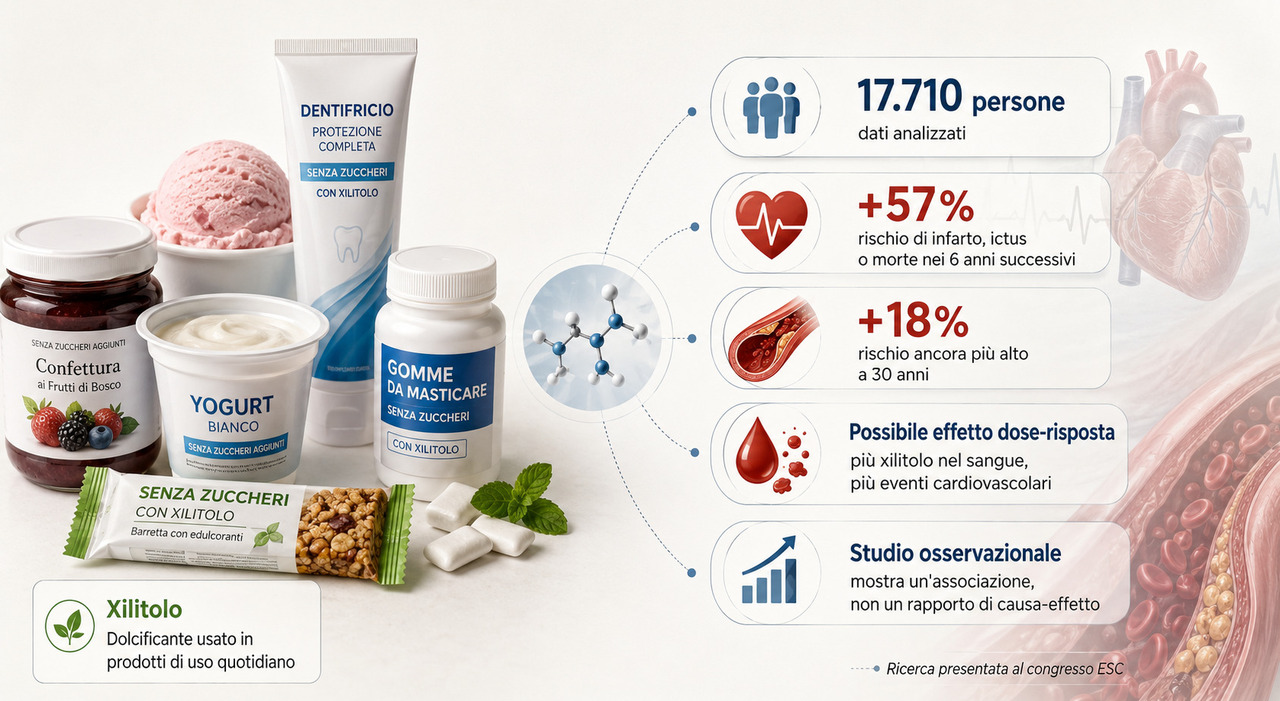
Those who regularly chew sugar-free gum could face a higher risk of suffering a deadly heart attack or stroke, a new study suggests. German scientists found that people who consume high quantities of xylitol – a sweetener commonly found in gum and mints – were up to 57 per cent more likely to suffer a heart attack or stroke, compared with those who consume very little.Previous research has suggested that xylitol could, in large quantities, make blood thicker and stickier, increasing the risk of a dangerous clot. Xylitol is a sugar alcohol that occurs naturally in the body.But it is also added to foods, beverages and oral care products because it provides sweetness with fewer calories than sugar. It is also believed to have some benefits for dental health, reducing the growth of bacteria that cause cavities and helping protect against tooth decay. Until now its long-term impact on heart health has been widely overlooked. Presenting the research at the annual congress of the European Society of Cardiology, Dr Marco Witkowski, the author of the study, said previous research has shown those with high levels of the sweetener in their blood are more likely to suffer a heart attack or stroke within the next three years. Artificial sweeteners have been linked to a number of serious health issues, including cancer, heart disease and diabetes His team wanted to see whether xylitol raised the long-term risk of heart problems in a larger group of people. The researchers, from the Charité University Hospital in Berlin, studied data from 17,710 participants over the course of 30 years.They found that people with the highest levels of xylitol in their blood had a significantly higher risk of heart attack, stroke or premature death than those with the lowest circulating levels. Over a six-year follow-up, the risk of suffering a major cardiovascular event remained 57 per cent higher among those who consumed the most xylitol – after adjusting for known cardiovascular risk factors such as age, sex, smoking status and high blood pressure. After 30 years, the risk of heart attack, stroke or heart death, was 18 per cent higher in those with the highest levels of the sweetener in their blood. Taken together, the researchers concluded that higher xylitol blood levels pose a greater risk to heart health. 'Artificial sweeteners are consumed by people who think they are healthier than sugar and they are generally regarded as safe by regulatory agencies,' Dr Witkowski said. He added that the findings demonstrate 'how little we know' about the long term safety of the additives.
Chewing gum linked with raised risk of deadly heart attacks
Those who regularly chew sugar-free gum could face a higher risk of suffering a deadly heart attack or stroke, a new study suggests.
772 words~4 min read