There is an intriguing instability in the world of Once Elephants Lived Here. The stories start out in places that seem familiar, with characters you have run into variations of already, until suddenly, the real morphs into the fantastic.A strangely expansive sky turns into a lover. An ambitious young man attempts to find his place in a city that has cleaved into two. A woman starts her morning with a routine walk and cannot stop. A man sits in his friend’s house, waiting anxiously, watching shadows. A couple finds the beginning and the end of their love story in a graveyard. A mother finds joy in sakura blossoms, millions of miles away from home. With the surreal skirting the edges of everyday existence in contemporary spaces, these stories defy easy classification and easy consumption. They unfold across a range of settings – a city that promises to be a superpower, a village that has not let go of older ways of life, a generic housing society, a beautiful hamlet in Kerala, a new planet, an ordinary hotel room, a train in Japan. Their concerns are just as varied. Like the rest of Geetanjali Shree’s fiction, this anthology of 11 stories, first published in 2012 as Yahan Haathi Rahtey Thhey and translated from the Hindi by Daisy Rockwell, explores the complexities of human behaviour. Each of the stories in this selection plays with form, ideas, and, decisively, with the reader’s expectations.Your city, my cityThe eponymous story, set in a town that has lost its memories of the past, introduces the reader to an old woman: “Wherever she appeared, she was an unusual sight, but at the same time, she was supremely ordinary. Wherever she showed up was not her place, but it became her place. She could be anywhere, could belong anywhere. She belonged where she was today, and she'd belong where she appeared tomorrow.” The woman, never named, is the first of the many “complex elderly characters” Rockwell identifies as a recurring presence in Shree’s fiction. The town stands bifurcated into inviolable halves and has no place for the old. They are relegated to silence, removed from both public spaces and public discourse. The old woman remains unmoved by these codes. She becomes a story, a legend, powerful in the way stories are, reminding those who would rather forget that the past can never be permanently erased.In sharp contrast to her self-assured reclamation of space and time is the cantankerous father in “The End”. In the manner of ageing patriarchs everywhere, he continues to make his children and his wife miserable with his excessive calls on their time, labour and attention. And then there is the enigmatic grandfather in “And I Saw Myself Running”. Larger than life, Baba holds his household, his community and the entire village in thrall. He has the power to control snakes, much as he controls people, holding them under his protection while also entertaining himself at their expense. Baba is so authoritarian, time seems to bend to his will. Aggressively masculine, he reduces the narrator to a childlike state of indecision and insignificance. Age, in these stories, does not adhere to conventional narratives of effacement. It is deviously defiant, and the aged, engagingly anomalous.The world of this collection has the same jagged edges as our own. The city of “Once Elephants Lived Here” has been sculpted by riots: “The riots made this city famous. Well, not the riots themselves but the glitter and glamour that most definitely resulted from the riots.” The text does not spell it out but clues are scattered all over, coaxing the involved reader to connect the dots between rioting, a river that divides an erstwhile composite space and composite people, two factions on either side of the recently drawn-up border and the implied safety in living with people of your own kind.The trauma of the Partition lives on, 80 years after its genesis. Its violent legacy echoes in “These Days”, where a man, making an obvious show of being Hindu, adjusting to the optics of “looking” his religious identity by shaving off his beard and performing regular puja for the benefit of his neighbours, sits in the literal glare of headlights so as to show himself as harmless; someone who deserves the protection of the community. The house he occupies belongs to his friend, a Muslim, who, to take his own belongings, must break into his home under the cover of darkness, taking the form of shadows. In this city beset by communal violence, community has broken down and the only time anyone sees other people is when curfew is relaxed for a few hours. The narrative builds up anxiety and tension as the man waits, his inaction an obvious reminder of his loss of agency, echoing an essential psycho-social truth of our times. The woman who goes on a morning walk and finds herself unable to stop in “Out for a Spin” also draws attention to the sterility of urban spaces – posh housing societies, neighbourhood parks, community spaces – that have become sites of observation and even surveillance but have lost all human connection. No one hears her, no one pays attention, no one attempts to help. The critique is as damning as it is subtle.Unexpected heroesWomen in Geetanjali Shree’s fiction have often been subversive in unexpected ways. The pattern remains unbroken here. In “Echo”, a middle-aged woman, rekindling a “bygone college romance” in a nondescript hotel room in a nondescript city, refuses to give up first dibs to the newspaper. “I’ve never understood why men are such newspaper-worshippers”, she says. “For my father, it – the newspaper – was like a breast for a baby. It appeared before dawn – tea banana biscuit newspaper – presented on a tray as a small offering one might serve a sahib and a nawab.” It is as though in claiming control over the newspaper, men, across generations, claim control over the world, establishing their natural supremacy over all they survey. The woman resists. She spars with her new romantic partner, not ceding an inch, even when it threatens their relationship.The morning walker in “Out for a Spin” is a writer who started going for a walk while it was still dark because to be seen by the society residents was to be labelled interminably. “We are revealed in the eyes of others”, she insists. The world outside is always pointing fingers and yelling: “Madam, your bra strap is slipping, your hair is turning white, your belly insists on protruding through your clothing, and what outlandish thing you are wearing anyway, not feminine, not masculine, not Eastern or Western!” Caught in a loop of incessant, involuntary movement that pushes her into public view, the gazes on her reveal the ways in which the world looks at her, undermines her, and packs her away as an aberration that is best ignored.“So Much Sky” has another writer, another middle-aged woman, in conflict with the government, the way artists, globally, often seem to be. She is sent on a writer’s retreat by the same government (as a peaceful act of distancing?), and finds herself in a new world, a world run by bots and automation, a world where the sky is endless and playful and alive. In a radical break from the rituals and reality of the Anthropocene, the woman and the sky fall in love. “It wasn’t magic, but it was definitely magical”, is how she describes it. That is also exactly how the reader receives the story – as not quite magic but definitely magical. Something of the same shade of magical spills into “March, Ma and Sakura”, where a young man working in Japan is anxious about his visiting mother’s ability to navigate a new country and culture. As the sakura blossoms, so does Ma. Witnessing her changing her usual saree for more practical clothes, making new friends, learning to map the city, unsettles him. Her freedom is agonising to him: “There was nothing I could do. Ma had slipped through my fingers, like those sparkling grains of sand.” Patriarchy, in the form of sons and lovers and society, will continue to want to police women’s bodies, their choices, and their joy, these stories seem to say, and women, in fiction and elsewhere, will continue to live with defiance.In an interesting stylistic choice, many of Shree’s protagonists remain unnamed. The lack of a name seems to preserve each character in a private space of their own. Withholding a little something from the reader, they become a little more human, a little more real, shifting beyond the cognitive into the affective. In “Butterflies”, the narrator is a writer, grieving a personal loss in Kerala, “a place of matchless beauty”, where, despite the barrier of language, she begins to forge new connections with a set of young girls, as fragile and as doomed as they are full of hope. “Bulldozer”, set in Japan, runs through divergent landscapes and temporalities, delving into the narrator’s idyllic childhood in Ranikhet and juxtaposing it against the sharp anxiety of a train journey she took a year ago, hoping to catch sight of the sublimity of Mount Fuji. Both stories, as also the aforementioned “And I Saw Myself Running” and “Once Elephants Lived Here”, turn on memory, that elusive trickster that cares nothing for truth-telling. Affect – a recognition of loss, an anticipation of the end, an inexplicable fear, an untold history – becomes the only lens through which these narratives coalesce.In her Translator’s Note, Rockwell refers to translation as “a form of commentary or interpretation”. As a reader with access to the translation as well as the source text, it would be disingenuous to not explore the obvious synergy between the two. Rockwell’s translation stands tall as an independent text that must adhere to its own stylistic imperatives. In “So Much Sky”, she excises what she identifies as a “framing story” involving an email, the image of Rabindranath Tagore, and mind-reading tricks, calling attention to the praxis of translation and the undeniability of the untranslatable – an idea or an image that remains impossible to re-situate and re-contextualise.Shree’s Hindi is peppered with words from English, adopting a conversational tonality that signifies a post-colonial loosening of linguistic boundaries. Rockwell’s translation pushes the bilingual reader towards the source text. Once you get there, you run into strange little stories, told remarkably well, and a prose marked by its lightness of hand, its ability to converse. In both the source text and this impressive translation, the reader, like the woman who fell in love with the sky, is sure to find something that isn’t magic, but is definitely magical.Once Elephants Lived Here: Stories, Geetanjali Shree, translated from the Hindi by Daisy Rockwell, Penguin India.
‘Once Elephants Lived Here’: Geetanjali Shree’s stories play with ideas and readers’ expectations
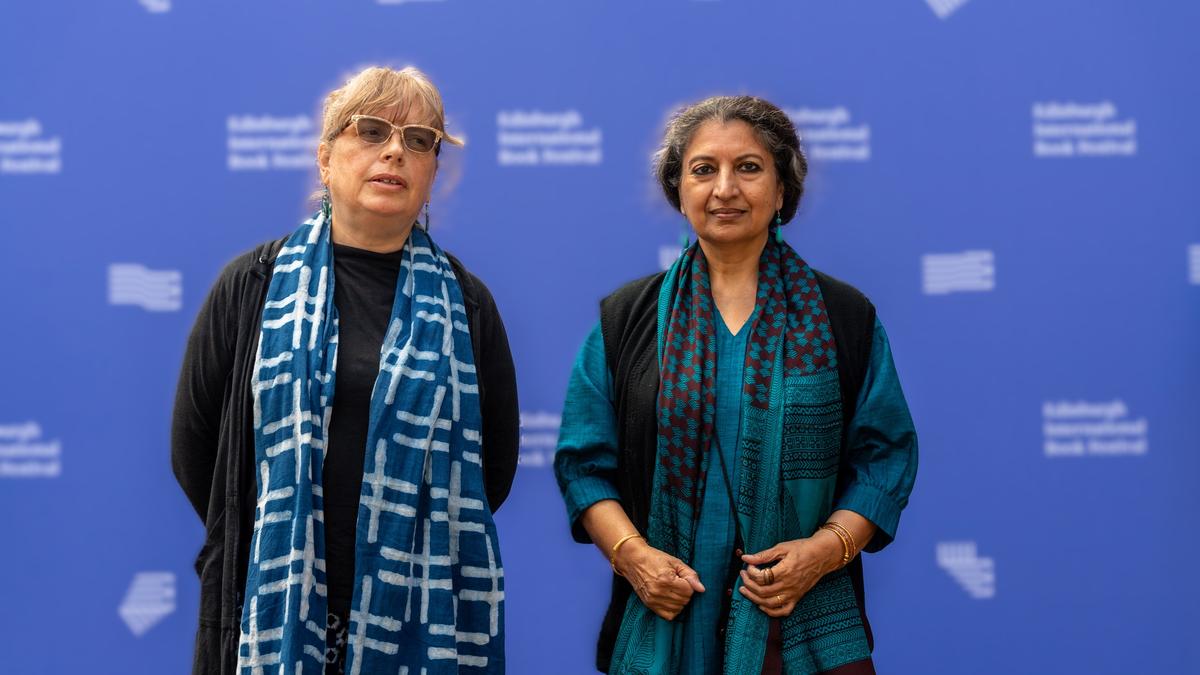
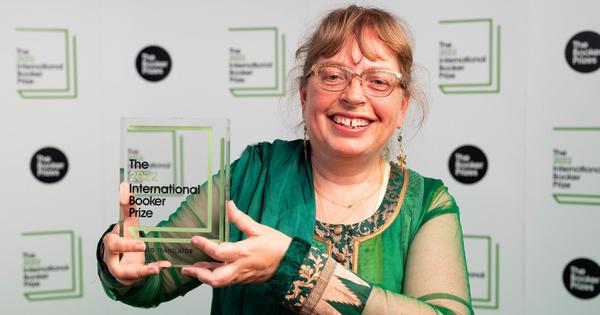
Daisy Rockwell’s translation stands tall as an independent text that must adhere to its own stylistic imperatives.
1,808 words~8 min read