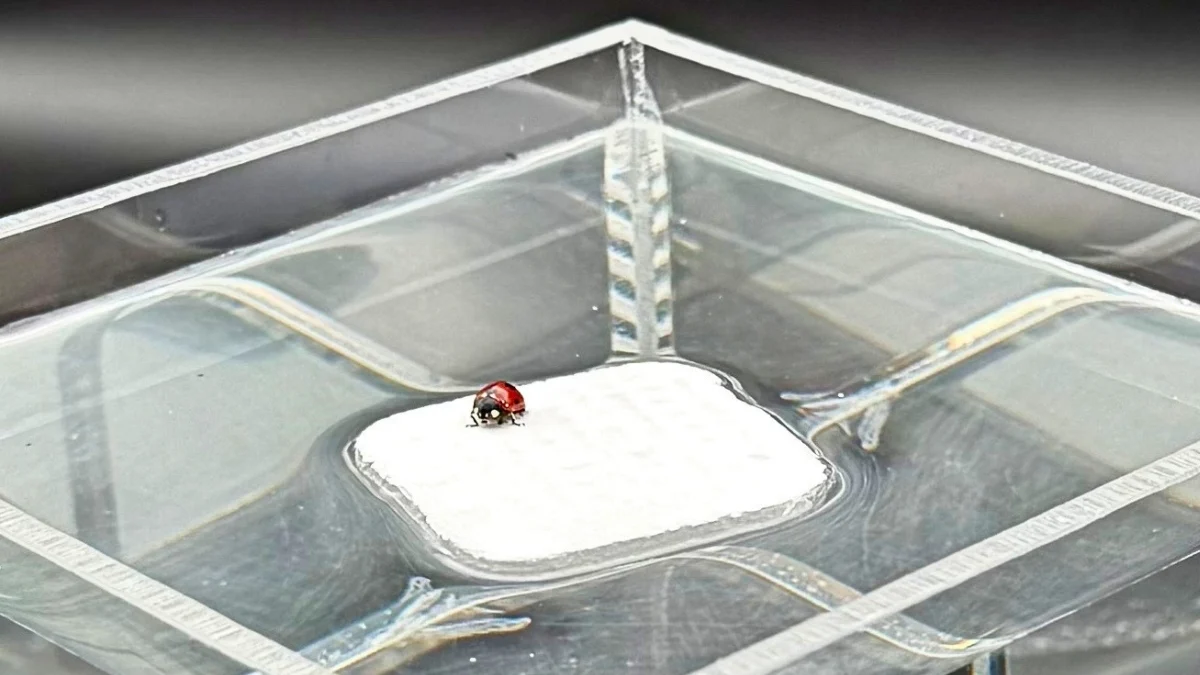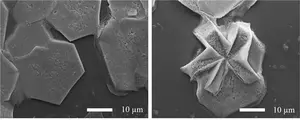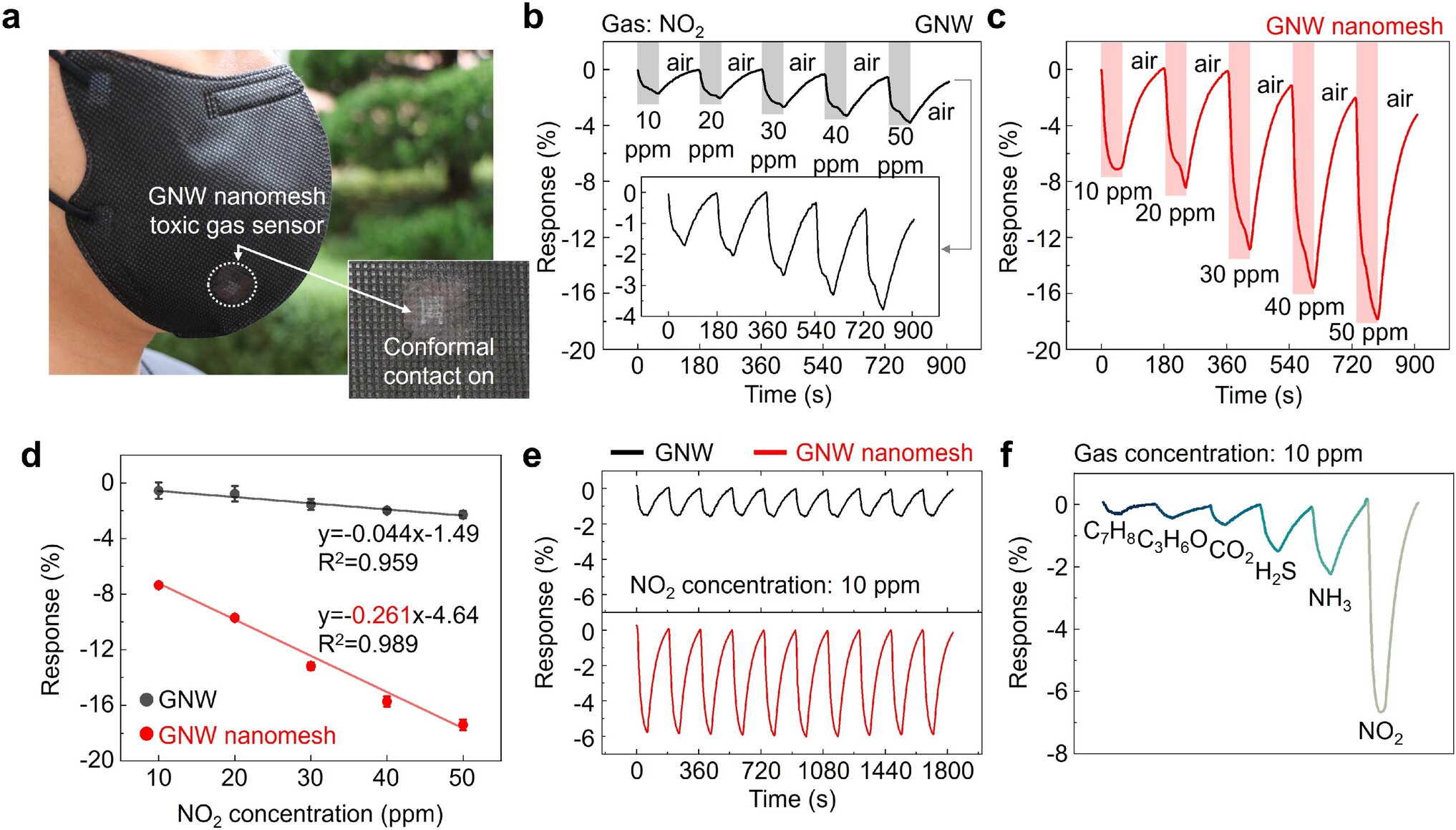
Enhanced NO2 sensing performance of the GNW nanomesh. Credit: Advanced Fiber Materials (2026). DOI: 10.1007/s42765-026-00752-9
A research team led by Sungwon Lee, a professor in the Department of Physics and Chemistry at DGIST, developed a hierarchical nano-on-nano structure by directly growing graphene nanowalls (GNWs) on polymer nanofibers and successfully used the structure to enhance the sensing performance of wearable gas sensors. The technology is expected to be applied to next-generation wearable sensors for real-time monitoring of individuals' breathing environments or hazardous gases in industrial settings.
Recently, there has been growing interest in wearable sensors that can be attached to the skin or masks to detect hazardous gases in the surrounding environment in real time. For extended wear, these sensors must be lightweight and flexible while allowing air and moisture to pass through.
Additionally, they must be capable of rapidly detecting even trace amounts of gases. Nanomeshes made of polymer nanofibers offer excellent breathability and flexibility but have limitations in surface area and functionality. Because polymers are vulnerable to heat, it is difficult to directly form functional carbon nanomaterials such as graphene, which require high-temperature processing, on their surfaces.