Cleaning products, candles, cribs, and cosmetics are just a few of the common household items that emit formaldehyde, a colorless, odorless chemical that when present in the air at levels higher than 0.1 parts per million has been found to be a risk to human health.
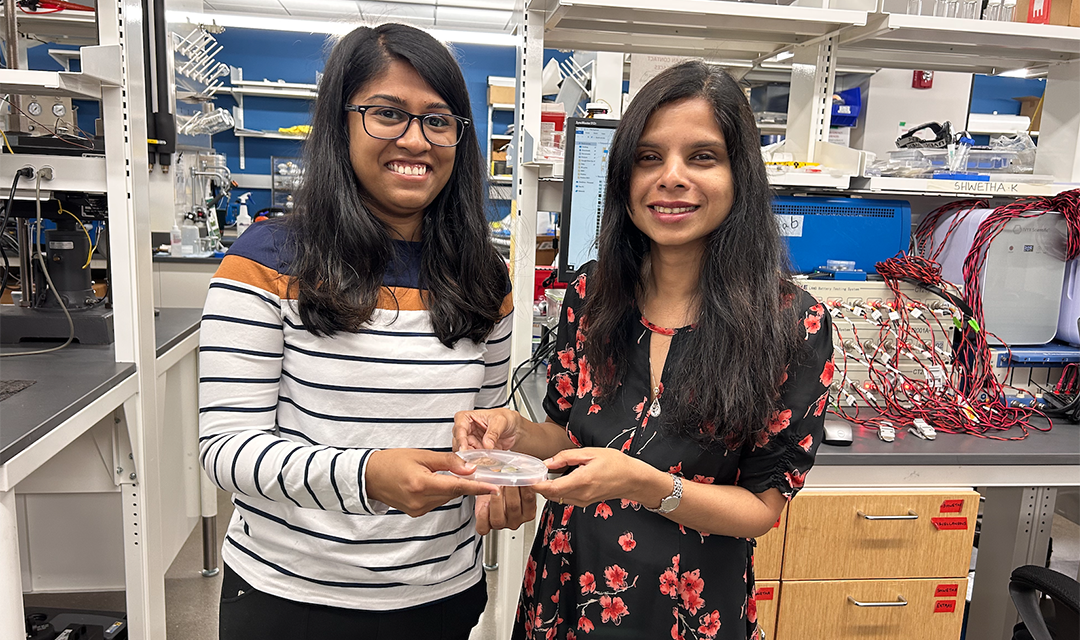
To make indoor air quality monitoring more accessible, researchers at Carnegie Mellon University have developed a low cost, long-lasting, indoor formaldehyde sensor. A unique polymer coating on the MXene-based sensor not only extends its half-life by 200% but also enables it to regenerate when performance begins to degrade.
MXene is a class of compounds that has shown promise in energy storage and gas sensing because of its superior electrical properties and versatile surface chemistries. Despite these advantages, MXenes are known to be highly susceptible to oxidation, particularly when exposed to air and/or humidity, posing a major challenge for MXene-based air quality monitors.
New research published this week in Science Advances, overcomes this challenge by encapsulating the MXene in a polymer coating. Using chemical vapor deposition, a materials processing technique that is fundamental to electronics manufacturing, the research team led by Reeja Jayan pumps vaporized precursor materials into a vacuum chamber housing the MXene sensor. The hot gases polymerize and form a nano-coating on the cold sensor in a way similar to how condensation coats the outside of an ice-cold drinking glass on a hot day.