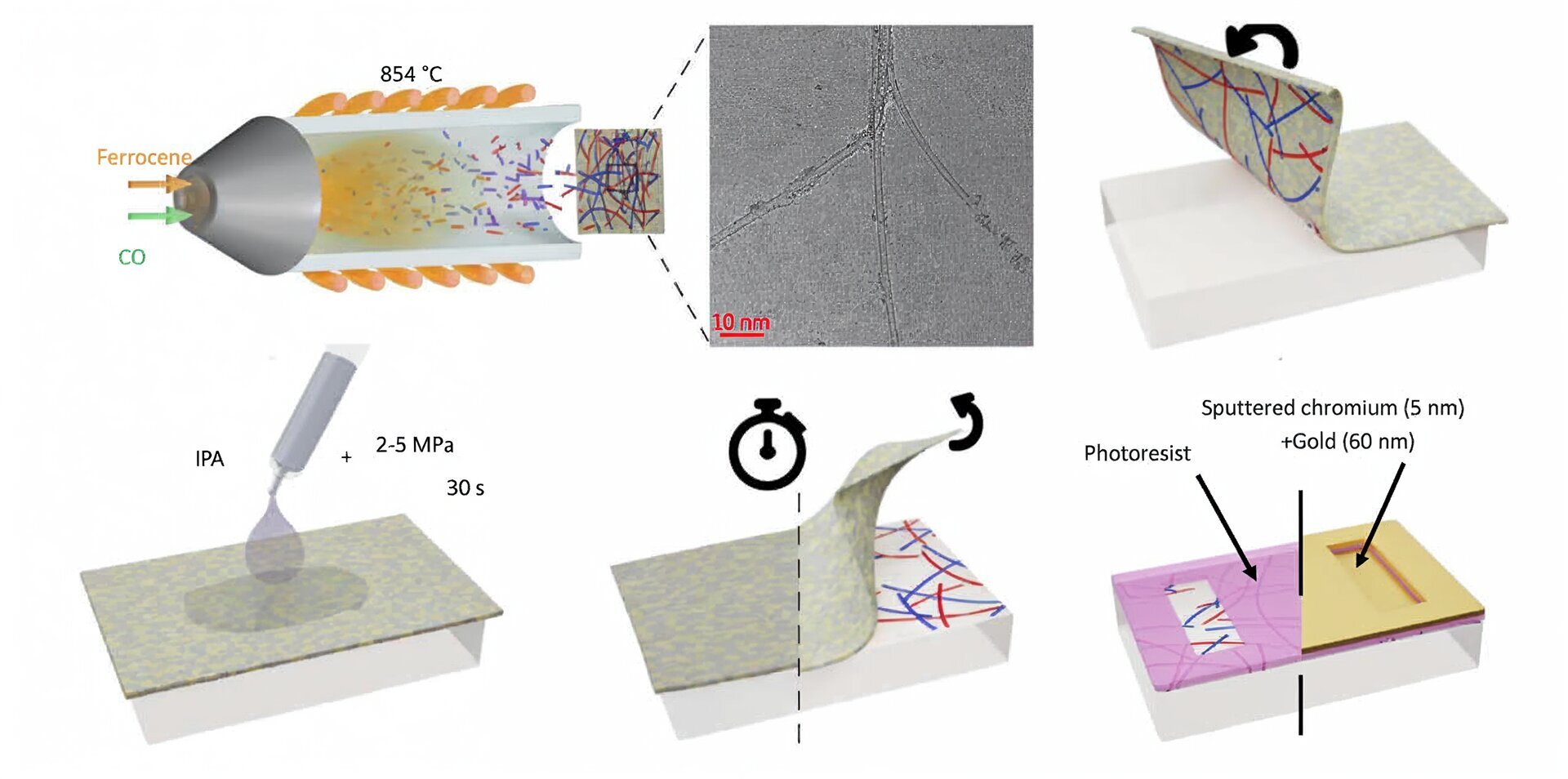
Nanotube synthesis and subsequent collection on a nitrocellulose filter (greenish gray sheet) and transfer to a different substrate (light gray block). Credit: Serebrennikova et al./Opto-Electronic Advance
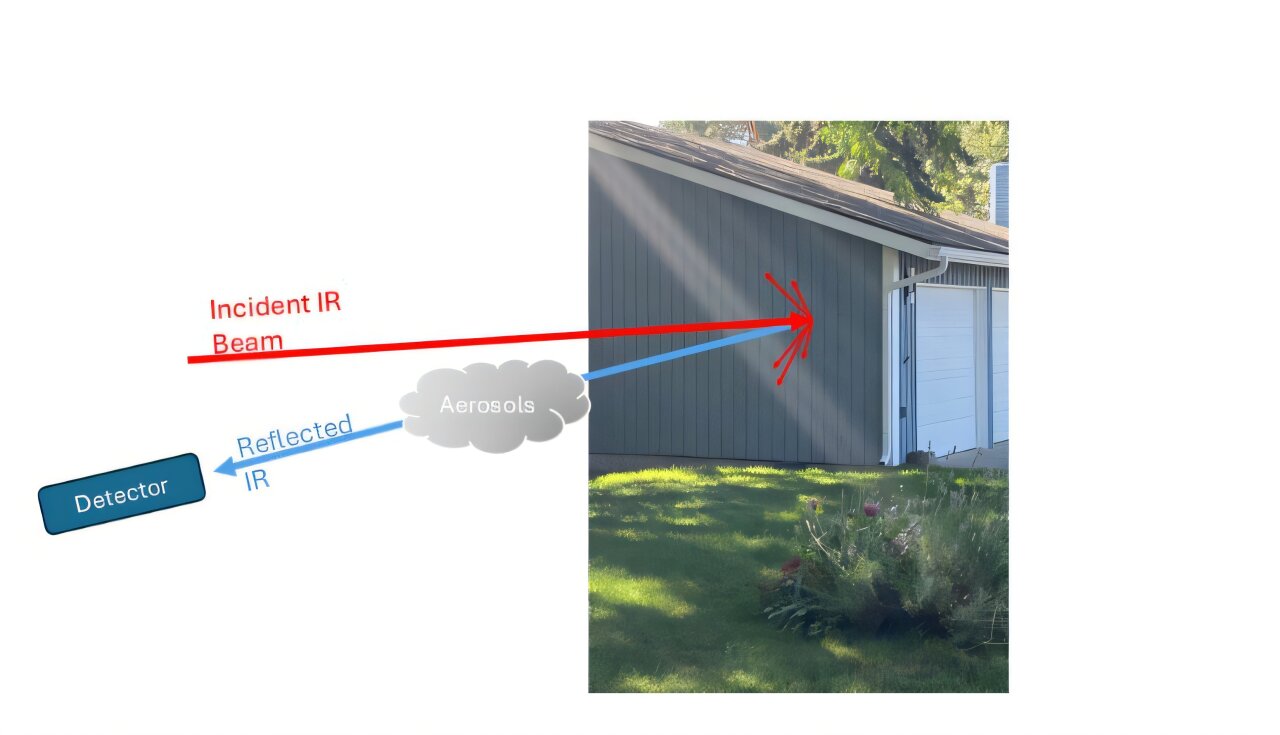
Researchers from Skoltech have devised a way to detect infrared radiation across a wide range without cooling the detector. This promises cheaper and smaller contactless thermometers and sensors for medicine, industry, fire and chemical hazard monitoring.
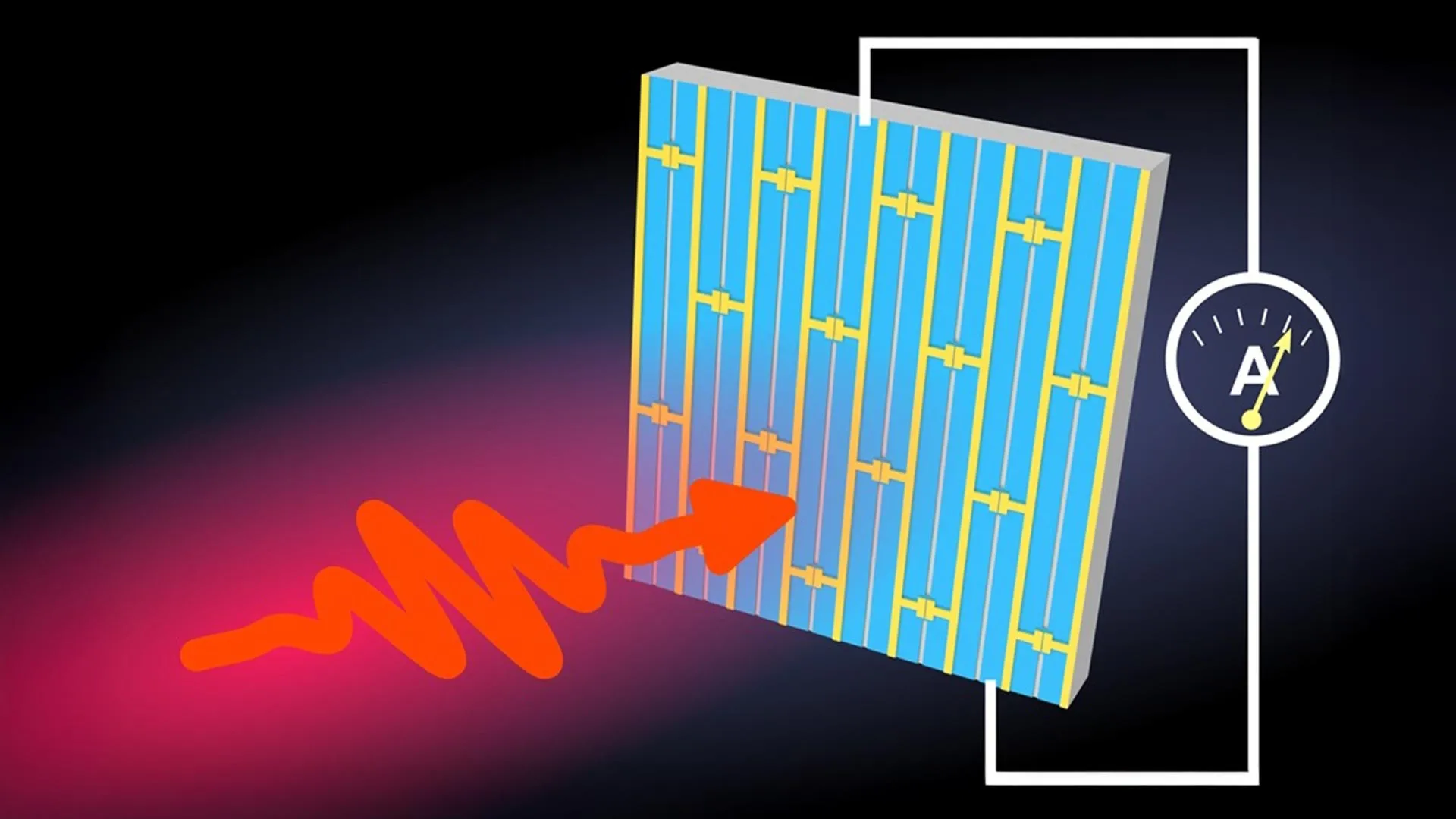
To detect infrared light, the team measured the change it induced in the electrical conductivity of single-walled carbon nanotubes. The observed change in conductivity was thousands of times more noticeable than in graphene, used in analogous detectors previously.
The findings were reported in an Opto-Electronic Advances paper.
Where infrared sensors fall short