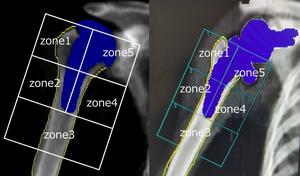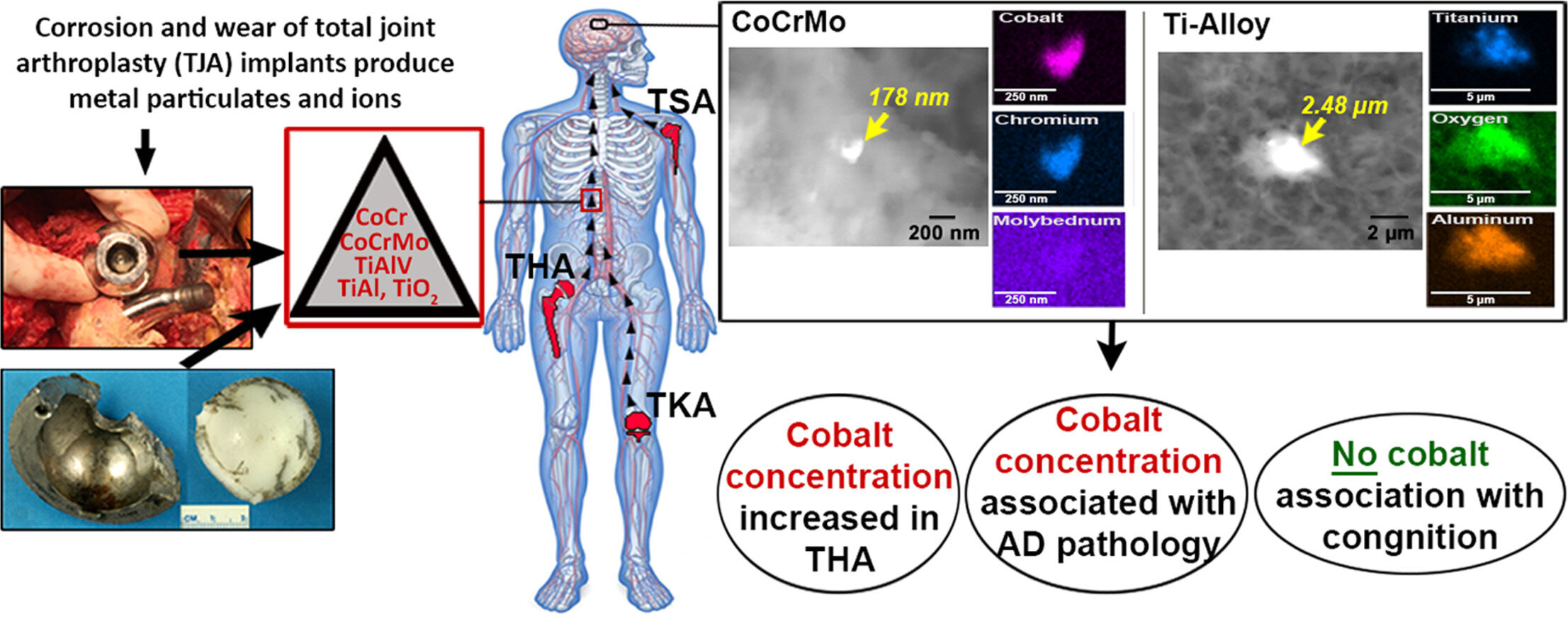
Graphical abstract. Credit: Acta Biomaterialia (2026). DOI: 10.1016/j.actbio.2026.05.006
Total joint replacement is a proven treatment to relieve chronic knee pain, but concerns have been raised that particles from the device may migrate to the brain and cause memory problems. New research from Rush University shows this may not be a concern.
In a study published in Acta Biomaterialia, researchers found that particles in some people with total joint replacements traveled to the brain but did not cause cognitive decline.
Researchers did find an association between cobalt, a key element in most implants, and greater Alzheimer's disease pathology in the brain.
The particles, called wear debris, are caused by friction and movement in the joint or, in some cases, corrosion. The newer materials used in joint replacements today make this less likely to occur.