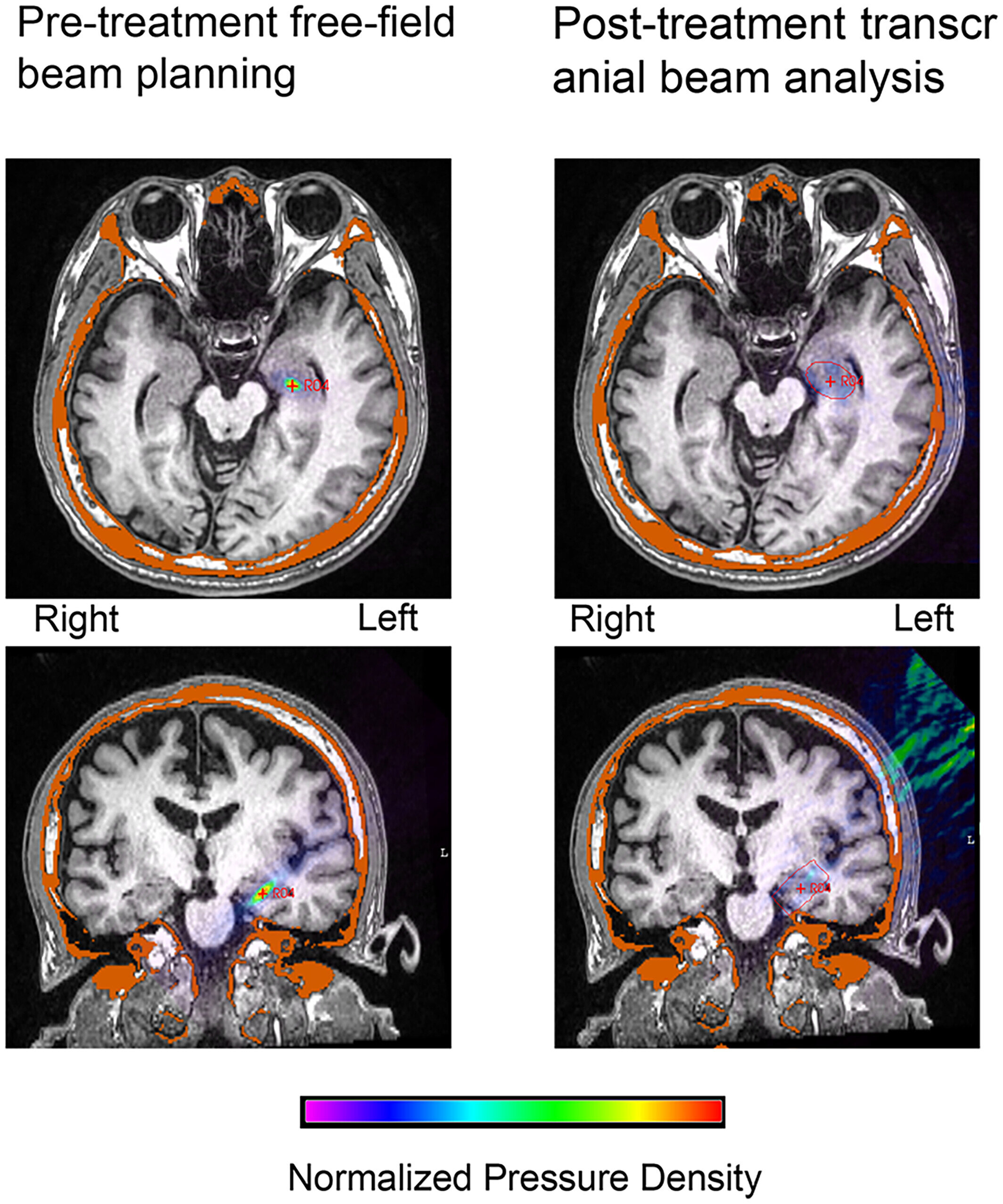
Pretreatment free-field beam planning and posttreatment transcranial beam analysis. Credit: Epilepsia (2026). DOI: 10.1002/epi.70404
Results from a pilot clinical trial evaluating the safety and feasibility of focused ultrasound neuromodulation in patients with drug-resistant epilepsy were published in Epilepsia. The study, led by Hsiang-Yu Yu, MD, a neurologist at Taipei Veterans General Hospital in Taiwan, built upon the group's initial clinical research with six participants.
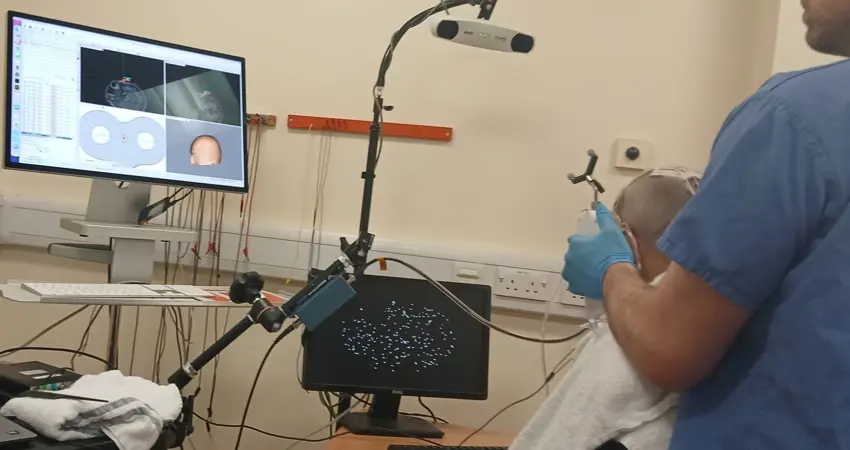
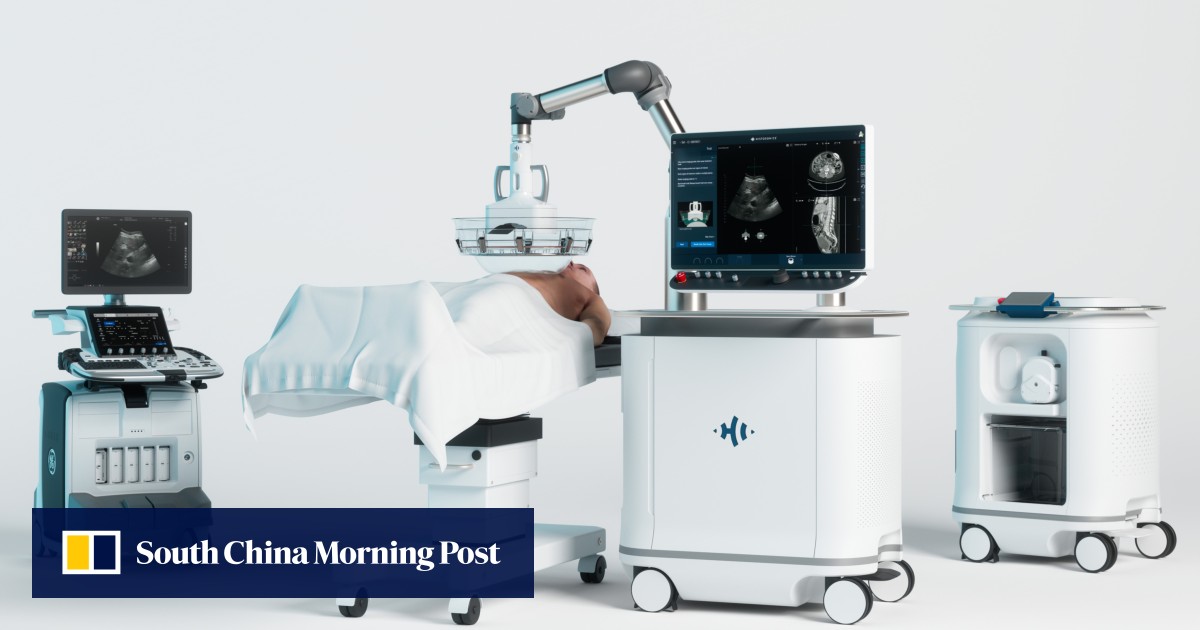
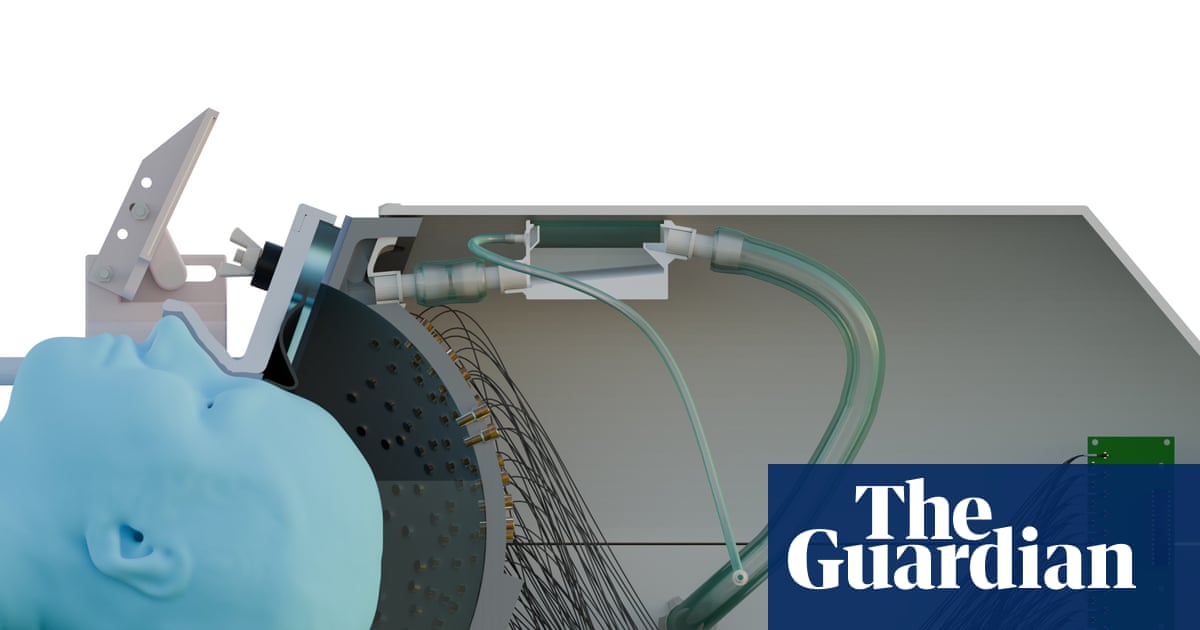
The clinical trial enrolled 12 adult participants between January 2022 and March 2024 who received low-intensity focused ultrasound (LIFU) neuromodulation using the NaviFUS neuronavigation-guided device. The brain target was personalized to each participant's seizure onset zone, which was localized through clinical examination, MRI, positron emission tomography and electroencephalographic testing, among other methods.
The team used treatment parameters determined by preclinical studies that suppressed epileptiform activity without tissue injury and the group's previous first-in-human study of LIFU neuromodulation in this population (i.e., a spatial peak temporal average intensity of 0.3 watts per square centimeter [mechanical index = 0.25], corresponding to a peak pressure of 0.18 megapascals and a root-mean-square pressure of 0.12 megapascals).