How Shanghai immigration officers spot forged identities, stop cross-border crimes with technology and experiences
Behind 7,000 fake documents
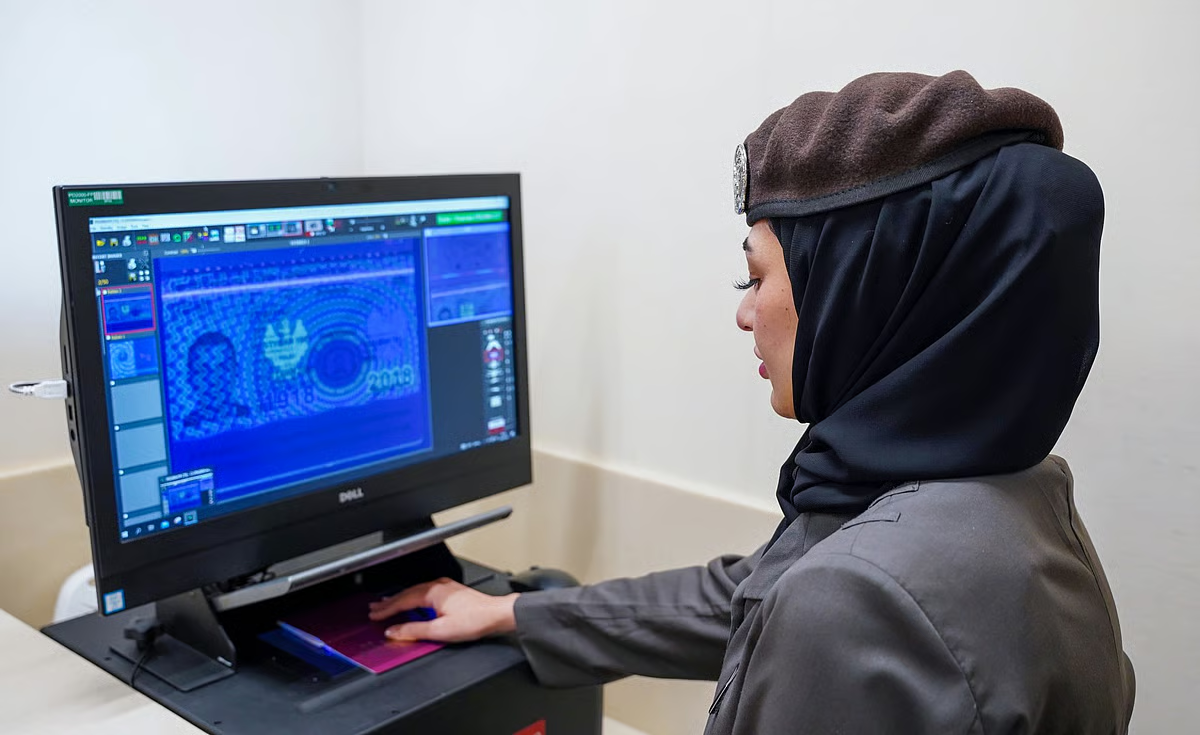
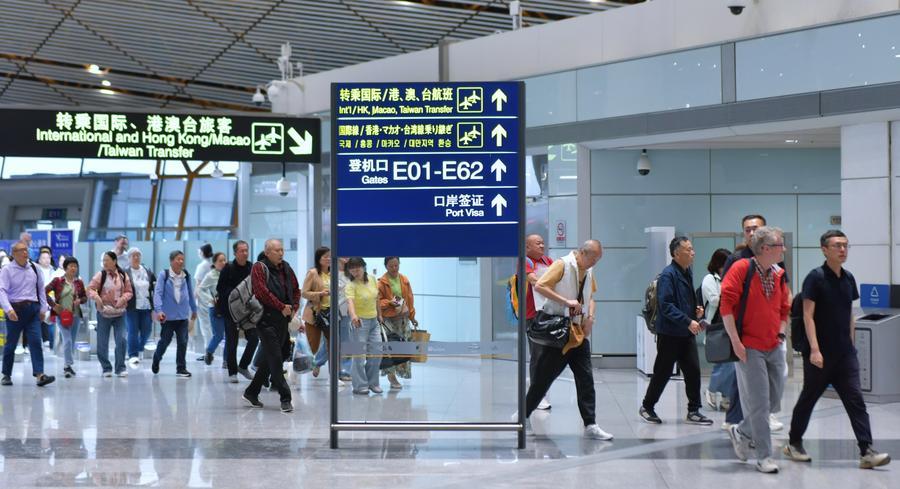
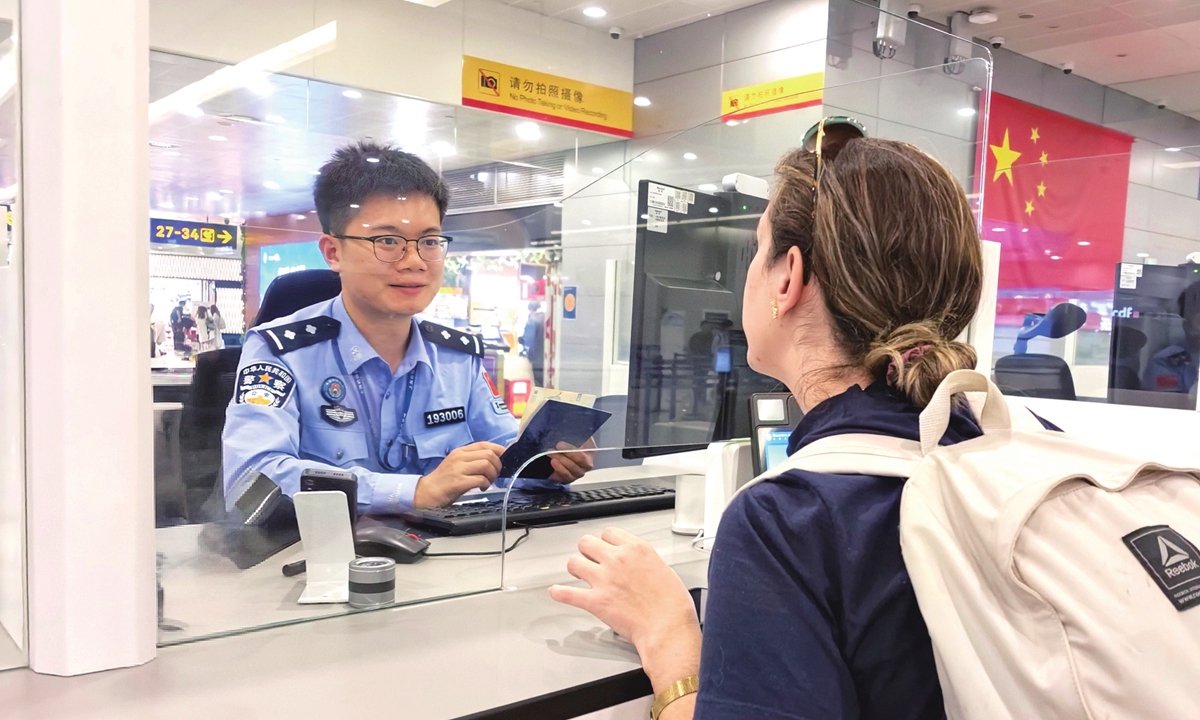
A view of a part of Shanghai Pudong International Airport Photo: Courtesy of Shanghai General Station of Immigration Inspection At the arrival hall of Shanghai Pudong International Airport's Terminal 2, the crowd moved in a steady stream. As a middle-aged man handed over his passport, his eyes flickered away for a brief moment.That slight hesitation did not go unnoticed by a border inspection officer on duty, who looked at him a second time. The officer opened the passport and let his fingertips glide across the data page. Seconds later, the expertly made but ultimately flawed counterfeit was identified, and the man was denied entry in accordance with the law.This ability to tell genuine from fake at a glance, comes not only from years of experience honed by local border inspection officers, but also from the support of advanced technology. Not far from the airport, in a building nearby, the Document Examination Center of the Shanghai General Station of Immigration Inspection has been operating for years. Its collection of more than 7,000 forged documents records a long-running battle between those who make fakes and those who expose them.What exactly is housed in this center? How do Chinese immigration officers outsmart a wide range of forged documents, holding fast to the front-line of border security? Earlier this week, a Global Times reporter visited the center, as well as the arrival halls of Pudong airport, to explore the efforts behind safeguarding China's borders.