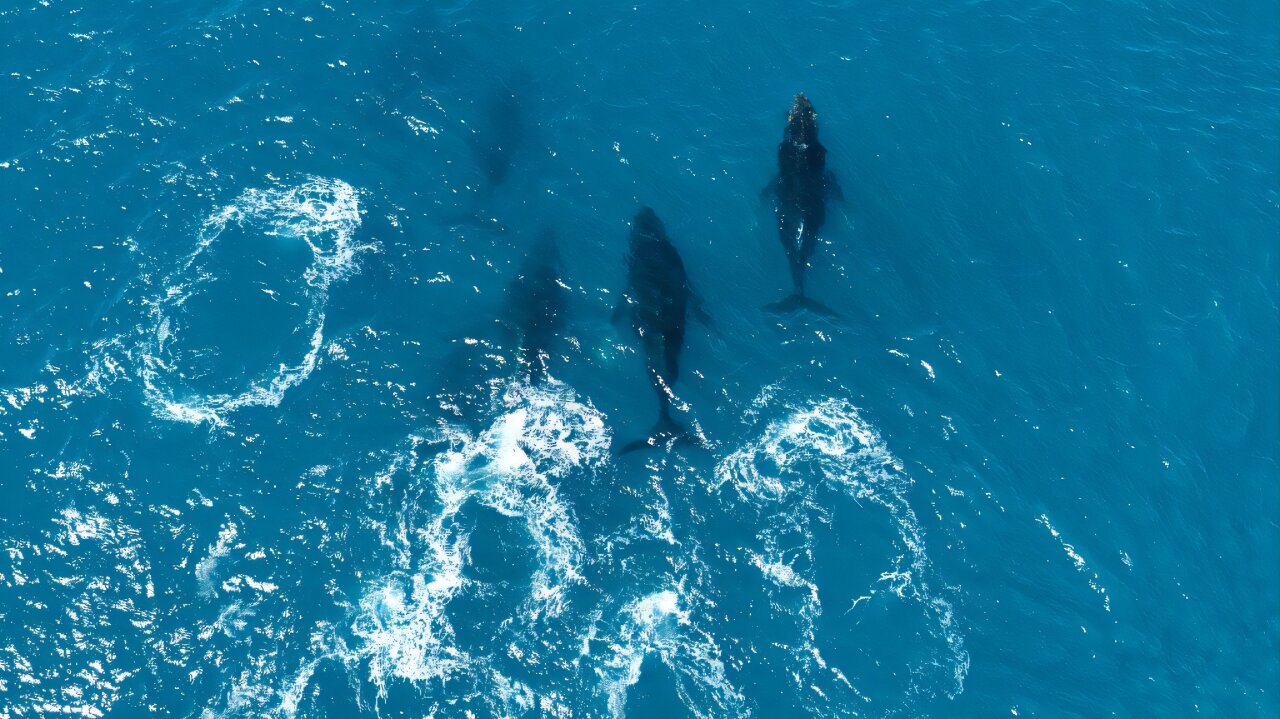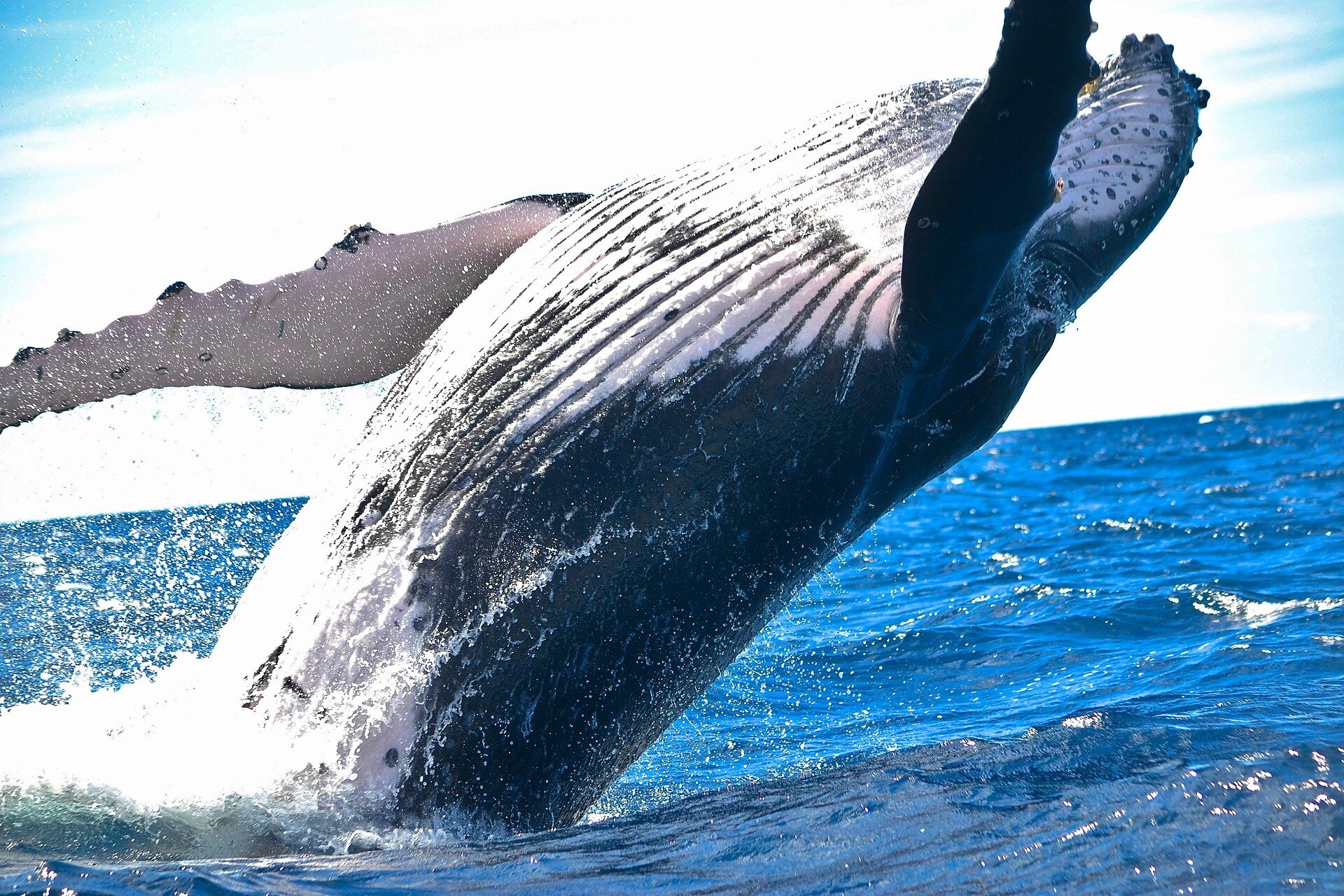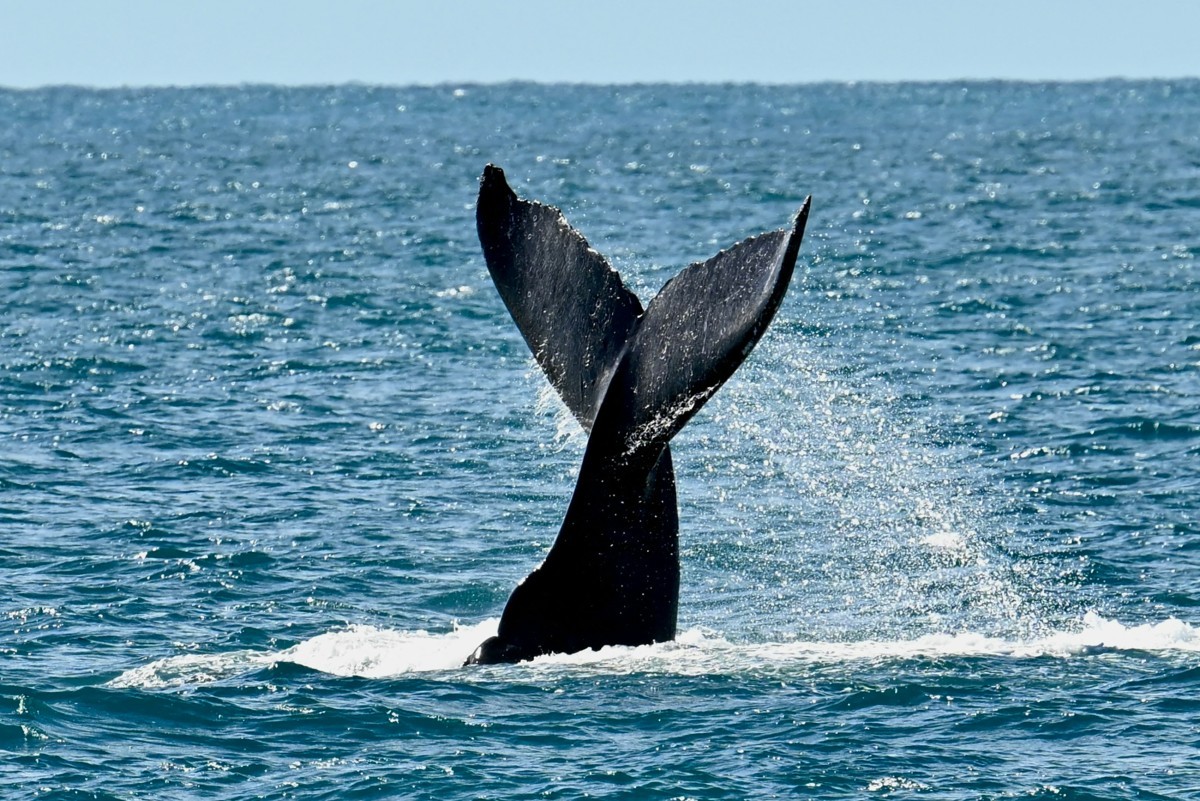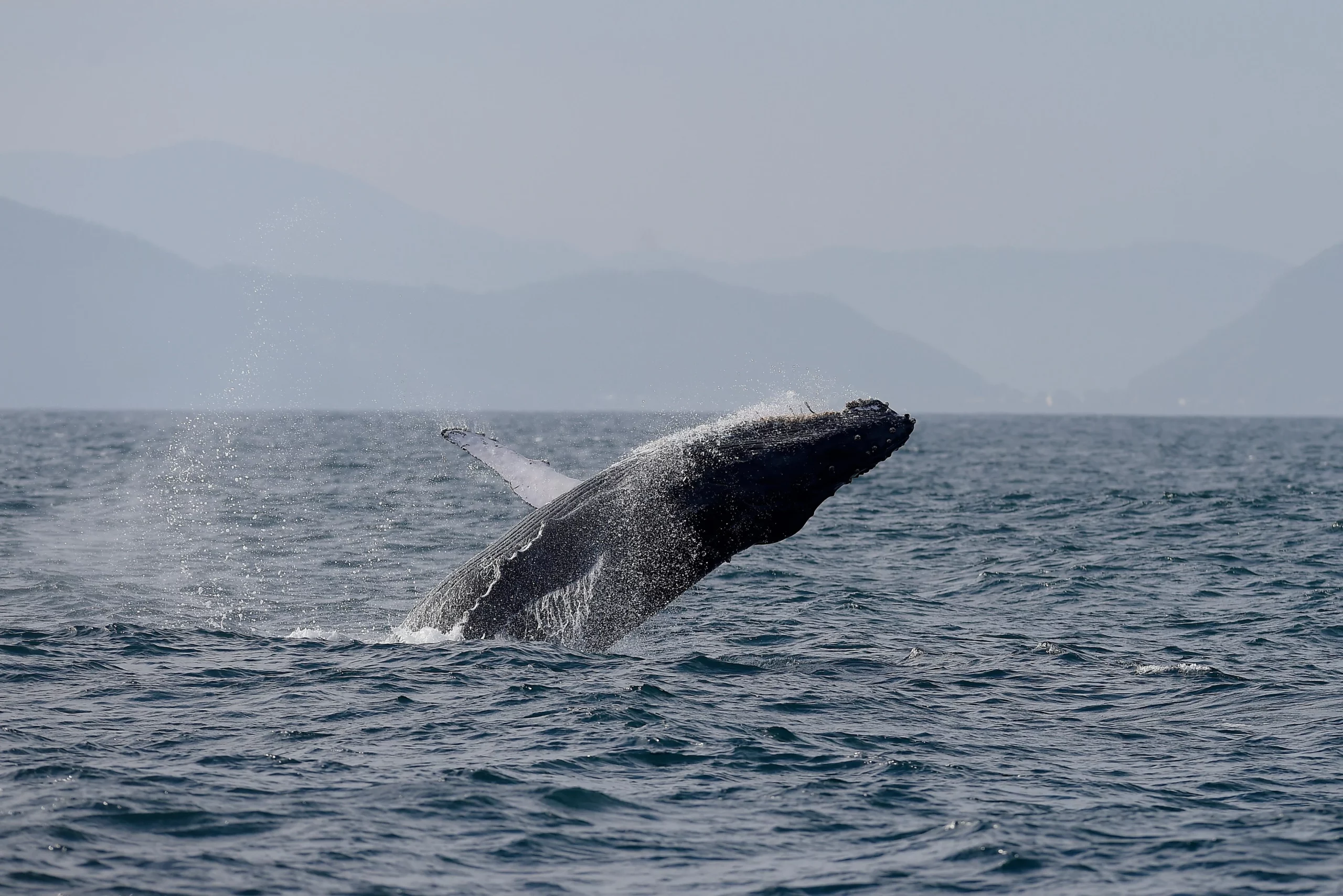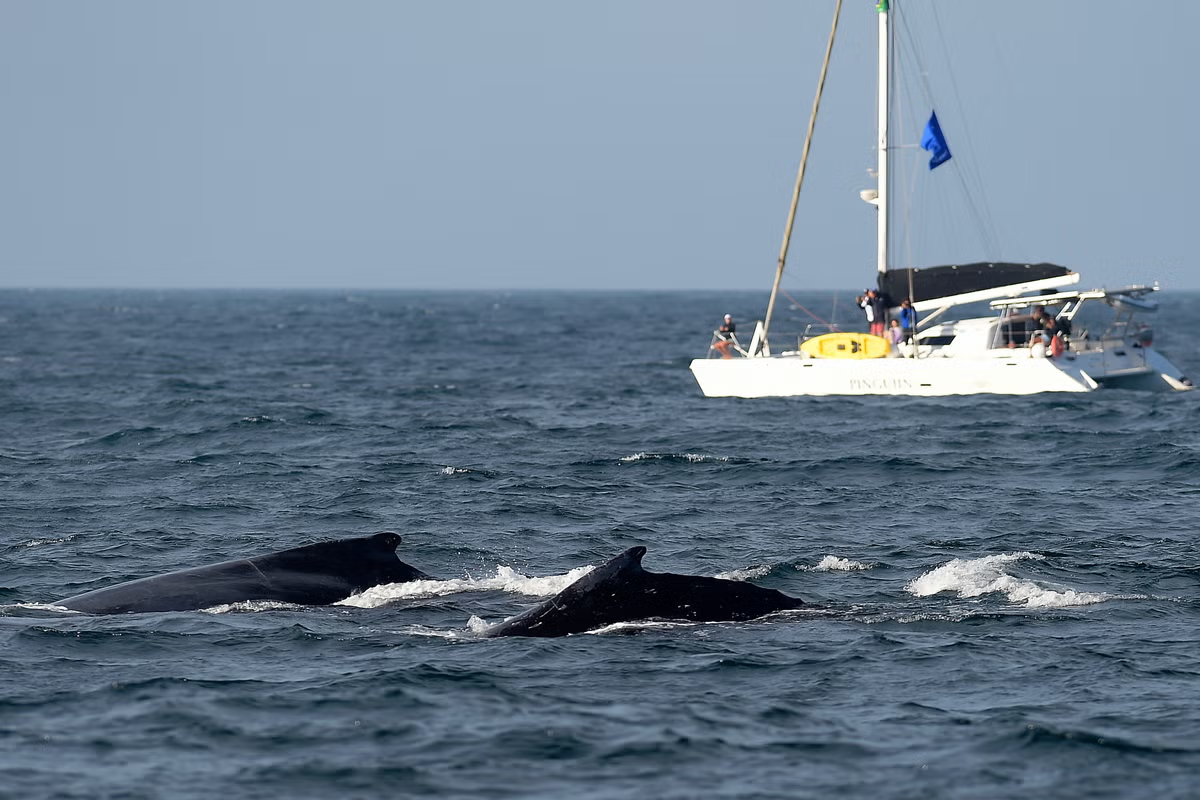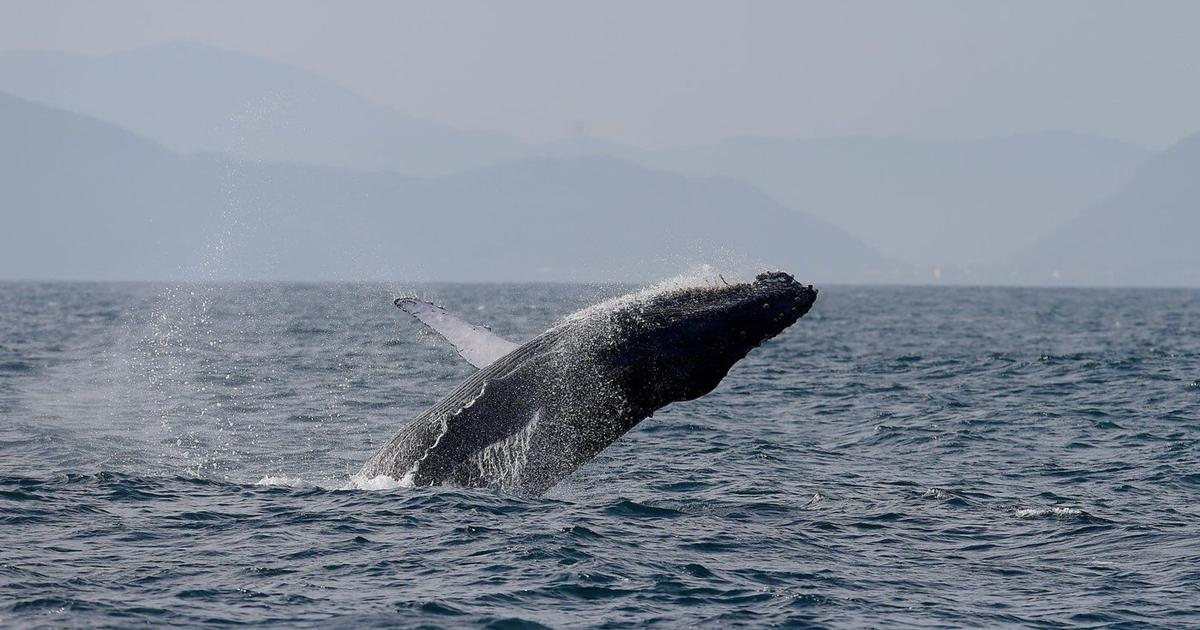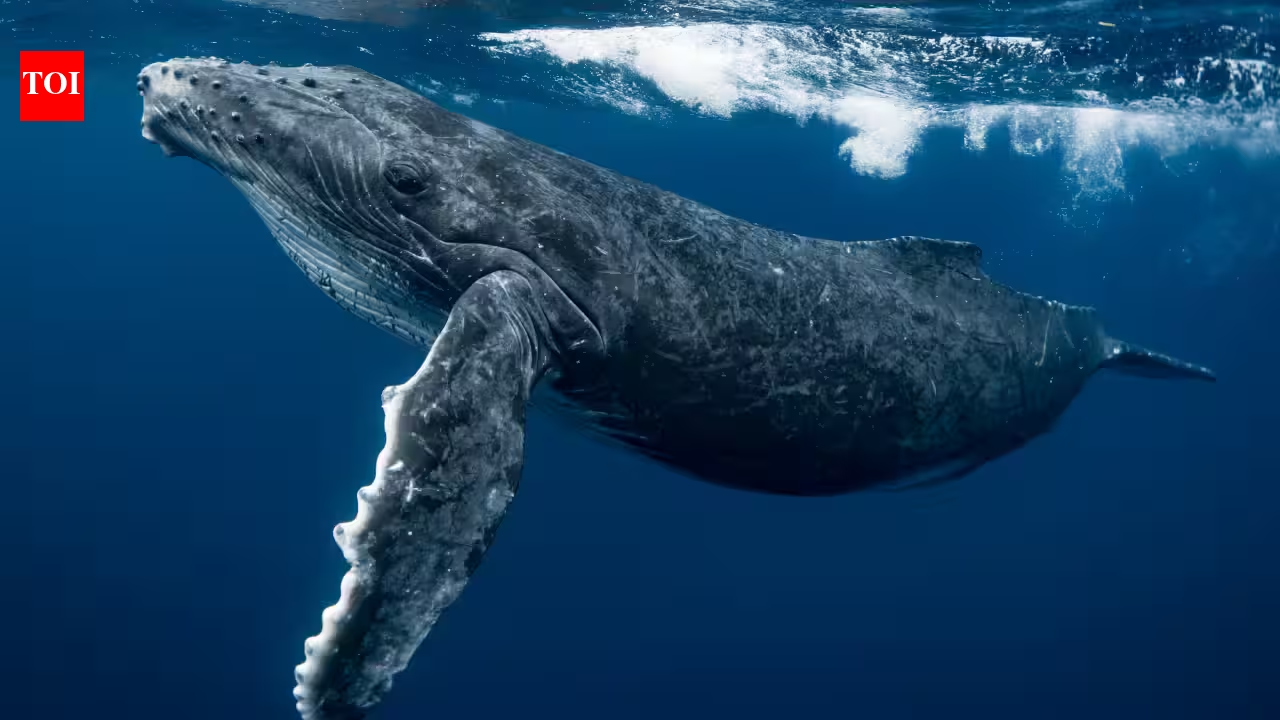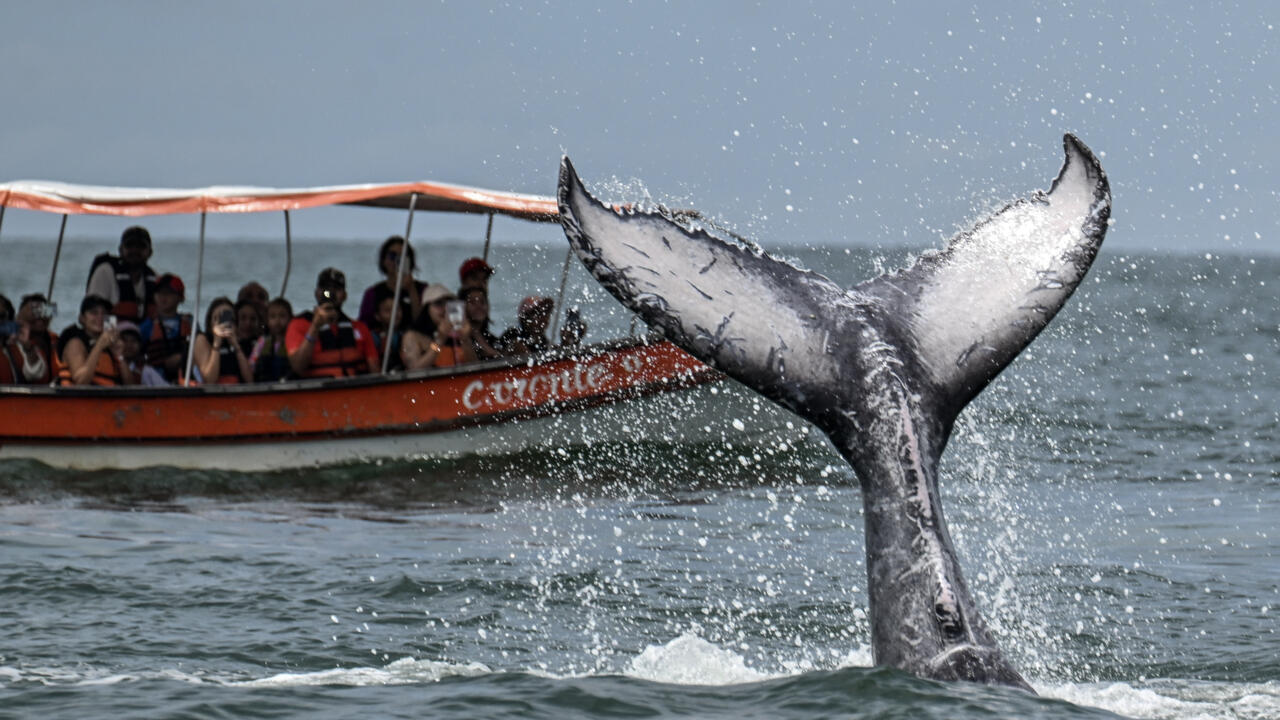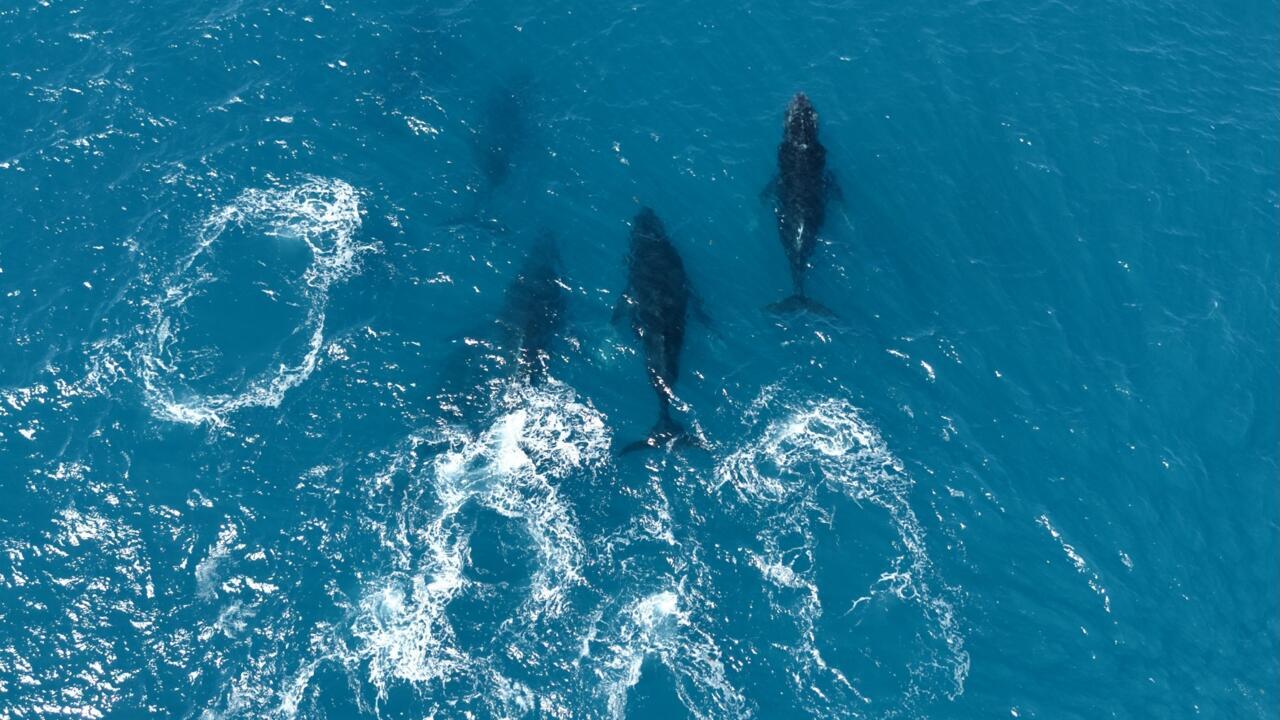
Female humpback whales off the coast of Brazil now have their pick of mates, who slap the water with their tails and jostle for attention – a scene that would have been unthinkable a few decades ago. Driven to near-extinction in the 1980s, there are now about 35,000 humpback whales in the South Atlantic, almost half of the world's total. The warm waters off the coast of Brazil are the largest breeding ground for Southern Atlantic humpbacks. Males compete for the chance to mate, and females give birth and nurse their calves. They also offer a bonanza to scientists who come each year to the Abrolhos archipelago off the coast of the state of Bahia to record and study hundreds of the cetaceans. Four decades ago, no one even knew there were whales in Brazil, said Enrico Marcovaldi, founder of the Humpback Whale Institute (IBJ) – one of Brazil's leading organizations researching and protecting the species. The first time he saw one, he mistook it for a rock. "They were legends. We had never seen one," Marcovaldi told AFP.
Wearing a life jacket and helmet, and armed with a crossbow, biologist Fabio Fontes pursues the group of males in a small boat who are competing to mate with a female © Evaristo Sa, AFP