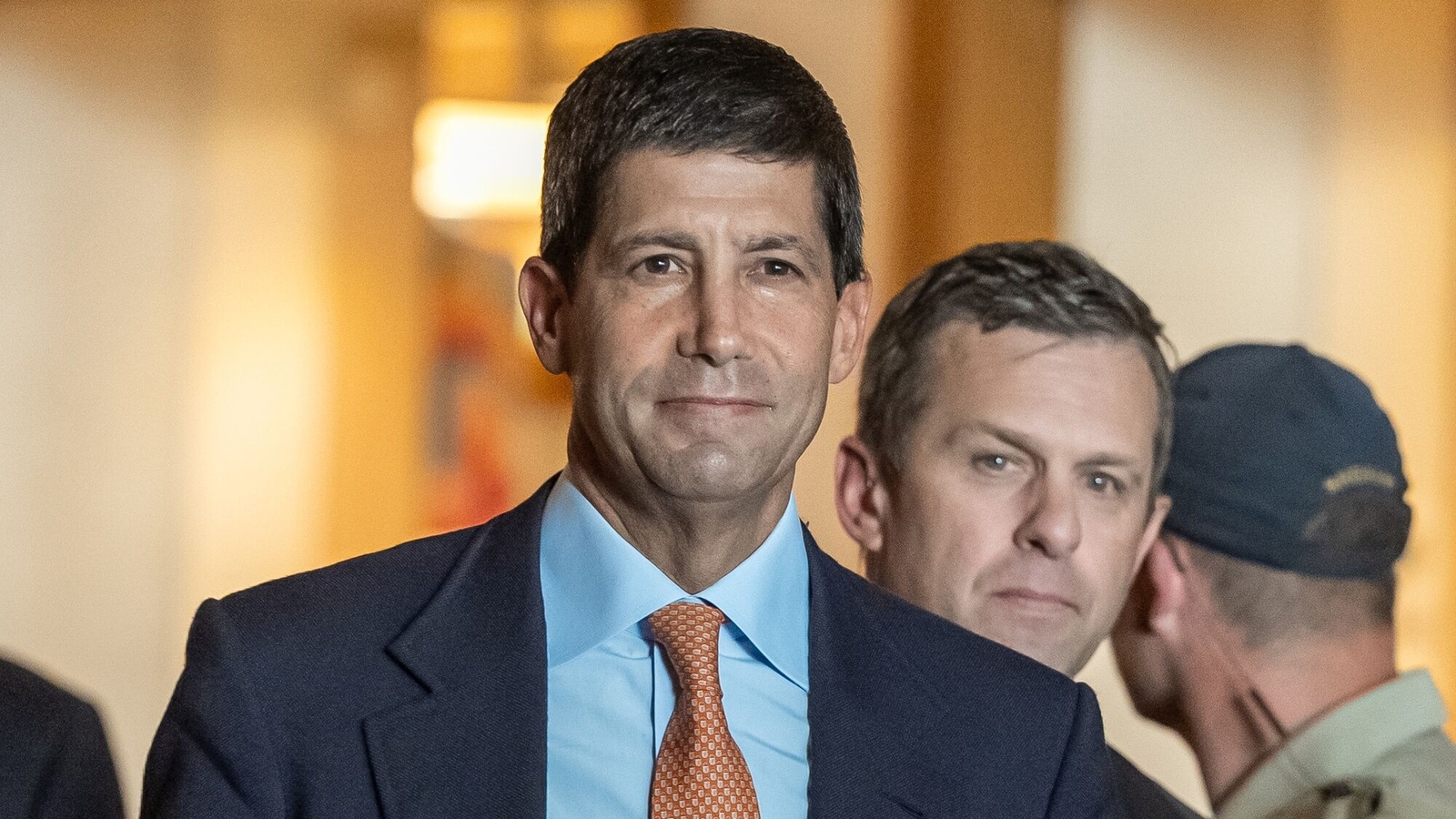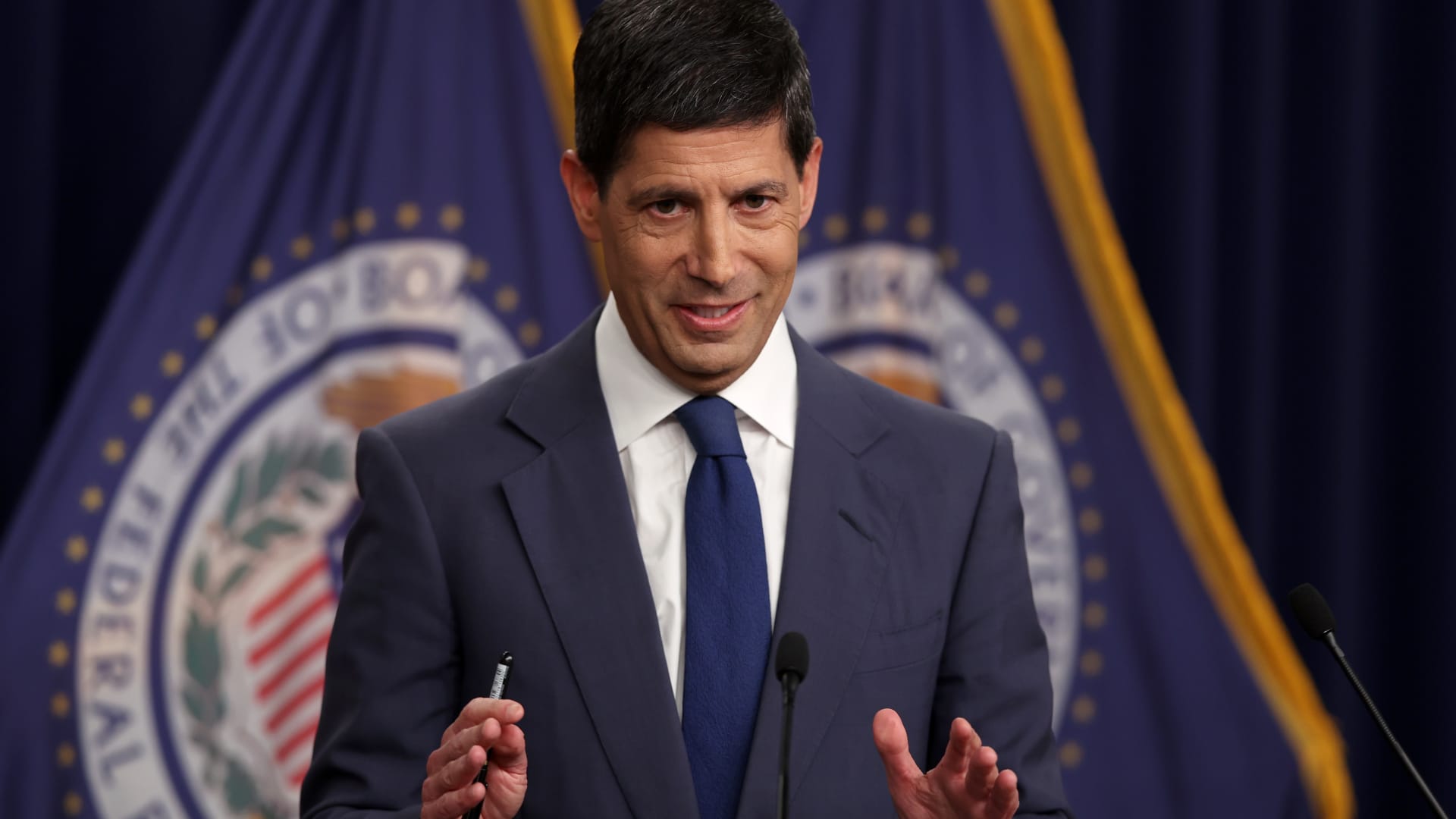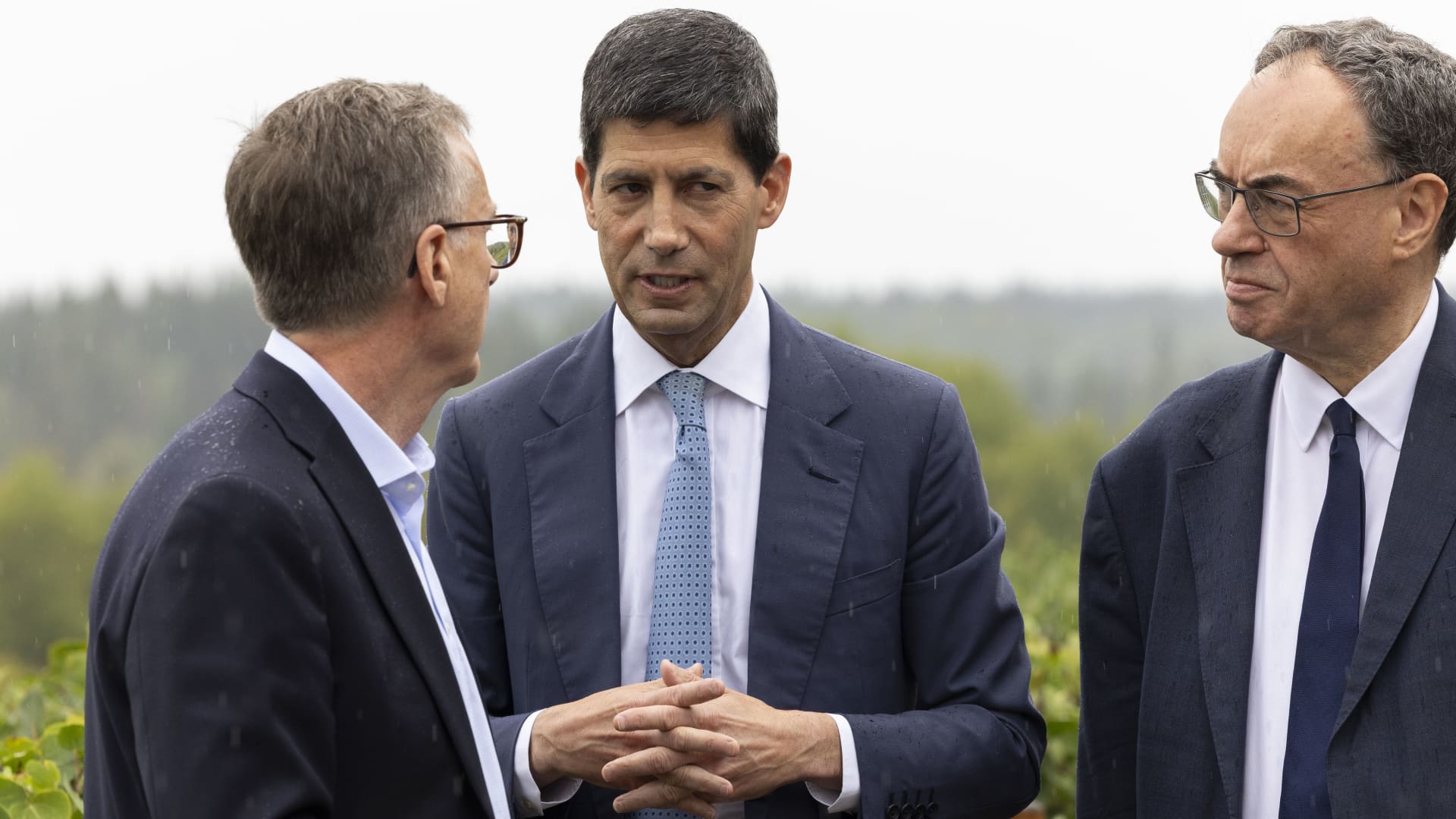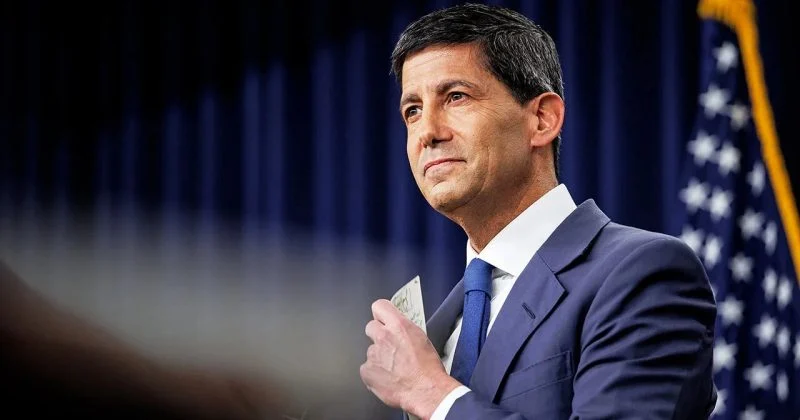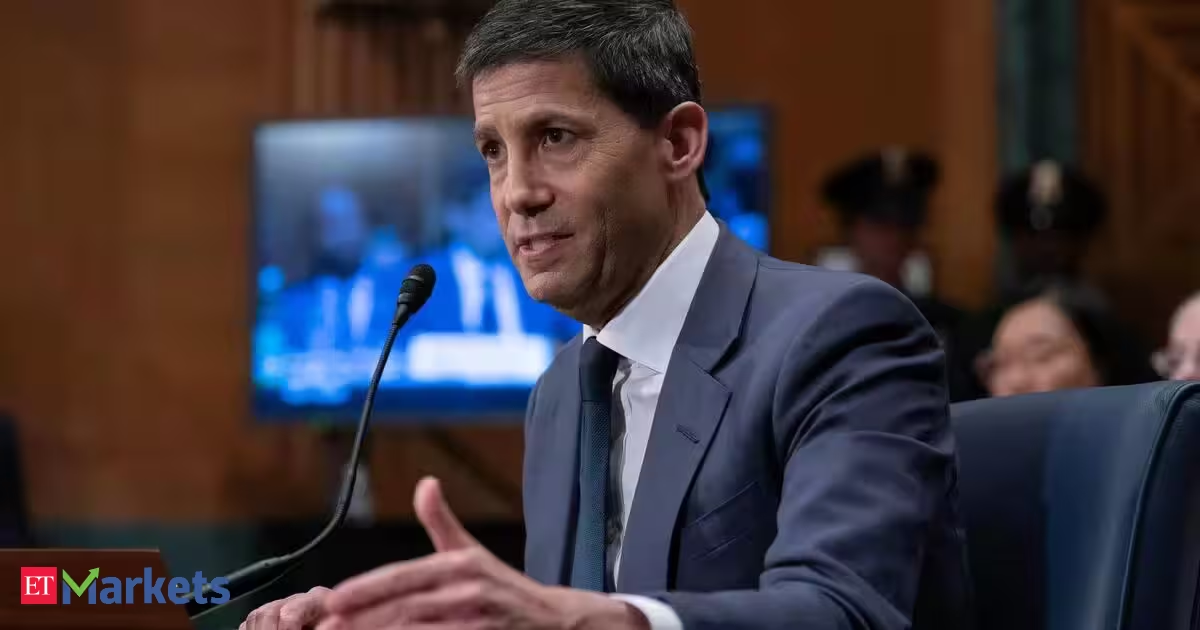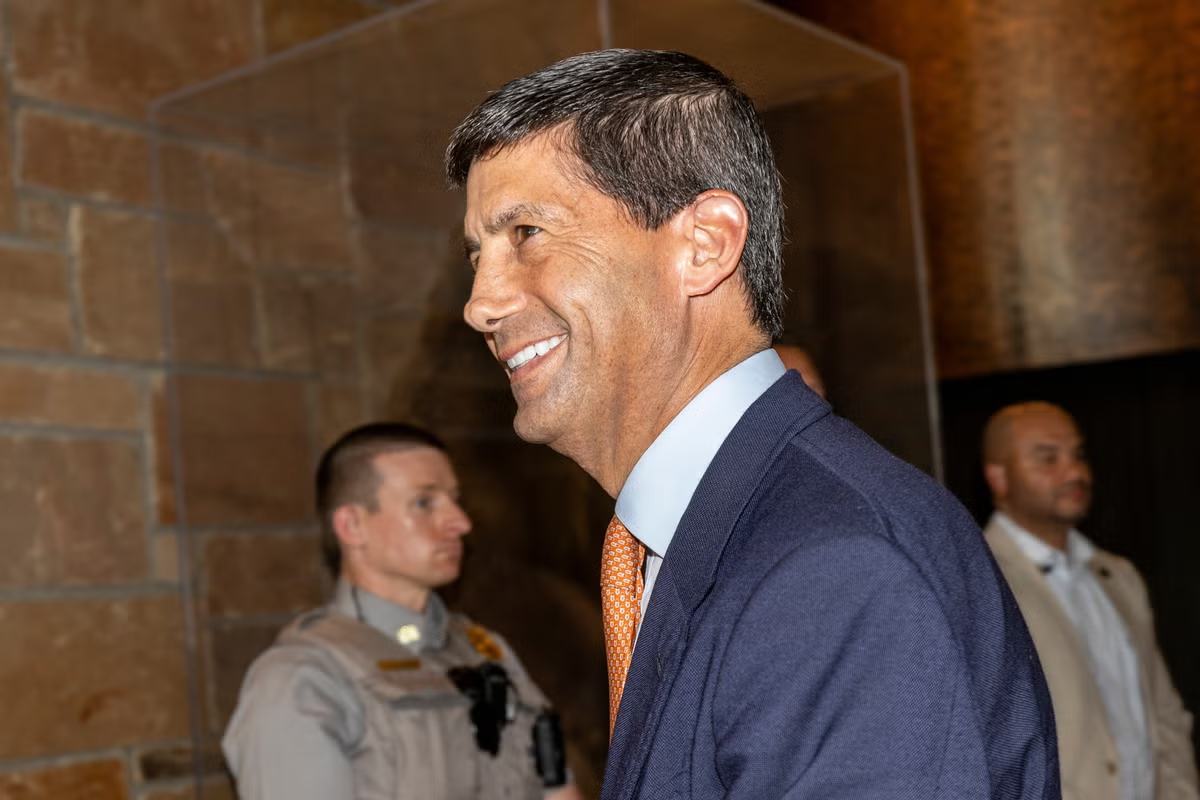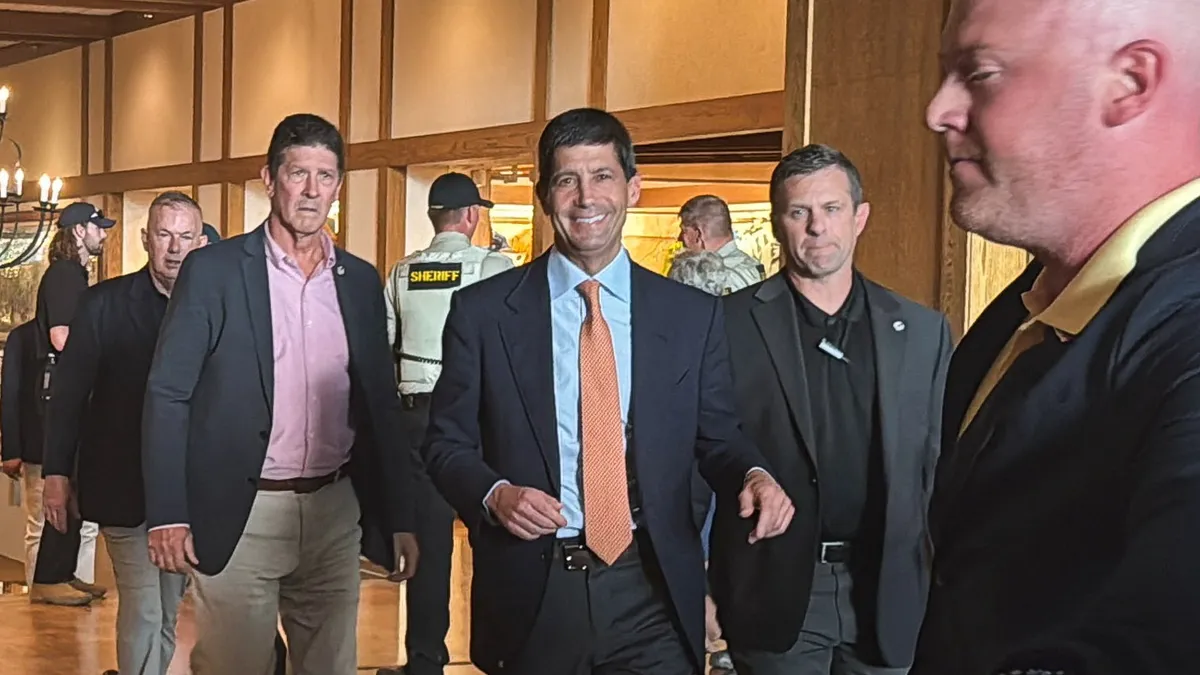
With inflation still running hot, Federal Reserve Chair Kevin Warsh said policymakers’ focus right now should be on bringing down prices during a keynote address at an annual symposium in Jackson Hole, Wyoming. Since taking over as Fed chair in May, Warsh has remained quiet on what’s next for short-term rates. He said the federal funds rate, the Fed’s benchmark for interest rates across the country, is the predominant tool to achieve price stability and maximum employment. But those hoping for clarity on the Fed’s next rate decision didn’t get it. Instead, Warsh made a case against giving markets forward guidance. “If markets rely materially on the Fed’s guidance and the Fed relies on market prices, we are all more likely to be blinded to new developments,” according to Warsh's prepared remarks. “If the Fed gets inflation wrong and judges the economy wrong, who gets the worst of it? Not the financial high-fliers. Hardworking Americans are the ones left to deal with inflation that is too high or jobs that suddenly appear less secure.” Why the Fed chair's keynote address may matter to consumersWarsh chairs the Federal Open Market Committee, the body responsible for setting a target range for short-term interest rates.It typically raises the range to tame inflation and lowers it to stimulate the job market. A higher range means U.S. consumers pay more interest on things like credit cards, car loans, and personal loans, while savers benefit from higher returns on their high-yield savings accounts and certificates of deposit. A lower range has the opposite effect.The committee voted in July to keep the range at 3.5% to 3.75%, as it has so far this year. Since then, policymakers have witnessed the United States reignite a trade war with Canada. There's also the ongoing war in Iran. Both developments risk driving prices higher.As of Aug. 28, a majority of traders are still predicting that the committee will leave the target range unchanged at its next meeting in September, according to CME FedWatch, though many are still betting on a hike sometime before the end of 2026.The Fed chair has an opportunity to "set the agenda" at the symposium, Amarnath said, ahead of the event.Warsh could say "we really do want to take inflation seriously here and that we do need to consider a hike in September," Amarnath added. "That's probably the rational case, but it's kind of at odds with his MO as Fed chair, which is to not give any information."How is the US economy doing?Inflation continues to run well above the Fed’s 2% target. Personal Consumption Expenditures, the Fed’s preferred measure of inflation, was up 3.7% over the year in July, in line with June’s pace. The Labor Department’s Consumer Price Index showed that prices overall rose 0.1% over the month in July, but the rate of annual inflation slowed to 3.4%. Over the year, prices still rose faster than workers’ paychecks. After a hiring spree this year, the labor market has shown some signs of cooling. U.S. employers shed 23,000 jobs in July, but the national unemployment rate dropped to 4.1%, though experts said it fell for "the wrong reason."U.S. real gross domestic product, or GDP, increased at an annual rate of 1.5% in the second quarter this year, according to the latest estimate from the Bureau of Economic Analysis. That’s a “solid, but unspectacular” performance, according to Jim Baird, chief investment officer with Plante Moran Financial Advisors.Consumers are still spending, but they’re feeling a little worse about the economy. The Conference Board’s consumer confidence index and the University of Michigan’s measure of consumer sentiment both fell in August. “Although the early month weakening in sentiment was pervasive across various demographic groups, notably large reductions were seen among older consumers, lower-income consumers, and those without a college degree,” Joanne Hsu, the university’s director of surveys of consumers, said in a statement.“These groups are all particularly vulnerable to any erosion of purchasing power stemming from inflation.”What are Fed governors saying?Although the Federal Open Market Committee voted to hold its benchmark for interest rates steady at its last meeting, the decision wasn’t unanimous. Three of 12 voting members dissented. Cleveland Fed President Beth Hammack, Minneapolis Fed President Neel Kashkari, and Dallas Fed President Lorie Logan preferred to raise the target range by a quarter-point.“Now is the time to act,” Hammack said in an Aug. 11 post to LinkedIn. “There’s no tension in the mandate. Policy isn’t restrictive. And the longer we wait to take action to bring inflation back to our 2 percent objective, the more challenging it will be to bring it back down and the more expensive it will be for the American people.” Minutes from the July meeting revealed “most” participants thought inflation would cool throughout the remainder of the year as the effects of tariffs and energy prices waned, but that “many” were concerned inflation would stay elevated as the Iran war limits oil supply and AI investment pushes up demand. Committee members thought labor market conditions were “stable,” and judged that higher rates “would likely be necessary if inflation did not decline,” the minutes said. Kashkari told CBS on Aug. 23 that he’s watching to see how continued conflict in the Middle East and a U.S.-Canada trade war will affect prices, but that he’s waiting to see August inflation and employment data before deciding how he will next vote. “I don’t want to prejudge the next meeting, but I’m not feeling confident right now that inflation is heading back down to target in a short period of time,” Kashkari said. “The longer there’s back and forth on the trade front, just like the longer there’s back and forth in the conflict of Iran, the imprint in inflation ends up being extended and delayed.”Although Fed Governor Lisa Cook did not dissent from the last decision, ahead of the July meeting she said she'd be prepared to act if inflation didn't begin to slow. She is still fending off an attempt by President Donald Trump's administration to remove her from her role. Her lawyers, in an Aug. 26 statement to USA TODAY, maintained that there is "no legal basis" for her removal.(This is a developing story that will be updated to add new information.)Reach Rachel Barber at rbarber@usatoday.com, follow her on X @rachelbarber_, and subscribe to her newsletter "Making More of Your Money" here.
Fed chair expected to discuss changes in Jackson Hole speech
Federal Reserve Chair Kevin Warsh is expected to give an update on the U.S. economy in his keynote address at a symposium in Jackson Hole, Wyoming.
1,062 words~5 min read