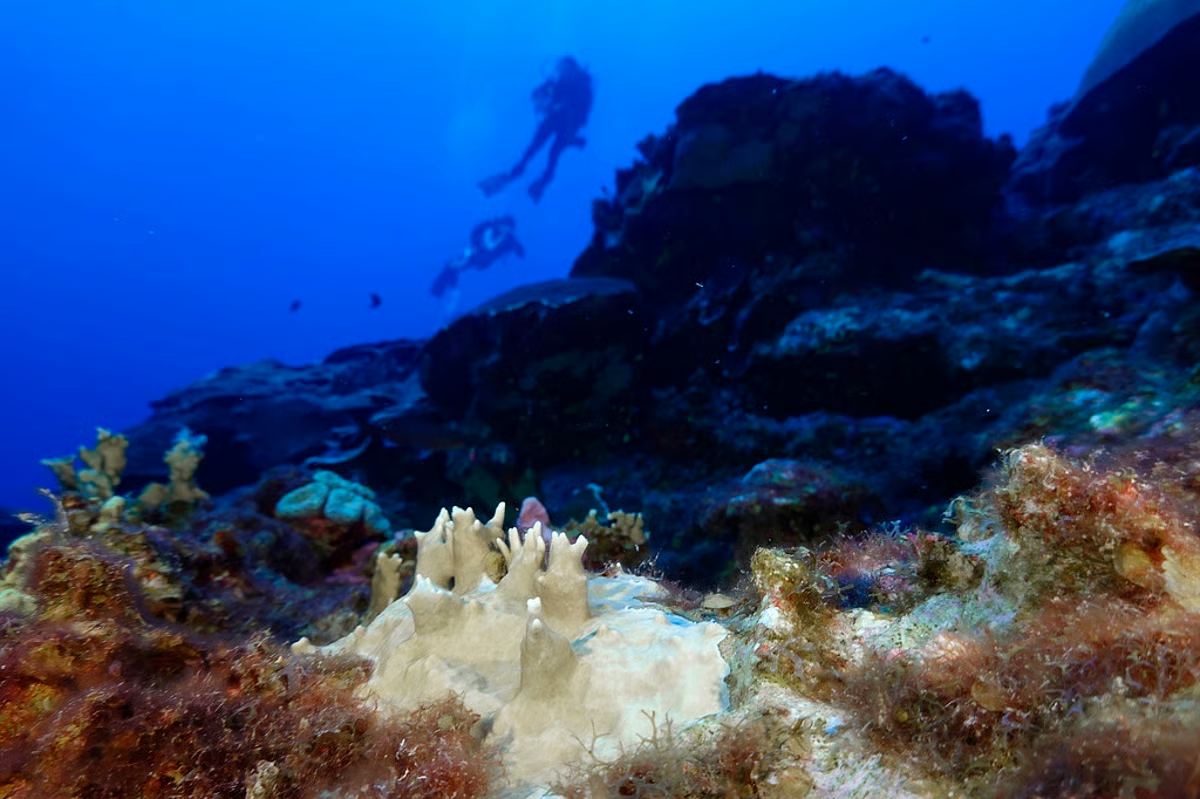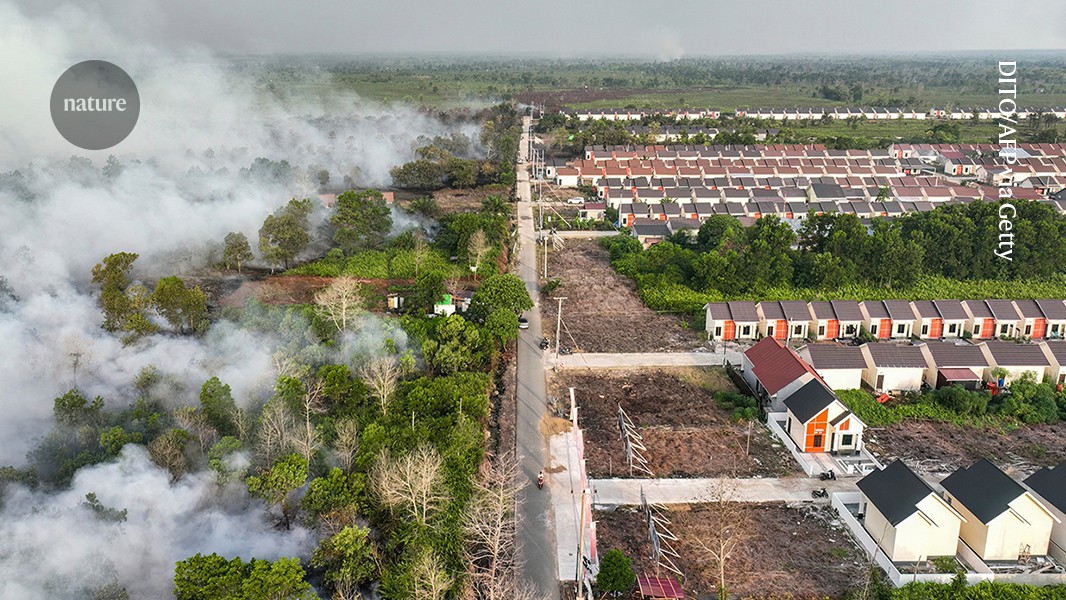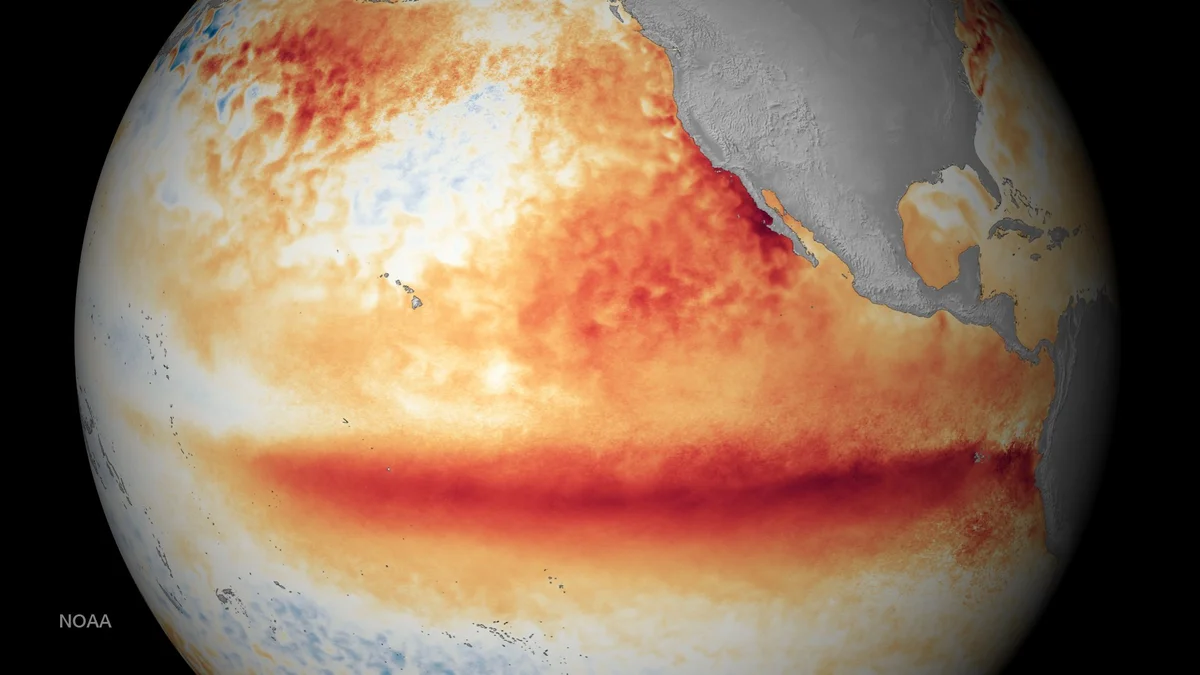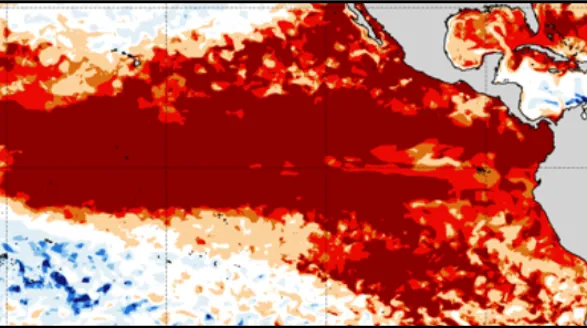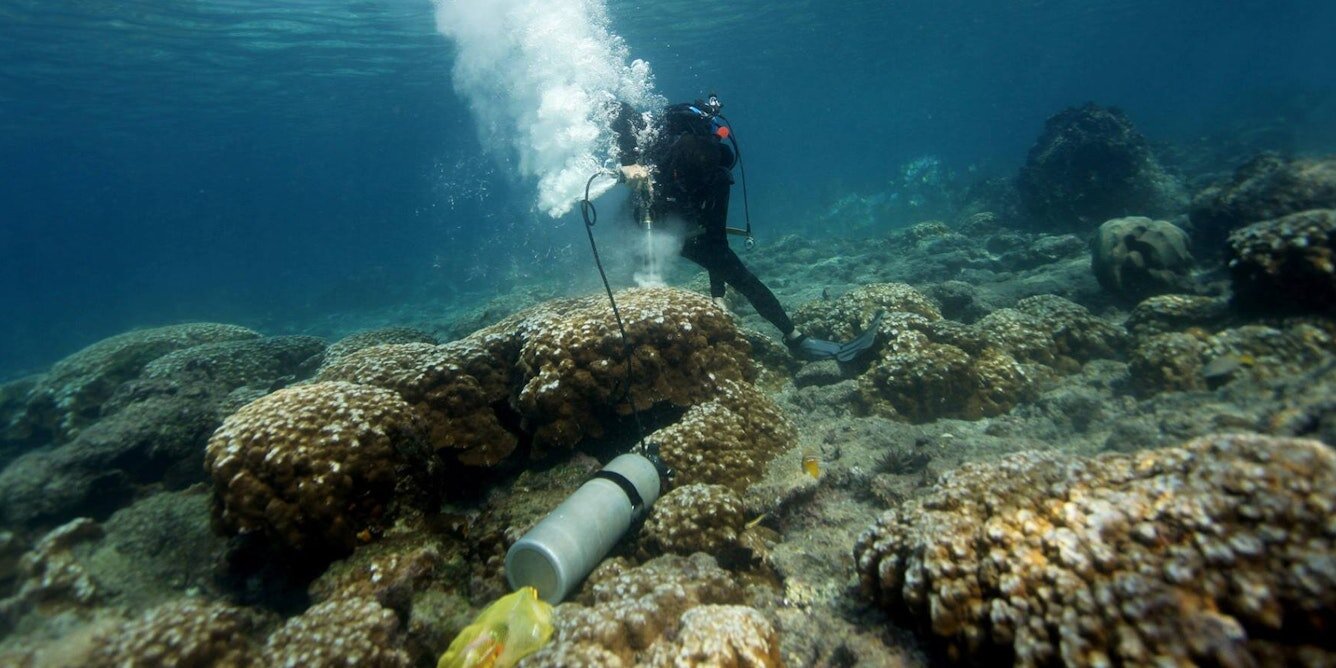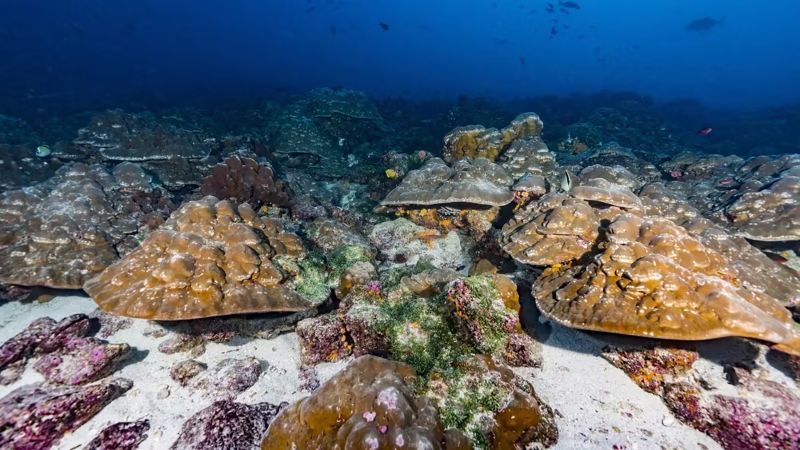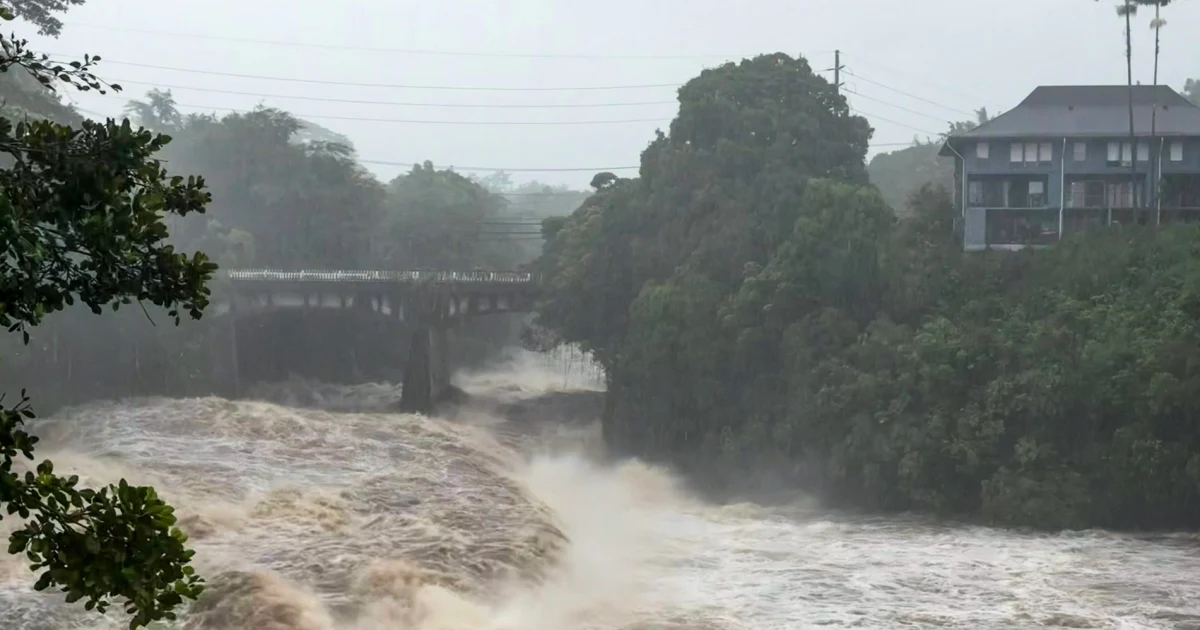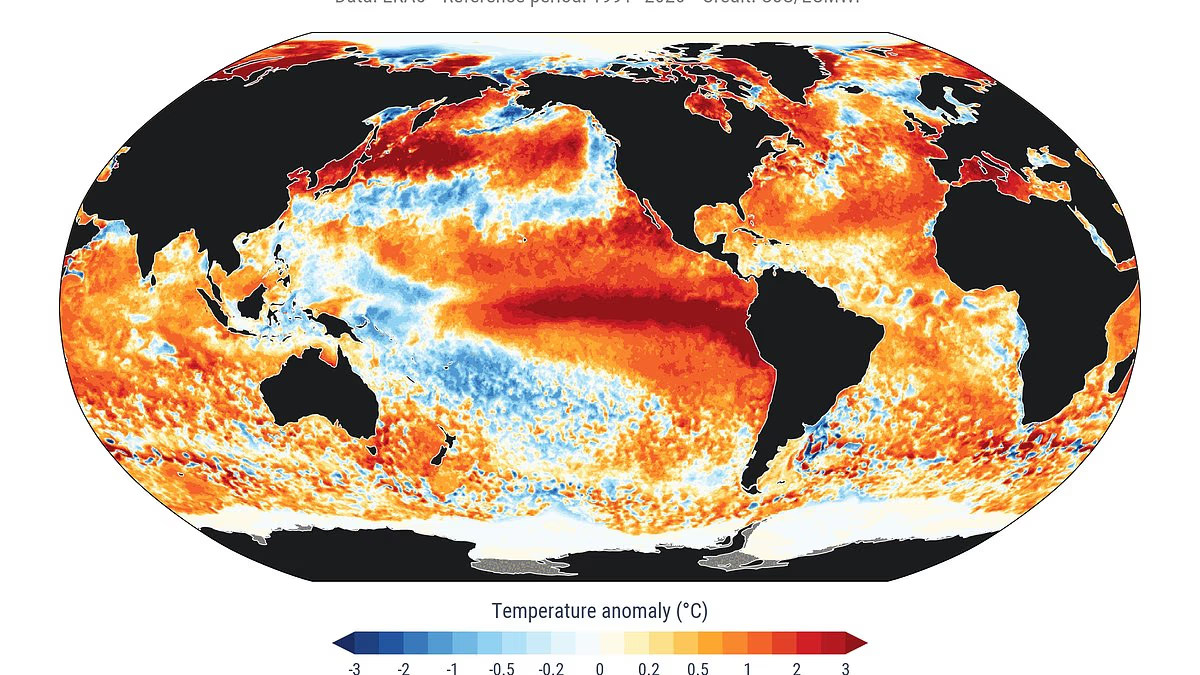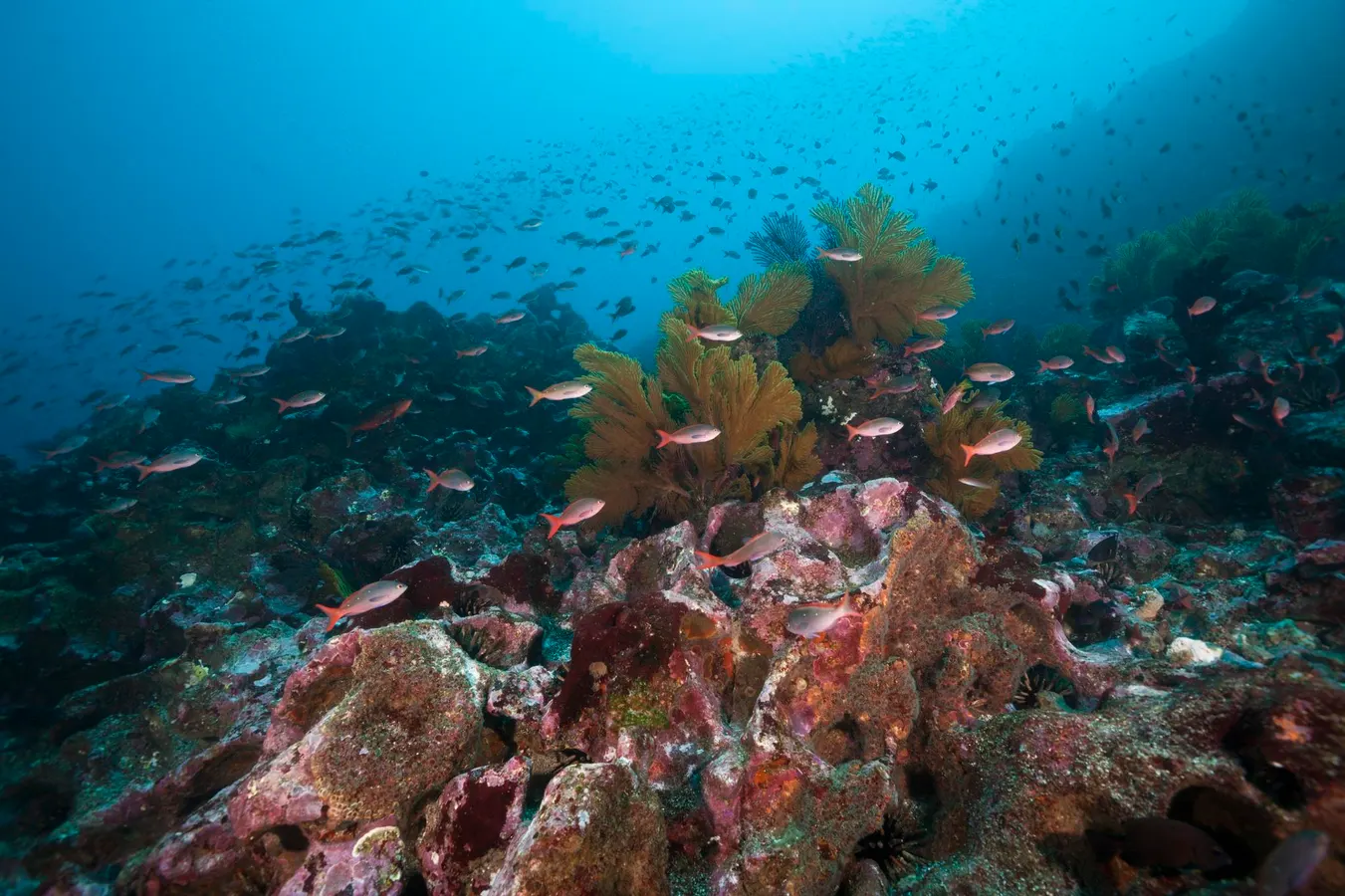
Coral around the Galápagos Islands has enabled scientists to build a 1,000-year record of ocean temperatures, which has enabled them to better understand El Niño.Universal Images Group via Getty ImagesWith a so-called “Godzilla” El Niño already strengthening in the Pacific, scientists this week revealed that the ocean warming phenomenon is more powerful than at any point in the last 1,000 years—and human-caused climate change is the reason why.El Niño is the periodic warming of the tropical Pacific Ocean that reshapes weather patterns worldwide, fueling droughts in some regions and floods, storms and heatwaves in others.A new study of Pacific corals, published Thursday in the journal Science, shows that El Niño variability in the eastern Pacific is now 36.5% stronger than it was before the industrial era, a jump that the study's authors say is too large to be explained by anything except planetary warming caused by the burning of fossil fuels.The Case For Human-Caused WarmingThe study, led by Professor Julia Cole, a paleoclimatologist at the University of Michigan, went to great lengths to rule out every natural explanation for the strengthening of the eastern Pacific El Niño Southern Oscillation, or ENSO.Cole and her colleagues studied ocean coral chemistry which, much like tree rings can be used to count years, records changes in ocean temperatures to develop a data set spanning 1,000 years. They compared the resulting data against 12 climate models simulating the same period under natural forces alone, including volcanic eruptions, shifts in the sun’s output, and the climate system’s own internal noise—but none produced a swing as large as the one recorded in the coral. The team then checked whether the phenomenon lined up with two well-known natural climate episodes, the Medieval Climate Anomaly and the Little Ice Age. It didn't.ForbesNepal Flash Flood: Experts Say Climate Change Primed DisasterBy David Vetter"If it’s not natural, and it’s not internal, and it’s nothing like the past, you tell me what the other thing is," Cole tells me. “The obvious answer is global warming, and if you're going to push back on that, you'd better have an alternative.”Cole is direct about what’s driving that warming. "We’re in a different climate state," she says, "and we’re in that different climate state because we're burning fossil fuels."Fire rises from a flaring tower at the Chevron Products Company El Segundo Refinery in the early morning hours on October 3, 2025, in El Segundo, California.AFP via Getty ImagesThe timing backs bears this out: the sharpest rise in El Niño variability didn’t begin until the mid-to-late 20th century, tracking the acceleration of global temperatures caused by greenhouse gas emissions.A Thousand-Year ThermometerScientists have only been able to measure El Niño precisely since the 1980s, with the advent of climate satellites. Cole’s team got around that by turning to coral, which has been recording ocean temperatures continuously for thousands of years. Drilling into modern and centuries-old coral skeletons across five Galápagos islands, the researchers measured chemical ratios that shift with sea-surface temperatures, building a set of 28 year-by-year temperature records spanning more than a millennium.But building that record wasn’t easy.The Galápagos Islands sit in what Cole calls "the heart of El Niño country"—the stretch of ocean where the biggest events hit hardest, which made the archipelago the obvious place to go looking for a long-term record. Cole first tried to start a coral-based project there in 1989, only to find that much of the islands’ living coral had been killed off by the severe El Niño of 1982-83, leaving too little material to work with.It took years for the project to find its way forward. "Only much later did we realize there are ancient corals along the shorelines that could be used for this work," Cole says. These were fossil skeletons, still standing where they grew, that had escaped the fate of the reef corals.The team also tracked down a patch of living coral on a reef in the remote northern islands of the archipelago that had survived the 1982-83 die-off relatively intact, giving them a modern baseline to work from. Three separate field expeditions, in 2010, 2015 and 2016, gathered the raw material for the study, the culmination of many years of effort that eventually produced thousands of individual data points.One Third Stronger, And RisingComparing three eras—a "preindustrial" baseline running from 1000 CE to 1850, the 20th century, and the modern satellite era since 1984—the team found eastern Pacific El Niño variability today is 36.5% stronger than the preindustrial norm, and 16% stronger than the 20th century alone. Almost all of that jump has happened within living memory, and El Niño events are also tilting more consistently toward extreme warm swings, rather than the balanced mix of strong and weak years typical of past centuries.ForbesAs Wildfires Intensify, Climate Lies Endanger Lives, Report WarnsBy David VetterA similar, though noisier, signal shows up in coral from the central Pacific’s Line Islands, where variability has risen about 34% above preindustrial levels. That matches what climate models have predicted: warming should intensify El Niño first and most clearly in the eastern Pacific, with the central Pacific following behind. That pattern gives scientists more confidence that the shift is being driven by the same underlying cause in both places.The study itself does not include a formal statistical attribution study pinning the change on human activity. What it does show is a change too large for natural forces to explain, at a location and moment in time that lines up precisely with human-driven warming—a conclusion consistent with separate attribution research cited by the authors, which indicates that emissions from fossil fuels are the likely cause.Why A Stronger El Niño MattersThe stakes of understanding ENSO are enormous, as a single strong El Niño can shift rainfall on nearly every continent at once. Cole points to the drought and wildfires currently unfolding in Indonesia, which are a near-automatic consequence, of El Niño dragging the Pacific’s major rain-generating system eastward, away from the archipelago and over the warmer open ocean. The same pattern has been linked to unusual tropical storm activity threatening Hawaii, and to both drier and wetter extremes across South America, Africa and the North American mainland.And, as with other major global phenomena, the human cost falls unevenly. "We’re talking about millions of people at risk," Cole says, pointing to subsistence farming communities already facing food insecurity in drought- and flood-prone regions, particularly in Africa. “We’re not getting it half as bad as the countries that cause the least [climate change].”What happens next, Cole is careful to point out, isn’t certain. "My corals are like a crystal ball to the past," Cole says, "but they’re not a crystal ball to the future." In other words, it doesn’t follow that, as we continue to burn fossil fuels, El Niño will consistently become more powerful.But the mechanism driving the last 40 years of change isn’t in dispute among the scientists who study it. Burning fossil fuels warmed the planet, and a warmer planet has made El Niño more extreme.
Human-Caused Climate Change Is Making El Niño Stronger, Corals Show
Coral skeletons reveal El Niño is stronger than at any point in 1,000 years. Scientists say human-caused climate change is the reason.
1,163 words~5 min read