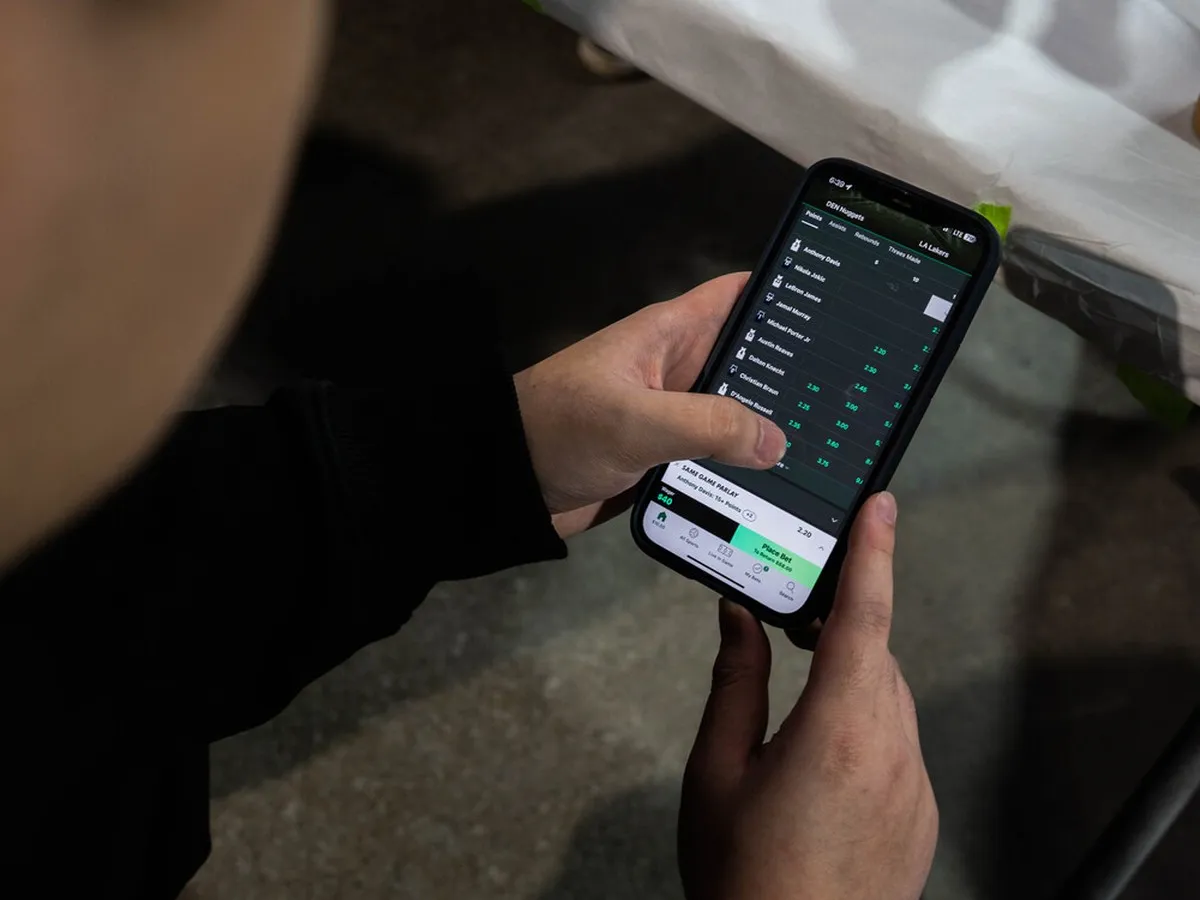
Skip to Content News Archives Economy Energy Oil & Gas Renewables Electric Vehicles Mining Commodities Agriculture Real Estate Mortgages Mortgage Rates Finance Banking Insurance Fintech Cryptocurrency Work Wealth Smart Money Wealth Management Investor Personal Finance Family Finance Retirement Taxes High Net Worth FP Comment Executive Women Puzzmo Newsletters Financial Times Business Essentials More Innovation Information Technology FP500 Podcasts Small Business Lives Told Tails Told Shopping Financial Post Store Obituaries Place a Notice Advertising Advertising With Us Advertising Solutions Postmedia Ad Manager Sponsorship Requests Classifieds Place a Classifieds ad Working Profile Settings My Subscriptions My Offers Newsletters Customer Service FAQ News Economy Energy Mining Real Estate Finance Work Wealth Investor FP Comment Executive Women Puzzmo Newsletters Financial Times Business Essentials HomeFP CommentJack Mintz: Are we taxing gambling too much? The rapid growth of online betting that can lead to tax avoidance by joining international websites will pressure governments to lower ratesLast updated 1 hour ago Like most “sin” taxes, gambling and online gambling taxes typically have two objectives: discourage harmful consumption and, of course, raise revenue to fund public services. Photo by Dan Janisse/PostmediaLast month, iGaming Ontario announced that gambling wagers from online betting in the province totalled an astounding $9.5 billion in June — almost $7,000 per active player account — yielding $400 million in net revenues that month. Since 2022, when regulated online gambling was introduced, the government has been more than happy to collect, on average, 20 per cent of gambling revenues for its budget. That will be close to $1 billion this year if current trends continue.Subscribe now to read the latest news in your city and across Canada.Exclusive articles from Barbara Shecter, Joe O'Connor, Gabriel Friedman, and others.Daily content from Financial Times, the world's leading global business publication.Unlimited online access to read articles from Financial Post, National Post and 15 news sites across Canada with one account.National Post ePaper, an electronic replica of the print edition to view on any device, share and comment on.Daily puzzles, including the New York Times Crossword.Subscribe now to read the latest news in your city and across Canada.Exclusive articles from Barbara Shecter, Joe O'Connor, Gabriel Friedman and others.Daily content from Financial Times, the world's leading global business publication.Unlimited online access to read articles from Financial Post, National Post and 15 news sites across Canada with one account.National Post ePaper, an electronic replica of the print edition to view on any device, share and comment on.Daily puzzles, including the New York Times Crossword.Create an account or sign in to continue with your reading experience.Access articles from across Canada with one account.Share your thoughts and join the conversation in the comments.Enjoy additional articles per month.Get email updates from your favourite authors.Create an account or sign in to continue with your reading experience.Access articles from across Canada with one accountShare your thoughts and join the conversation in the commentsEnjoy additional articles per monthGet email updates from your favourite authorsSign In or Create an AccountorIt’s not the only way Ontario collects gambling profits however. The Ontario Lottery and Gaming Corporation, which operates lotteries, land-based gaming (e.g., casinos and horse-betting), and digital gaming earned over $9 billion in proceeds in its 2024-25 fiscal year, generating $2 billion in net profits for the province’s coffers.Get the latest headlines, breaking news and columns.By signing up you consent to receive the above newsletter from Postmedia Network Inc.A welcome email is on its way. If you don't see it, please check your junk folder.The next issue of Top Stories will soon be in your inbox.We encountered an issue signing you up. Please try againMost provinces operate gambling operations themselves. Only Ontario and Alberta have adopted a regulated approach in which private owners operate online gambling businesses with a provincial body taxing their profits.Overall, Canadian provinces and territories raised about $8 billion in the past year in “trading profits” from lotteries, casinos, sports betting and other gambling. These funds may be distributed to social causes, including health and community programs.According to the World Health Organization, global gambling revenues total US$650 billion, with three-fifths coming from gambling addicts, who are an estimated 1.2 per cent of the population. Salivating over gambling revenues, governments tax the gross revenues (bets minus winnings) earned by gambling operators at rates ranging from three per cent to 83 per cent. The average tax rate among EU countries is 21 per cent, which is close to the rate in Ontario.Some countries also collect sales taxes on gambling sales revenues, as our HST does. Or they may exempt online gambling from VAT, like the EU.Gambling can also be taxed using income taxes. In the United States, individuals are taxed on their gambling winnings minus the bet. An exemption is deducted from winnings and both cash and non-cash winnings are taxable. The intent of income taxation is not to discourage gambling but to tax all sources of income so that people with the same income pay the same tax, regardless of how they have made that income.The U.S. is the only OECD country that taxes non-professional gamblers on their winnings. Other countries tax gambling operators on their profits. Besides the complexity in taxing small payouts, the strongest argument for exempting non-professional gamblers from income taxation is that their expected gain from betting is negative.Gambling clearly has an ugly side: addiction and under-age betting. At a Munich conference I attended in April, Yale Professor of Psychiatry Marc Potenza showed some stark pictures of brain deterioration in gambling addicts. After interventions to curb addiction, however, the deterioration was reversed.Potenza’s research centre reports that young people have a higher proclivity for gambling disorders since their brains are less developed. It is estimated that half of gambling disorders are genetically related, with the remainder due to environmental factors.Ontario limits betting to people over the age of 18. To get around registration requirements for online betting, some parents help their children acquire player accounts, especially in sports betting. If their kids run up losses, parents are on the hook.Like “sin” taxes on alcohol, tobacco, sugars and cannabis, taxes on gambling typically have two objectives: discourage harmful consumption and, of course, raise revenue to fund public services.Next year is the hundredth anniversary of a seminal article on optimal commodity taxation published by British economist Frank Ramsey. Writing in Britain’s prestigious Economic Journal, he provided mathematical proof that the economic cost of taxation is minimized if higher tax rates are put on commodities where taxes have less impact on behaviour. Following this guide means that “sin goods” typically should be taxed at higher rates than, say, labour income — which in fact is what we often see today.Of course, the revenue-raising objective contradicts the goal of discouraging gambling and maybe even eliminating it altogether. If the government wants to suppress the consumption of a “sin” good, tax rates should be set so high that everyone stops consuming. Not all gambling leads to addiction, however, so economists often argue that consumption decisions should be left to individuals rather than “nanny” governments. If gambling disorders affect only a small part of the population, the focus should be on interventionist programs rather than prohibition via tax. Some countries like the U.K. earmark a small portion of gambling revenues to such programs.The rapid growth of online betting that can lead to tax avoidance by joining international websites will put pressure on governments to reduce gambling tax rates. In recent years, some countries have decided to tax online gambling less than other betting forms such as casinos to counter tax avoidance. For example, Germany taxes online gambling at 5.3 per cent compared to casinos at 30 per cent. The U.K. taxes online gambling at 20 per cent and casinos up to 50 per cent.Overall, our highly indebted governments are more concerned with raising revenue than using taxation to discourage a potentially addictive activity. However, by applying both HST and high taxes on gambling, Canadian governments in the future might find their tax base disappearing as it goes abroad. Join the Conversation This website uses cookies to personalize your content (including ads), and allows us to analyze our traffic. Read more about cookies here. By continuing to use our site, you agree to our Terms of Use and Privacy Policy.
Jack Mintz: Are we taxing gambling too much?
The growth of online betting that can lead to tax avoidance by joining international sites will pressure governments to lower rates. Read on
1,368 words~6 min read